Hackers break into Foxconn servers, usernames and passwords stolen

With criticism of working conditions in its factories increasing, Foxconn now faces a new problem: hackers. In a series of posts, a group calling itself Swagg Security boasted on Twitter that it had hacked Foxconn's services, posting the results to Pastebin and torrents available on The Pirate Bay.
Apple enthusiast blog 9to5Mac reported that before external access to the company's intranet was cut off, it was able to verify several of the login credentials as legitimate. This includes credentials for company CEO Terry Gou. It is not immediately clear if any sensitive information has leaked.
Google releases Chrome 17 -- get it now!


Chrome 17 entered the "stable" channel today, 33 days after going beta. Not coincidentally, the stable build follows Chrome for Android by one day. You'll want the one to get the full sync benefits of the other.
Google promises security improvements with the new release and something else: Faster page loading, as you type and in some cases barely before you start typing the address. Chrome essentially pre-renders websites, extending the search page pre-rendering already available. The feature is disturbing in practice -- a little too prescient, like mind reading, when it works.
Do you store files in the cloud? Try BoxCryptor 1.2


Acomba UG has released BoxCryptor 1.2, its free and paid-for encryption tool for those using certain cloud-based backup services. BoxCryptor is designed for those who wish to encrypt their data locally prior to uploading it to services like Dropbox where the encryption is handled remotely, thereby adding an extra layer of privacy and security to the user’s files.
Version 1.2 adds support for unlimited encrypted folders to those using the paid-for, unlimited version ($39.99 personal, $99.99 business), plus adds a new Advanced mode for more experienced users alongside a new wizard for creating and opening encrypted folders for beginners.
Hacker taunts Symantec, releases pcAnywhere source code, promises others

Source code for Symantec's pcAnywhere software is now out in the wild, following failed negotiations between a hacker and the company. Emails published to Pastebin on Monday indicate that the hacker demanded $50,000 from the company to prevent the source code's release, a conversation Symantec confirms is legitimate.
The company says it did not handle the negotiations, which were done in conjunction with law enforcement. "YamaTough", the hacker behind the extortion attempt, tells Reuters in his own defense that even if the money was paid, he still intended to release the source code to Symantec's remote desktop software.
Save big on security software in February


February is a great month if you’re looking to bolster the security of your computer as we have an amazing selection of offers available on AVG products in the Downloadcrew Software Store. Whether you are looking to protect a single computer, or several, we have deals on the most appropriate software for you so you can save money whatever your needs.
For complete, all-round security, look no further than AVG Internet Security 2012 Complete Bundle, which includes an incredible five AVG products -- (AVG Internet Security 2012, AVG PC Tuneup 2012, AVG LiveKive (complete with 25GB of storage), AVG Family Safety 2012 and AVG Mobilation). This exclusive bundle is available for just $34.95, saving 82 percent of the MSRP of $198.
Ad-Aware 10 definitely needs to be on your shortlist


Lavasoft has today released one final beta of Ad-Aware 10, the latest incarnation of its flagship anti-malware package. The program will soon be available in three versions -- Ad-Aware Free Antivirus+, Ad-Aware Personal Security ($12 per year) and Ad-Aware Pro Security ($36 per year) -- but, unusually, it’s the free release this time around that sees the most significant change.
Many technologies previously reserved for the commercial editions only are now available in the free build, for instance. So real-time process protection will detect and block malware before it can launch; Registry protection looks out for potentially risky Registry changes, and real-time network protection blocks connections to blacklisted IP addresses. Ad-Aware 10 Free gains advanced rootkit protection, too, and the new (to this edition) Game Mode means the program can maintain all this without hassling you with extra alerts.
27 downloads you shouldn't miss this week

The update rate for web browsers is faster than ever, and this has been a particularly busy week for Firefox, starting off with the release of Firefox 10 FINAL. While there aren’t a huge number of big, notable changes, aside from perhaps the rejigged forward button that hides until it is needed, this is still an important milestone and offers impressive performance and stability improvements over previous version as well as better support for third-party addons.
There is also a portable version of the browser available in the form of Firefox Portable 10.0. The release of a new stable version of Firefox means that there has been a spate of releases in the other channels, including Firefox 11 Beta 1. If you’d like to peer a little further into the future, Firefox Aurora 12.0a2 gives a taste of what to expect from upcoming releases.
Anonymous leaks FBI phone call; reminds of the insecurity of conference lines


Hacktivist group Anonymous has released an audio recording of a January 17 conference call which it claims includes members of the Federal Bureau of Investigation and the UK's Scotland Yard discussing their latest anti-hacking efforts. We've embedded the 17-minute long clip above.
The participants in the conference call talk about Anonymous, LulzSec, Antisec, CSL Security and other black hat security groups, the evidence they have against such groups, and their progress in arresting suspects.
Go ahead, use pcAnywhere again -- after you update

A week after telling users to disable its pcAnywhere, Symantec says the remote computing software is now safe to use, with a few caveats. First, the app must be upgraded to version 12.5, and a critical software patch applied to plug the hole.
In a statement posted to its website, Symantec says that it had patched all versions of the software back to 12.0. A patch for 12.0 and 12.1 was released on January 27, following a patch that was released for 12.5 on January 25.
Symantec launches Norton Identity Safe as standalone beta app
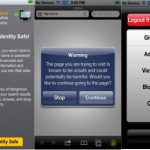
Symantec on Tuesday launched the public beta of Norton Identity Safe, a free password management application for mobile and desktop devices. The software was originally a feature built into Norton Internet Security and Norton 360, and is now available for the first time as a standalone application.
Norton Identity Safe beta is designed to be a simple and secure way for users to store and manage their logins and passwords for all their different applications and services. With the application installed, the user only needs to remember their master password, and then they can launch any of their stored services. This login information can be synched across the users' different devices as well.
Google, Microsoft, Yahoo look to stop phishing attacks

A group of fifteen technology and email providers announced plans Monday that aim to curb the spread of phishing e-mails by making it more difficult for scammers to impersonate legitimate e-mails. The agreement calls for the use of preexisting standards to authenticate messages on a much wider scale than ever before.
Currently, PayPal is one of the few companies using the technologies, known as SPF (Sender Policy Framework) and DKIM (DomainKeys Identified Mail). Its work only has limited effectiveness though as so far it only has working partnerships with Yahoo and Google.
McAfee releases new security suite for Android, BlackBerry, x86droid

Intel may still be a rookie in the mobile space, but its security software subsidiary McAfee has got Intel's Android project covered. On Monday, the security company launched its second-generation McAfee Mobile Security suite for smartphones and tablets, which includes compatibility with Intel-based Android devices.
The $30 subscription-based application supports Google Android 2.1–4.0, BlackBerry 4.5, 4.6, 4.7, 5.0, 6.0, 7.0, and S60 3rd and 5th Edition, as well as Symbian ^3, and provides a suite of anti-virus, anti-spyware, and anti-theft, tools for mobile devices.
Symantec tells users to stop using pcAnywhere amid security breach

It's not often when a developer tells you outright not to use its software, but that is exactly what Symantec is forced to do in light of the theft of source code. Last month, Hacktavist group Anonymous bragged that it had possession of code that powers several applications, including Norton Antivirus Corporate Edition, Norton Internet Security; Norton SystemWorks and pcAnywhere.
Symantec says the code theft originally occurred in 2006. While at first security experts believed the theft to only be a black eye for the company's reputation, it now appears that the incident is far more serious. Symantec recommends users of pcAnywhere stop using the software immediately until there is a solution to address any security concerns.
What are the top domains used for spam?

It's likely that most will expect domains belonging to popular web-based e-mail services are at the top of the list for the mountains of spam we receive everyday. That's not the case: the most common spam domains according to Chelmsford, Mass.-based security firm AVG are social networks.
Facebook tops the list at 7.3 percent, followed by Twitter at 4.2 percent. Considering these are the top two social networking sites, that's not too surprising. How about Google+? Hard to say since it doesn't have its own domain, nor did google.com appear in the list AVG supplied us. LinkedIn also appears, but way down in eighth at 1.5 percent of all spam.
The top-10 web security threats you should avoid
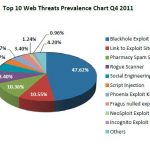
The compromised website is still the most effective attack vector for hackers to install malware on your computer with 47.6 percent of all malware installs occurring in that manner, says security firm AVG. Another 10.6 percent are tricked into downloading exploit code -- many times, without their knowledge -- by clicking on links on pages to sites hosting malware.
The Chelmsford, Mass. company announced its findings as part of a broader study of threats detected by its software. It also found that faked pharmacy sites are a popular attack method, seen in about 10.4 percent of all attacks.
© 1998-2026 BetaNews, Inc. All Rights Reserved. Privacy Policy - Cookie Policy.