Panda Cloud Antivirus makes firewall social

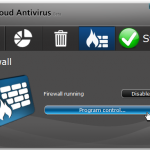
Panda Security has released Panda Cloud Antivirus 1.9.1 Beta, a preview of its forthcoming 2.0 release. The beta sees Panda’s lightweight free cloud-based antivirus tool add firewall protection for the first time.
The new firewall is community based, which means it’s capable of detecting known processes and settings appropriate levels of protection for them without bothering the end user with a pop-up alert. The new firewall is visible from a new tab on the Panda Cloud Antivirus interface.
Next to cyberattacks, well-meaning insiders pose greatest security risk


Businesses are concerned about security, but which are the biggest and what are their strategies. Symantec explores these questions in their 2011 State of Security Survey.
Symantec commissioned Applied Research to conduct the survey in April and May of 2011. Thirty-three hundred organizations worldwide, across a range of industries and sized from 5 employees to many thousands were surveyed. Sixty-five percent of the organizations had 500 or more employees, weighing the survey heavily towards large organizations in terms of total seats.
Google, Microsoft block DigiNotar for fake SSL cert, company halts all certification sales


Users of some of Google's SSL-encrypted services in Iran were the subject of man-in-the-middle attacks earlier this week, the search giant reported. The attacker was using fake SSL certificates from certification authority DigiNotar who does not officially certify Google sites. Google and Microsoft promptly blocked DigiNotar's certificates, and today it has suspended its sale of SSL and EVSSL certificates.
"We plan to disable the DigiNotar certificate authority in Chrome while investigations continue. Mozilla also moved quickly to protect its users," Heather Adkins, Google Information Security Manager said yesterday. "This means that Chrome and Firefox users will receive alerts if they try to visit websites that use DigiNotar certificates."
Anti-Malware 6 beta is 450% faster

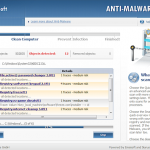
Austrian security company Emsisoft has launched a public beta test of Anti-Malware 6, its flagship antivirus tool. And the focus this time around has clearly been performance, with the company claiming a new multi-core optimised scanning engine is on average 450-percent faster than the previous version.
The next benefit comes from a new scheme for identifying trustworthy files. These then don’t have to be scanned in the future unless they’ve changed, providing another speed boost. And, the company claims, further optimizations have “drastically” reduced Anti-Malware’s impact on the boot process.
Prototype of first virtualized ATM: Diebold calls it 'a game changer'

Diebold, the United States' largest manufacturer of Automated Teller Machines (ATMs) will be unveiling its prototype of a virtualized ATM today, the first day of the annual VMworld conference in Las Vegas.
Like most of the products coming out of VMworld this week, the virtualized ATM was developed jointly by Diebold and VMware. Unlike the traditional standalone ATM model, the virtual ATM has no onboard computer driving it, and it is effectively a thin client tied to a central management server.
Trend Micro Titanium 2012 targets encrypted malware
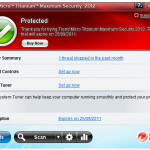
Internet security company Trend Micro Incorporated has released its Titanium 2012 range of products, which have been extended with a variety of new features.
Malware detection has been improved with some interesting new technologies. Perhaps the most useful of these allows Titanium 2012 products to detect applications that have been packed (encrypted), in an effort to bypass your defenses; once the file has been unpacked, it’s then scanned in real time using file-based signatures, which greatly improves the chance of detection.
Do a good deed today, uninstall Windows XP

Let's compare the major computer operating systems at the moment. We have Windows XP, Windows Vista and Windows 7. We have various Linux distributions, and we have Mac OS X.
Of these, obviously Windows XP has the weakest security, by far, and Windows XP has the biggest marketshare, too. Globally close to half of all computers still run XP.
Chinese government documentary shows attacks against US sites

It was probably a slip-up and appears to have been taken down, but a Chinese documentary on cyber-warfare shows attacks being performed against US-based Internet properties of Falun Gong and other organizations banned in China. Thanks to F-Secure for passing this on, although they appear to have picked it up from the Epoch Times.
The video was entitled "Military Technology: Internet Storm is Coming" and was published on the Government-run TV channel CCTV 7, Military and Agriculture (at military.cntv.cn). According to F-Secure the specific URL was:
Sniff out banking Trojans with DeBank

Security company Damballa announced this week that the source code for SpyEye, one of the most dangerous banking Trojans around, has been leaked online. Which is good for researchers, as they can better understand how it works. But it also means that a malware kit that used to cost more than $10,000 is now available for free, so is expected to become an even more pervasive threat in the next few weeks.
No need to panic just yet, though, as coincidentally Finnish security company Fitsec has just released DeBank, a portable tool that can detect the presence of all five major banking Trojan families on the target PC: SpyEye, Zeus, CarBerp, Gozi and Patcher.
Anonymous posts cops' personal data, puts their lives in danger


Hackers have again disclosed the personal details of police officers, this time in response to BART's decision to cut off cell phone and Wi-Fi service in its metro stations and tunnels to quell a planned anti-police protest. The decision by hacktivist group Anonymous calls its motives again into question, and could put these police officers at risk.
Data disclosed includes names, home addresses, email addresses and passwords to the site of the BART police union; 102 officers in total had their information disclosed, and the hack has taken the organization's website offline.
Anti-malware vendors unite to fight cybercriminals

I travel a lot. One day I might be in Australia, next day Japan and then off to the United States. Why such a hectic schedule? It's all about how the antivirus industry cooperates. I've been in meetings. Specifically, I've been in meetings with our competitors.
I've now been working with computer viruses for more than 20 years. During this time I've come to realize that the antivirus industry is quite unique in the way direct competitors help each other. It's not publicly known, but antivirus companies like F-Secure, Symantec, McAfee, Trend Micro and others help each other out all the time.
Wombat updates service that lets you defensively phish your own employees

Rather than provide security alerts when suspicious messages arrive in employee inboxes, Pennsylvania-based Wombat Security Technologies trains employees by actively trying to phish them.
Tuesday, Wombat announced the second version of its PhishGuru anti-phishing training service now extends to mobile devices including iOS and Android-based devices.
NSS tests claim IE9 blocks 96% of social engineering attacks, Firefox 8%

Three months ago, Microsoft published some statistics pulled from Internet Explorer 9's SmartScreen Filter anti-phishing and anti-malware tool which led the IE9 team to conclude that the browser cuts malware threats by 95%. Today, research firm NSS Labs released a study that backs up Internet Explorer 9's internal statistics, and gives IE9 a block rate of 96.2%, putting it far ahead of Chrome 12, Firefox 4, Safari 5, and Opera 11.
NSS used the same "live testing" methodology it debuted in 2009, and has used for bi-annual tests since that time. In addition to traditional threat detection rates, it uses a metric called "time to defense" which measures the time between when a security vendor first classifies a potential new threat and when protection to that threat is added to consumer products.
Why isn't Apple protecting iTunes/App Store users from purchase fraud?

John Gruber and MG Siegler may deny it, but there is massive fraud going on through iTunes and the App Store. Apple's response, or lack of it, is the first problem. Apologists are the second.
I'm a big fan of brand or product enthusiasts. They're the measure of a company's success and the best marketers. But enthusiasts also get in the way by their insistent denial, when they defend a company at fault. The worst-case scenario is when the deniers are highly influential writers like Gruber, who writes for himself at Daring Fireball, and TechCrunch writer MG Siegler, who also has personal blog Paris Lemon. Both men are unabashed Apple apologists.
Beta This! Symantec tests new security software for Android


Security software is not something that is generally associated with mobile devices such as phones, but the open nature of the Android platform means that viruses are a real threat, just as for desktop computers. Security firm Symantec is only too aware of this and has released a beta version of Norton Mobile Security that includes not only virus protection, but also other security features such as location locating and remote wiping.
On the virus protection front, any files you download or updates you install are scanned for signs of infection before they can cause any harm, and SD cards can be automatically scanned when you insert them. This in itself is comforting, but there are plenty of other mobile specific security features that will be of interest to anyone looking to safeguard their phone and the data it contains.
© 1998-2026 BetaNews, Inc. All Rights Reserved. Privacy Policy - Cookie Policy.