BitDefender 2012 improves malware detection and removal


BitDefender today released its 2012 family of security suites, which have been enhanced with a range of new and interesting features.
A new monitoring tool tracks process behavior, for instance, helping to detect new and unknown viruses. Integrated cloud services deliver a faster response to new outbreaks. And the new Scan Dispatcher runs scans only when it's idle, so improving security without impacting on your overall system performance.
iOS security hole much easier to exploit than first thought


Apple may have thought an update released Monday to fix issues with security certificates wasn't a big deal, but security researchers disagree. The flaw is easy to exploit thanks to an update to a publicly available application that can snoop on the data stream of iOS devices.
That application is called SSLSniff. An update to the application also released Monday allows it to now intercept secure communications of unpatched iOS devices.
Tough luck Symantec, McAfee, Trend Micro, IBM, CA


The security software market is undergoing dramatic changes, says, Gartner, which released data for 2010 yesterday. Twenty-ten? Why'd it take so long? Gist: The five companies controlling the market have lost dramatic combined share compared to four years earlier. Get this: Microsoft isn't given as a reason.
I call out Microsoft because its entrance into the security software market seemed sure to sap longstanding vendors, or so some claimed five years ago. The company gives away for free products like Security Essentials, and its choosing to compete with longstanding partners was controversial. But as I explained in December 2006, Microsoft needed then and still needs now to protect Windows users from hackers and bot herders.
Getting real: Apple issues second iOS security patch in 10 days

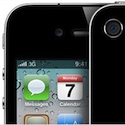
Mobile security issues are no longer the next big thing. The threats are here, and vulnerabilities could be present in your pocket right now.
Apple has released the second security update to iOS 4.3 in just over a week. While the last update addressed a vulnerability to maliciously crafted PDF files, this update fixes a security issue with certificate validation.
The 2011 Pwnie nominations are in!


The premier event on the software vulnerability research calendar is the Pwnie Awards ceremony (it's pronounced "pony"). The 2011 nominees include critical vulnerabilities in Microsoft ASP.NET, iOS, Google Chrome, Java, the Linux kernel, and an award for special achievement in insecurity to Sony.
Read the nominations page for the full list. Here are my selections:
Anonymous claims NATO hack, withholds pilfered information

Hackers with the group Anonymous claimed Thursday that they had hacked into the servers of the North Atlantic Treaty Organization (NATO). However, it wouldn't release much of the gigabyte of information it stole because doing so would be "irresponsible," seemingly indicating some of the data may be sensitive to security interests.
"Yes, #NATO was breached. And we have lots of restricted material," the group tweeted over its @AnonymousIRC account. "In the next days, wait for interesting data :)"
Anonymous and LulzSec fire back at FBI in war of words

Anonymous and LulzSec issued a joint statement Wednesday, firing back at FBI director Steve Chabinsky over his comments to NPR that Tuesday's arrests of 14 hackers associated with the groups was meant to send a message that "chaos on the Internet is unacceptable." The response strikes a markedly political tone.
Posted to Pastebin, the statement accuses governments of lying to their citizens and "dismantling their freedom piece by piece," governments conspiring with corporations and wasting taxpayer money, and lobbyists having too much control over day-to-day business "and corrupt them enough so the status quo will never change."
Google to alert users of possible malware infection
Google's engineers say they have noticed unusual patterns of activity on its search engine which has given it a way to detect a certain type of malware. As a result, the company has altered the code for its search engine to place a warning at the top of the search results that a computer has been infected.
The malware apparently sends a small amount of traffic through a proxy. The company believes that a few million PCs may be infected, and since launching the feature Tuesday has warned "hundreds of thousands" of its users to possible infection.
FBI raids homes, makes arrests in connection with Anonymous hacks
At least a dozen individuals were arrested early Tuesday as the FBI expanded its investigation into the hacking group Anonymous. In conjunction with these arrests, raids were carried out in three homes -- two in Long Island, N.Y. and the other in Brooklyn, N.Y. -- as well as locations in California.
The FBI was not commenting on the raids directly but sources told Fox News that the raids were related to the federal government's widening probe of the activities of Anonymous. Arrests were made in California, Florida, and New Jersey. Charges against the detained individuals were not specified.
LulzSec livetweets attack on Rupert Murdoch's news empire

Mischievous hacker group LulzSec on Monday repeatedly attacked websites belonging to international media conglomerate News Corporation, calling it "Murdoch Meltdown Monday."
At 5:40pm EST, LulzSec announced on Twitter that it had "owned" the UK news outlet The Sun, and replaced the front page with a fake one which proclaimed that News Corp. Chairman and CEO Rupert Murdoch was found dead.
After getting booted from Google+, Anonymous announces its own social network
Responding to Google's ban of +YourAnonNews on new social network Google+, "hacktivist" group Anonymous and Presstorm Media began discussing the possibility of a new social network called AnonPlus (or Anon+).
"This project is not overnight and will take many of those out there who simply want a better internet," the site's landing page says. "We will not be stopped by those looking to troll or those willing to stop the spreading of the truth. One thing i would like to point out that this project is for ALL people not just anonymous, this idea is a presstorm idea and only takes the name anon because of the Anonymity of the social network."
Apple patches, does not acknowledge, iOS malware vulnerabilities
Friday, Apple released an update to its mobile operating system (iOS 4.3.4) which patches a couple of vulnerabilities that left a door open for malware infections on the iPad, 3rd and 4th generation iPod touch, iPhone 4, and iPhone 3GS.
Apple's update describes the CoreGraphics vulnerability as "A buffer overflow…in FreeType's handling of TrueType fonts. Viewing a maliciously crafted PDF file may lead to an unexpected application termination or arbitrary code execution."
Microsoft adds an ounce of hacking prevention to Hotmail
Microsoft introduced a new feature within Hotmail on Thursday that it hopes will assist the company in detecting compromised accounts, as well as prevent users from locking their accounts with passwords that are easily guessed by attackers. The company's thinking is that you will know your friend's account was hacked well before Microsoft would.
"When someone's account gets hijacked, their friends often find out before they do, because the hijacker uses their account to send spam or phishing email to all their contacts," Hotmail group program manager Dick Craddock said.
Bad, but inevitable: The consumerization of IT is accelerating

Everyone, led by Vice President Whatshisname, wants to use their iPhone on the corporate network. Don't IT security people have enough problems? But the onslaught of unsecurable consumer devices in the enterprise is probably unstoppable.
A new study by IDC sponsored by Unisys looks at the problem of consumer devices invading the enterprise. The authors of the study come out of it upbeat, but it scares the bejeezus out of me. Put simply, these devices -- by which I basically mean those running iOS or Android -- were not designed to be secure and manageable. There are efforts to make them secure and manageable, but these are, generously-construed, version 1.0 efforts. It's obvious to me that these devices will create many severe security problems for enterprises, but the forces of consumerization cannot be stopped. Too many people want to use them, security be damned. Even the White House got them.
The 10 most dangerous people on the Web

Romanian security company BitDefender on Wednesday released statistics from its analysis of more than 25 million spam messages, which reveal the most common celebrity names used to entice users to view junkmail.
1. Jay Leno
2. Madonna
3. Cameron Diaz
4. Barack Obama
5. AC/DC
6. Stephen King
7. George Lucas
8. Kenny Chesney
9. Howard Stern
10. 50 Cent
© 1998-2026 BetaNews, Inc. All Rights Reserved. Privacy Policy - Cookie Policy.