Spanish cops ask for trouble, say they've nabbed 3 Anonymous hackers


Spanish national police have arrested three individuals responsible for hacking Spanish banks BBVA and Bankia, Italian energy company Enel and the governments of half a dozen different countries in Europe, South America, the Middle East and Africa, and Oceania. Officials believe the three men were members of Anonymous, a quasi-hivemind "hacktivist" group that has been blamed for the repeated attacks on Sony's PlayStation Network.
The three men were arrested in Barcelona, Almería and Alicante after they attempted to carry out a DDoS attack on the websites of Spain's two main political parties as well as the Spanish parliament on the eve of election day. The server they used to orchestrate these attacks, as well as ones against the website of Spain's central election commission and the Catalonian police force, was confiscated.
Ex T-Mobile UK workers fined for stealing and selling customer info

The pair of T-Mobile UK employees who stole confidential subscriber data and sold it to a rival wireless company in 2008 were hit with £73,700 ($121,000) in "fines and confiscation costs" this week as a part of their hearing at Chester Crown Court (Case# T20100382), if the fines are not paid, the men face up to 18 months in prison.
The former employees, David Turley and Darren Hames, pled guilty last year to multiple violations of Section 55 of the UK's Data Protection Act of 1998. This section of the act makes it a criminal offense to "knowingly or recklessly obtain or disclose personal data or information without consent of the data controller."
Where in the world are iTunes hack victims? [Map]

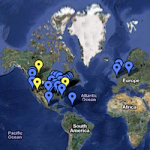
View iTunes Hack Reports in a larger map
It all began last Wednesday with a startling discovery. I noticed mysterious charges on iTunes that I didn't make. Someone hacked my account, and I told my story here on Betanews. I didn't realize until after the e-mails began pouring in the next day from readers that I may have stumbled onto something. Some readers wrote in and told us they had experienced something much the same, which we shared with you.
Do your friends call you when the PC is blooey? WebTools can help


As a knowledgeable PC user, experienced in the ways of Windows, you're probably used to helping out your friends with their various computer issues. You can't rely on them having the security or diagnostics programs you'll need to solve their problems, of course -- so when you're next off on a computer support mission then it could make sense to bring along a portable troubleshooting toolkit of your own. And WebPost Tools is a good place to start.
If you suspect malware infection, for instance, then the program allows you to download avast! Free Antivirus, Malwarebytes Anti-Malware, SUPERAntiSpyware or Spybot-Search&Destroy at a click. Or, if they're installed already, then a series of buttons give you easy access to the program you need.
iTunes hack goes global, new affected games identified
As coverage of the apparent hack of the iTunes Music Store expands, so have the reports from readers. The newest round of reports indicate that the issue is not limited to the US: Betanews has been able to identify victims in at least five foreign countries. Worse yet? It's no longer just Sega's Kingdom Conquest anymore: several other games have now been identified. Betanews first reported about the spreading hacks one week ago.
To date, reports have been received primarily from the US. However, since then reports have been received from Britain, Ireland, and Germany. Betanews has also been able to source reports through its investigation to New Zealand and Canada as well. Since the reports are not centered to one particular region per se, it's likely this has become a worldwide problem for Apple.
Sound the ZoneAlarm -- Extreme Security is back in spiffy 2012 edition

It has been 18 months since Check Point released ZoneAlarm Extreme Security 2010 -- and as it didn't make much impact, and there was no 2011 release, you might have thought the company had given up on security suites altogether.
But you'd be wrong, though. It turns out ZoneAlarm was simply working on a much more interesting Extreme Security 2012 edition, released today, which comes packed with essential functionality.
Beta this! Android security software from BitDefender and ESET


The more popular and sophisticated a smartphone becomes, the more susceptible it is to malware, fraud and other personal attacks. Android is no exception, and two respected security vendors have dipped their toes in the market with two new betas offering protection for Android-based devices.
Both BitDefender Mobile Security and ESET Mobile Security are currently available for free testing as public betas through the Android marketplace. Both currently offer anti-malware protection and a Security Audit tool, which allows the user to quickly see what permissions have been granted to applications, making it possible to quickly highlight potential privacy concerns.
Shields down -- IPv6 is not ready for attack

Get ready folks for the Information Superhighway of the future, one with 2128 lanes.
It's World IPv6 Day, a day when we're all supposed to check our readiness for the next version of IP, or Internet Protocol, the Internet Layer protocol of the Internet and almost all networks these days. IPv6, of course, is an old story, since it was long ago that we recognized the address space of IPv4 would run out, and we're almost there. The IPv6 address space, as I have written before, is so large that we may just take it with us to the first few planets we colonize.
Get Google Chrome 12 now!

Google has updated its popular open-source browser Chrome to version 12, introducing a number of notable features. Of most importance is a new extension to the Safe Browsing feature, which now screens downloaded files for known malware in addition to warning against potentially malicious or phishing websites.
Privacy has been bolstered ,too, with Chrome now able to manage and delete Flash Player's equivalent of cookies (Local Stored Objects) directly within the browser itself. LSOs are now listed alongside cookies when clicking the Content Settings button followed by All cookies and site data in the Privacy section of Chrome's Options dialog.
Kaspersky releases Anti-Virus and Internet Security 2012

Russian security company Kaspersky has dropped the beta tag from Anti-Virus 2012 and Internet Security 2012 products, launching both today. While there are no revolutionary changes on offer, Kaspersky has provided more than enough general improvements and enhancements to justify giving the programs a closer look.
Significant low-level changes sees both Anti-Virus and Internet Security 2012 offering strong protection even earlier in the boot process, for instance, making it harder for rootkits to modify the operating system, and blocking attempts by malware to disable the antivirus engine.
Sony's Tretton apologizes for Playstation Network outage

At Sony's afternoon E3 keynote, President and CEO of Sony Computer Entertainment of America (SCEA) Jack Tretton issued an apology to third party partners, retailers and consumers for the massive Playstation Network outage.
To the media, who profited a great deal off of the bad news, Tretton said "you're welcome."
iTunes hack widespread, and Apple appears to know about it

Since Betanews' original report last Wednesday, dozens of readers have e-mailed their own reports of account issues, most dealing with Sega's Kingdom Conquest. Some of these initial reports were detailed in a followup to our original piece, but we have received more since then.
(Betanews is still actively collecting reports. If you've been hacked, whether it's Kingdom Conquest or not, we'd like to know. Send your reports to ed at edoswald dot com.)
LulzSec turns its hacking sights on Nintendo, FBI

Fresh off a hack of the Sony Pictures website last week, hacking group LulzSec turned its attention elsewhere. FBI related websites were attacked on Friday night, and it was revealed this weekend that the US web servers of Nintendo had been hit by the group several weeks ago.
In the Nintendo hack, LulzSec took no information. "Re: Nintendo, we just got a config file and made it clear that we didn't mean any harm. Nintendo had already fixed it anyway.
Hijazi claims that LulzSec attempted to extort money from Unveillance in exchange for them not publicly releasing his information, although the hacking group claimed that Hijazi wanted LulzSec to hack his competitors. Hijazi maintains that no sensitive information was disclose about his company's anti-hacking efforts, since the e-mails were of a personal and work nature.
Will Cyber World War I be outsourced?

Earlier this week, Google claimed to have uncovered a password-stealing campaign that originated from Jinan, China, and targeted senior U.S., officials and other prominent individuals. The Chinese government later denied involvement. The attacks' origins aren't being disputed so much as who is responsible.
The most famous cases of alleged "cyberwar" have some common characteristics that are at the heart of the problem. It's never clearly the governments conducting the attacks and it's plausible that outside actors are responsible. This leads to the "attribution" problem of cyberwar, that it's never crystal clear where retaliatory measures should be targeted.
New version of MacDefender scareware takes name of legit product MacShield

MacDefender, the fake antivirus malware targeting Mac OS users that stole headlines in the month of May has changed names yet again. It can now be found under the name "MacShield."
The fake antivirus program, best classified as scareware, has gone by five different names since it was discovered: MacDefender, MacProtector, MacSecurity, MacGuard, and MacShield. The premise of the malware and its UI remain unchanged from version to version, according to security companies Intego and ESET.
© 1998-2026 BetaNews, Inc. All Rights Reserved. Privacy Policy - Cookie Policy.