Mac App Store already a target for hackers and piraters


Just a day after Apple launched the Mac App Store to generally positive reviews, reports that the copy protection may have been hacked have begun to surface. In addition, several developers may have improperly secured their apps, making the pirator's job that much easier.
A group calling itself "Hackulous" said that it has developed a program called Kickback which circumvents the DRM methods used by Apple. However, the group is holding off public release of the application until the Mac App Store builds a larger library.
4chan victim of DDoS as FBI investigates role in PayPal attack

Users of 4chan may have gotten a taste of their own medicine after the site was knocked offline by a DDoS attack from an unknown origin early Thursday morning. The attack came amid an FBI raid on a Texas collocation facility as part of a wider investigation into an attack on PayPal.
4chan may have been indirectly involved in the attack, which has also been blamed on a group that calls itself "Operation: Payback." Operation Payback is also believed to have involvement in attacks on Visa and MasterCard. In all cases, the attacks were in response to the suspension of accounts associated with WikiLeaks.
Chinese Trojan discovered in Android games


An Android-based Trojan called "Geinimi" has been discovered in the wild, mobile security company Lookout now warns. The Trojan is capable of sending personal information to remote servers and exhibits botnet-like behavior, the security company says.
Geinimi originated in China, and is being distributed inside applications and games downloadable in third-party Android app stores. Once the application is launched on the user's smartphone, the trojan collects location data, as well as the device's IMEI and IMSI numbers, and a list of all the apps the user has installed on his device. It then attempts to contact a remote server every five minutes to send this information.
As NFC enters the mass market, so too should NFC security

All the stars are in line, and tech industry experts now expect an explosion in the close-range wireless communications technology known generally as Near Field Communicaitons (NFC.) But is it as secure a method of sharing as it could be? According to one company the answer is yes, but cost has been a prohibitive factor up to now.
This week, market research firm iSuppli predicted that the market for NFC chips will grow by a factor of four over the next three years, and NFC chipmaker NXP Semiconductor recently made a prediction that 50 million NFC-enabled consumer devices will enter the market in 2011 alone.
Pro-Wikileaks group using Botnet to retaliate against detractors

A group that is using the name "Anonymous" is using a voluntary botnet in order to take down websites that interfere with the operations of Wikileaks. The group has taken responsibility for a denial-of-service attack on Visa on Wednesday and an attack on competitor MasterCard earlier in the week.
The two credit card firms had suspended Wikileaks' account, as did PayPal over the weekend. That company was also the victim of a DDoS attack, which Anoymous has also taken responsibility for. The creation of this botnet could be seen as the first salvo in what is sure to be an increasingly vicious war between the site's supporters and those looking to shut the site down.
Facebook User IDs were sold to data brokers, company admits

In yet another black eye for social networking site Facebook, the site disclosed Friday that several developers were selling user data to a third-party. User IDs, or unique identifiers given to every registered member of the site, allow an application to look up a user's public personal information.
As a result of the discovery the offending developers have been placed on a six-month suspension. While not identifying those at fault, the company did say at least one data broker -- RapLeaf, Inc. -- came forward to assist in the investigation. It was not immediately clear if RapLeaf was the purchasing broker, although it agreed to delete any user IDs in its possession.
In the name of privacy, Facebook revamps groups, dashboard, data portability

As more people put more sensitive information on Facebook, it's becoming increasingly important to give users better ways to control who sees that data and how it's used. At a press conference in Palo Alto today, Mark Zuckerberg and company unveiled three big enhancements to the way users interact with their Facebook accounts, with the underlying theme of privacy.
First, users can now download everything they've ever posted on Facebook, including all correspondences between friends, all photos and video they've been tagged in, and their friends list as a single zipped file.
Microsoft Security Essentials free anti-malware coming to small businesses, too
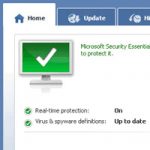
Microsoft on Wednesday announced it will be making its free Security Essentials product available to small business in a 10-pack of licenses in October. The anti-malware product has thus far been aimed at the consumer market, and has garnered quite a bit of recognition as a high quality free software antivirus.
This new availability is thanks to a change in the software's end user licensing agreement (EULA), which now lets business customers put Security Essentials on individually managed PCs.
Security hole on Twitter.com exploited, links forced on mouseover

Though Twitter recently launched a newly redesigned site, users of the popular microblog are advised to use only third-party Twitter clients Tuesday morning to avoid a newly-exploited security hole.
The hole comes from the onMouseOver JavaScript code, which lets websites launch in your browser simply by mousing over a link in your Twitter feed. So far, the flaw has been used to redirect users to third-party sites, to pop up unwanted messages, and to have messages retweet themselves.
Alleged HDCP 'master key' leaked, HDTV copy protection may be dead

The entertainment industry may have encountered another setback in its efforts to protect its content Monday as a hacker has reportedly cracked high definition content protection, more commonly referred to as HDCP. A supposed "master key" has begun to make its way around the Internet, although its validity has yet to be confirmed.
With the master key, the system no longer works, as hackers would now be able to create their own source and sink keys, both of which are needed to playback content on HDCP-protected devices. Thus a perfect connection could always be ensured between transmitting and receiving devices.
HP second acquisition target is security firm ArcSight

HP said Monday that it had agreed to acquire ArcSight, a security software maker, for $1.5 billion. The acquisition is the company's second since former CEO Mark Hurd resigned amid controversy last month, and appears strategic as it follows a pattern of larger technology conglomerates adding security technologies to their product portfolios.
It is not known whether or not HP ran into competition with other bidders, as the company would not comment on the process in a conference call announcing the deal. HP and Dell battled over virtualized storage company 3PAR last month, pushing the final purchase price to $2.4 billion, more than two times Dell's initial bid for the company.
Symantec releases Norton Internet Security 2011 and Norton Antivirus 2011

Symantec Wednesday launched the latest versions of its flagship security products: Norton Antivirus 2011 and Norton Internet Security 2011. As it has been for the last two years, Symantec's focus remains on keeping the Norton software quick and lightweight, while harnessing the power of the crowd and the cloud.
For this version of the Norton software, Symantec has added 100 new content updates, which includes new versions of both the software's behavioral engine, and the file-based heuristic engine. The cumulative effect of the improvements were recently shown off by software benchmarking company Passmark; which ranked a beta version of Norton Internet Security 2011 the best performing security software package for Windows 7 Ultimate (64 bit.) The company timed booting, scanning, browsing, IE launching, and installation, measured memory usage at idle, footprint, registry keys added, and network throughput in a total of 30 different tests.
40 Windows apps affected by critical security flaw, researcher claims

A Texas-based researcher claimed he had discovered that about 40 different Windows apps, including the Windows shell, suffer from a critical vulnerability that could open up users to attacks by hackers. The flaw was originally discovered in iTunes for Windows, and was patched by Apple four months ago with iTunes 9.1.
Rapid7 chief security officer HD Moore detailed his findings to Computerworld in an interview on Wednesday. He said a wide range of applications are affected, and it was found while looking into another flaw involving Windows shortcuts, which Microsoft patched in an emergency update.
Intel seeks to change cybersecurity with $7.6B McAfee acquisition

Intel Corporation Thursday morning announced that it will acquire security software and management company McAfee Inc. for $7.68 billion in cash. Intel says the move reflects the changing security climate as more non-PC devices connect to the Internet, like cars, TVs, and medical equipment.
"With the rapid expansion of growth across a vast array of Internet-connected devices, more and more of the elements of our lives have moved online," said Paul Otellini, Intel president and CEO. "In the past, energy-efficient performance and connectivity have defined computing requirements. Looking forward, security will join those as a third pillar of what people demand from all computing experiences."
Intel says there needs to be "a fundamentally new approach involving software, hardware and services," for the increasingly connected world.
Android growth spurs new mobile malware, SMS Trojan discovered
Security researchers at Kaspersky Lab announced the first malware for the Android operating system to be classified as a Trojan-SMS, the most widespread type of malware on mobile phones.
The malware is disguised as a media player application with the standard Android .APK file extension. When the 13KB file is installed, the mobile device will start to send SMS messages to premium numbers which incur charges on the user's account.
© 1998-2026 BetaNews, Inc. All Rights Reserved. Privacy Policy - Cookie Policy.