


Android threats grow as attackers follow the money


Mobile malware is growing into a profitable business according to the latest Mobile Threats Report from Juniper Networks. Not only is mobile malware growing at a rapid rate its writers are behaving in an increasingly businesslike way when planning their attacks and distribution strategies.
Of the malware detected by Juniper's Mobile Threat Center, 92 percent is aimed at Android thanks to its large share of the market. This is a massive increase over the 24 percent Android accounted for in 2010. Attackers are also seeking to streamline their distribution by using loosely-regulated, third-party app stores. Some three out of five of these originate in China or Russia.
Access management goes self-service with Tufin Security Suite

Policy management specialist Tufin Technologies launches the latest version of its Security Suite for business networks with a number of new features. Version R13-2 has a self-service portal for connectivity requests, enhanced device support and increased automation of security-related policies.
Tufin Security Suite is made up of three modules, SecureApp which manages the network connectivity and security requirements of applications, SecureChange which looks after change management and risk analysis, and SecureTrack which automates policy management for network infrastructure.
Microsoft trumpets next generation enterprise solutions

In a keynote speech to the TechEd Europe conference in Madrid, Microsoft's Server and Tools Corporate VP Brad Anderson has announced the availability of preview versions of Windows Server 2012 R2, System Center 2012 R2 and SQL Server 2014.
Writing on the company’s blog Anderson says, "These products are going to have a massive impact on companies around the world -- and IT pros are going to see the traditional boundaries between datacenters vanish and a true hybrid cloud emerge".
Microsoft and Oracle head into the cloud together

Microsoft has announced a tie up with Oracle that will allow customers to run Oracle software on Windows Server Hyper-V and in Windows Azure.
The partnership means that Oracle will certify and support its software -- including Java, Oracle Database and Oracle WebLogic Server -- on the Microsoft cloud platforms. The key elements of the deal are listed on Oracle's corporate blog.
UK government launches cyber security awareness campaign

As part of its National Cyber Security Programme the UK government has announced the first stage in a new £4 million awareness campaign. The campaign due to be launched in the autumn draws on expertise from various government departments and is led by the Home Office.
Bids are currently being invited from media, PR and creative agencies to produce a communications strategy to educate consumers and small businesses on the risks presented by cyber crime.
Pssst... Fastest enterprise hard drive launches (pass it on)

Seagate, working with IBM, has launched the fastest enterprise hard drive in the form of a 2.5-inch solid-state hybrid drive (SSHD). Oddly it sneaked this news out last week on the company's blog rather than trumpeting it in a press release.
The drive, for IBM System x servers, is based on Seagate's existing 600GB 2.5-inch drive spinning at 10,000 RPM with a 6Gb/s interface. It has 16GB of NAND flash storage and 128MB of cache on board.
The cloud has a ThousandEyes as new performance management tool launches
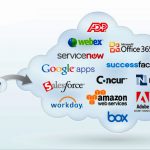
As enterprises adopt more cloud applications they’re becoming more reliant on data centers and systems which are outside their control. Performance management hasn't kept up with this trend as existing tools don't see what’s going on outside the corporate network and so can’t reflect the times when cloud apps are slow or down.
San Francisco based ThousandEyes has launched an answer to this problem with a tool that can recognize all of the layers involved and pinpoint where a problem lies. It can be set up as a Linux package or virtual appliance at multiple locations and is able to detect issues in real time.
Top SMBs use IT for SBE, OK?

A new report from Symantec shows that many small and medium businesses (SMBs) feel that good IT systems can give them a competitive advantage. It seems that confidence in IT can boost business success.
Using results from a survey of almost 2,500 companies the report has established an SMB IT Confidence Index designed to measure how confidently enterprises approach computing and divide them into three tiers. Top tier companies are far more likely to use IT as a strategic business enabler (SBE). These more technically confident SMBs are prone to invest heavily in computing infrastructure and are more inclined to invest in new initiatives like mobile devices and the cloud.
Growing popularity of OS X attracts cybercriminals

Security specialist Kaspersky is warning of the increased vulnerability of Mac systems to malware. It points out that there are now more than 63 million OS X users in the world and that since 2010 the number of antivirus signatures for Macs has increased more than six times.
The top five threats include becoming part of a zombie network via a compromised WordPress site, fake antivirus products like MacDefender and MacGuard, exploitation of software vulnerabilities, targeted attacks and network infections.
It's tough at the top for anti-virus products

Results of independent tests by AV-Comparatives looking at the real world protection offered by leading packages show that competition is as fierce as ever.
The tests use 569 real-world malicious URLs. 138 of these are blocked by a Windows 7 system with all its patches up to date, leaving 431 to be intercepted by security software. The tests use MS Security Essentials as a baseline providing a 95.4 percent level of protection. You can see the full results on an interactive chart but it’ll come as no surprise that it's all pretty close.
Sex and internet rank above food and shelter for 42 percent of UK men

Network products maker TP-LINK has released the results of a survey into the importance of the internet amongst UK consumers. It shows that reliable access to the internet is now among the highest priorities of many people.
Amongst men 42 percent rank sex and internet access as more important than shelter and food. Though this may well tell us more about British men than it does about the web. More interesting is that 51 percent of respondents say that thanks to internet access they've strengthened their friendships and a quarter say that it gives them an enhanced sense of belonging. However, only seven percent say that the web has brought a positive change to their love lives -- so much for all those online dating sites then.
Tech companies reveal details of NSA data requests

In the light of last week’s PRISM revelations the major tech companies have all been quick to deny that they allow the NSA direct access to their servers. But they have also said that they respond to lawful requests for data and have been revealing the numbers involved.
Apple says it received between 4,000 and 5,000 requests from US federal, state and local law enforcement agencies for customer data between December 1, 2012 and May 31, 2013. In its press release Apple says, "Regardless of the circumstances, our Legal team conducts an evaluation of each request and, only if appropriate, we retrieve and deliver the narrowest possible set of information to the authorities. In fact, from time to time when we see inconsistencies or inaccuracies in a request, we will refuse to fulfill it". Apple also says that certain types of data such as iMessage and FaceTime conversations along with Map searches and Siri requests are not retained in an identifiable form.
We see no threats, companies in denial over security

Network security specialist Lancope has released the results of a survey showing that 66 percent of large organisations said that either they hadn't experienced a security incident in the last 12-18 months or were unsure if they had.
Businesses face a constant stream of threats from the normal phishing and malware to more sophisticated, targeted attacks. But Tom Cross, Lancope's director of security research, says that it's very unlikely that none of these organisations experienced incidents during that time frame: "Any system you connect to the Internet is going to be targeted by attackers very quickly thereafter. I would assert that if you’re unsure whether or not your organisation has had a security incident, the chances are very high that the answer is yes -- and this is a significant problem".
New Myspace launches... Hello...? Is anyone there?

A funny thing happened when I checked my email this morning. I found I had a friend request from Myspace, something I haven’t had for a long time. Even funnier was when I clicked on it Myspace -- or at least Myspace as I knew it -- was gone. In its place was a new sleek, Modern UI meets Spotify, music-based site. A site that doesn't seem to do friend requests anymore either so it's lucky I got that email or I might never have stumbled on it at all (conspiracy theories on a postcard please).
Of course this really shouldn't have come as a surprise, around nine months ago my colleague Wayne Williams reported early news of the update with the headline New Myspace is gorgeous, but who will use it? Like everyone else though I’d read about a Myspace update and not deemed it worthy of brain space. So suddenly finding myself on the new site -- fresh out of beta -- was a bit of a shock.
Shifting software to the cloud could slash energy use

If all US companies were to move their core systems from in-house servers to the cloud the amount of energy used could be reduced by up to 87 percent a new report claims.
The research carried out by Lawrence Berkeley National Laboratory finds that if all the email, CRM and productivity software in the US were running in the cloud it would save 326 petajoules of energy. Just in case you were wondering a petajoule is around 278 gigawatt hours or the amount of energy you get from burning 34,121 tonnes of coal.
Ian's Bio
Ian spent almost 20 years working with computers before he discovered that writing about them was easier than fixing them. Since then he's written for a number of computer magazines and is a former editor of PC Utilities. Follow him on Mastodon
© 1998-2026 BetaNews, Inc. All Rights Reserved. Privacy Policy - Cookie Policy.