


Number of data breaches rises by 15 percent

The number of breaches and their severity are both growing, a new report by digital security company Gemalto is saying. Titled Breach Level Index, it says there has been 15 percent more data breaches in the first half of 2016, compared to the last six months of 2015.
A total of 974 data breaches were reported worldwide, amassing 554 million compromised data records, in the first half of 2016. It is also interesting that in more than half of cases (52 percent), the number of compromised records were not disclosed at the time of reporting. Looking specifically at the UK, there have been 61 breaches, most of which happened at the government sector (14). Finance and healthcare sectors were close second and third.
Businesses spend nearly $3 billion a year on mobile connectivity

The cost related to mobile connectivity through roaming, pay-on-demand Wi-Fi and free Wi-Fi is costing businesses in Europe and North America at least $2.91 billion every year. This is according to iPass, provider of global mobile connectivity.
The cost is high because, as the report puts it, mobile professionals have an "insatiable need for connectivity". When traveling and working on the go, they spend on average 6GB every month. The report has an interesting conclusion -- free Wi-Fi is not always as free as you’d think. These connections, being available to everyone, can often be slow, unresponsive and crowded. Business users are then stuck on these slow connections, which are hurting their productivity, which then reflects on the bottom line.
Oracle buys cloud security company Palerra

Oracle has announced that it will purchase the cloud access security broker (CASB) Palerra, making this the company's eight acquisition in 2016.
The deal was announced at the beginning of Oracle OpenWorld in San Francisco and the amount which the company is paying for Palerra has yet to be disclosed. Oracle made the decision to purchase the company for its Loric software product as it "protects and assures compliance of applications, workloads and sensitive data stored across cloud services".
Server sales are up, but revenue is down

New research has revealed that despite increased server sales, revenue has continued to decline for the companies responsible for manufacturing and shipping servers worldwide.
The analyst firm IDC brought this information to light in its new Worldwide Quarterly Server Tracker report, which covered server market share and revenue from April to June 2016.
DDoS attacks rarely strike businesses just once

A company is rarely attacked by a DDoS (distributed denial of service) just once. If it happens once, it will probably happen again, which is why constant preventive measures are required, if a company wants to keep their online services operational.
These are the results of a new report by Kaspersky Lab. Entitled Corporate IT Security Risks 2016, it says that one in six companies were victims of DDoS attacks in the past 12 months. The majority of those attacks were aimed against construction, IT and telecommunications companies.
Salesforce launches Einstein AI platform

Salesforce has announced the launch of its new Einstein artificial intelligence (AI) platform that has already been implemented into a number of the company's existing cloud services including Sales Cloud, Service Cloud, Marketing Cloud, Analytics Cloud, App Cloud, Commerce Cloud, Community Cloud and IoT Cloud.
The company has also announced that it has formed a new unit called Salesforce Research that will be exploring deep learning, natural language processing and computer vision. The new unit's aim is to improve Salesforce products and it will be led by the company's chief scientist Richard Socher, who is responsible for co-founding the A.I. startup MetaMind which Salesforce acquired earlier this year.
Ransomware is lucrative: Attacker's profits near $100 million

Hackers are increasingly targeting healthcare institutions with malware because of their poor cyber-security posture, reliance on legacy IT systems, third-party services and the need to access information as soon as possible in order to deliver great patient care. These are the conclusions released in a new report entitled McAfee Labs Threats Report: September 2016.
It says that hospitals paid almost $100,000 (£75,500) to a specific bitcoin account. In the first half of 2016, one "actor" (it could be a single hacker, but more likely a group) apparently received $121 million in ransomware (189,813 bitcoin), targeting various industries. This actor, according to the report, has had profits of $94 million in the first six months of this year.
Dell announces Latitude 13 3000 Series convertible laptop

Dell has announced a new hybrid device to help small businesses with tight budgets. The convertible laptop, a Latitude 13 3000 Series 2-in-1 comes with a few important features which budget devices usually lack, like the USB Type-C port or Windows Hello support. The new device, available now on Dell's online store, comes with a starting price of $699 (£530).
"Staying abreast of the latest form factors and solutions is critical in today’s competitive business landscape", wrote Raza Haider in a blog post, announcing the new device. "Specifically, the growth of 2-in-1 devices are revolutionizing the way workers perform day-to-day jobs, from data entry in the field, to visual design, virtual collaboration and any number of other tasks in the office and beyond".
HP launches new ProBook 400 G4 laptops
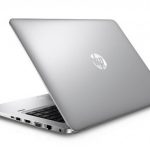
HP has announced a new series of laptops aimed for small business owners whose employees are style-oriented millennials. Truth be told, if you're a bit older, but would still like a fairly cheap, well-designed laptop, there's nothing stopping you from getting your hands on the new HP ProBook 400 G4 Series.
It comes with the latest seventh-generation Intel Core processor, or seventh-generation A-Series APUs from AMD. Its graphics are powered by the NVIDIA GeForce 930MX, and is paired with 16GB of RAM. It has full HD displays, USB-C ports, and enterprise-grade security. Most importantly, the company significantly improved its battery life, and promises up to 16 hours on a single charge.
European workers vulnerable to social engineering attacks

Hackers are using social media to gather information about their next victim. They use that information to form sophisticated strategies and deliver advanced threats into networks.
These are the results of a new Blue Coat Systems report, based on a poll of 3,130 workers in various industries in Great Britain, France and Germany. Key takeaway from the report is that user behavior has not improved much since last year. This year, 42 percent of respondents say they only accept friend requests from people they know.
The best of both worlds regarding storage and the cloud

It might shock you to hear that managing data has never been more difficult than it is today. Data is growing at the speed of light, while IT budgets are shrinking at a similar pace. All of this growth and change is forcing administrators to find more relevant ways to successfully manage and store data. This is no easy task, as there are many regulatory constraints with respect to data retention, and the business value of the data needs to be considered as well.
Those within the IT world likely remember (with fondness) the hierarchical storage management systems (HSM), which have traditionally played a key role in the information lifecycle management (ILM). Though this was once a reliable and effective way to manage company data, gone are the days when businesses can put full confidence in such a method. The truth of the matter is that things have become much more complicated.
How to plan for and recover from IT emergencies

Bugs in the software, mistakes in configuration files, even the infamous "fat finger" -- all are responsible for service outages at cloud-based services, data centers, enterprise networks, and any other IT installation, large or small.
There are just too many things that can go wrong. Even if an organization takes care of everything humanly possible, there are still the monkeys. That's a lesson the folks at KenGen, Kenya's electric company, have learned the hard way.
Ads drive most Internet traffic in Europe

With all the buzz and fuss over ad blockers and how they hurt the internet we know today, it's interesting to see just how much traffic these ads actually drive. As it turns out, more than you'd expect. According to a new report by Adobe Digital Insights, more than two thirds (68 percent) of all European traffic is driven by ads. General traffic is also growing. In Europe, more than half (54 percent) of sites grew their traffic in the last three years.
Also, mobile advertising is catching up. Personal advertising, an ads strategy which seems to be working quite nicely, is not as popular in Europe as it is in the States, the same report says. Personalized ads, such as direct emails or social advertising, accounted for 36 percent of new traffic for growing U.S. websites. In Europe, that percentage is at eight.
Time to learn Pig Latin, your devices are listening

While it’s convenient to turn lights on, lock doors, check humidity levels and monitor energy use in your home with your smartphone, those conveniences come at a cost; even something as seemingly harmless as monitoring calorie burn with a connected device can lead to a breach. Billion dollar companies are having a hard time shielding themselves against hackers, insider threats and data leakage, let alone a single device in your home.
When you register devices and tie them to your email account and address you are opening that information up to be invaded. Additionally, fitness trackers are revealing whether you have met your goals, coffee pots are recording how quickly you go through your favorite brew and thermostats are recording what time of day you are home. All of this information is valuable to companies because it can be sold to other businesses that can customize ads to fit the data you are inadvertently feeding them. Even the FTC has expressed concerns over what the Internet of Things will mean for the future of privacy and security.
IBM Cloud adds mobile security service

When it comes to corporate IT security, one of the biggest pain points is the mobile device. With almost every employee having one, and many bringing their own, the cyber-attack surface increases dramatically, putting corporate data at huge amounts of risk. Now, IBM is stepping into the game with a service of its own, which aims to protects mobile devices, via IBM Cloud.
The mobile-security-as-a-service, called IBM MaaS360, aims to help IBM’s clients address local data protection standards. It is currently in operation in the US, Germany and Singapore, with France and India already in the works. They will be followed by an "additional eight countries" planned for the next two years. IBM didn’t go into further detail, but we’re hoping the UK will be among them.
© 1998-2026 BetaNews, Inc. All Rights Reserved. Privacy Policy - Cookie Policy.