


Augmented Reality glasses set to become more popular than smartphones, says Augmented Reality promoter

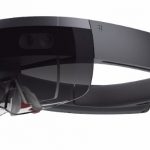
In the future, smart glasses (or AR, Augmented Reality glasses) will become more popular than smartphones -- although we are talking about the pretty distant future.
This unlikely sounding conclusion -- particularly given the recent demise of Google’s Glass Explorer project -- was reached by a report from Augmentedreality.org, although it is potentially somewhat biased in that it’s an organization "committed to advancing Augmented Reality".
Relying on Windows 10 security is risky for business
Microsoft’s latest operating system, Windows 10, unveiled earlier this month, places a fresh emphasis on corporate security. But there are already industry rumblings that over-reliance on Microsoft’s new security features could be dangerous.
Windows 10 is designed to run across the types of devices common to most business users: PCs, laptops, tablets and smart phones. In order to safeguard users’ privileged data, the new OS uses a two-factor authentication system utilizing biometric ID in the form of a finger or thumb print. Users can enroll a single device, such as a smart phone, which will effectively become their mobile credential. It will enable them to sign-in into all of their PC’s, networks, and web services as long as their smart phone is nearby.
How the cloud boosts business security

One of the most interesting aspects of the "Cloud Computing in 2015" infographic produced by QuoteColo is this: 94 percent of business managers state that security has improved after adopting cloud applications.
While reading this stat on an infographic is comforting, we want to explore the statistic more to discover why and how cloud applications have made businesses more secure. But before we can get into why cloud applications have made businesses more secure, we need to talk about the false illusion of porous cloud security.
6 technologies featured at CES that could disrupt businesses in 2015

Every year in Las Vegas, the Consumer Electronics Show (CES) is the ultimate place to see what’s new in technology. CES showcases new innovative and next generation technologies -- It’s a global platform for innovation where cutting edge technologies are revealed to the world. And this year’s show didn’t disappoint. Smart homes, ever advanced wearable devices, wireless home entertainment systems and even personally owned drones all had top billing at the show.
However, whilst the gadget geeks there were clearly bursting with excitement, the network administrators/IT Professionals/IT Managers I’ve spoken to seem to be scared witless as reality dawns on the practicalities of all of this. Issues such as bandwidth hogging, security vulnerabilities and the headache of ensuring compliance were the main areas of concern voiced to me at the show. Here follows the six technologies emerging from CES with the most potential to disrupt the business and network:
UK supermarkets need to be ready for the next wave of IT change

From farm to fork, there is no doubting that technology plays an integral role in the way supermarket chains interact with their suppliers, partners and customers. Since the first, secure, online purchase 20 years ago, retailers have come a long way in their use of technology to provide an efficient service and meet the ever increasing demands and expectations of their customers.
Today’s shopper expects to be able to use a number of mediums to interact with a retailer and make a purchase decision -- be it browse in-store or online, make a "click and collect" order to pick up at their convenience or have their weekly shop delivered to their home. All of this needs to happen seamlessly, with any breaks in the chain or inability to interact with a retailer subject to immediate criticism via social media channels or emails. It is therefore imperative that any new technology application or upgrade is set up for success with seamless integration and operation from the start. For, despite the opportunities which can be realized through technology, it can also give supermarkets nowhere to hide if it all goes wrong.
The future of wire-free charging

At fliCharge we believe 2015 will be an important and instrumental year in the ongoing development and deployment of wire-free charging. According to MarketsandMarkets Research, the total wireless charging market is expected to grow by over 60 percent (CAGR) per year reaching over $13 billion by 2020. To reach these levels we believe infrastructure markets will be key market drivers for wire-free technologies in the future.
In recent years competing wire-free technologies have caused confusion and in some cases disappointment in the market place with consumers or companies looking to include wire-free charging in their products. Cost and safety issues, as well as performance limitations, have led to a delay in wide spread deployment in the market. Based on our research, consumers want more than just a fancy, expensive phone charger. People are looking for a wire-free solution that is highly efficient, cost effective and interoperable for charging multiple devices be it at home, in cars or at school or the office.
This is why Windows 10 will be essential for your business
Microsoft’s worldwide release of Windows 10 gets underway later this year and with it thousands of businesses and those in the enterprise will be on tenterhooks to see if it manages to fulfill all the promise that the company is throwing behind it.
Windows 10 is a lot more than just the return of the Start menu and it could transform your business in a number of different ways.
Robots are after my job, and perhaps yours too

Robots are after my job. They’re after yours as well, but let us deal with my problem first. Associated Press, an American multinational nonprofit news agency, revealed on Friday that it published 3,000 articles in the last three months of 2014. The company could previously only publish 300 stories. It didn’t hire more journalists, neither did its existing headcount start writing more, but the actual reason behind this exponential growth is technology. All those stories were written by an algorithm.
Last summer the publication partnered with Automated Insights -- a US-based company that provides real-time content automation services to "transform data into narratives, visualizations and applications" -- to begin automating quarterly earnings reports using the software company’s patented Wordsmith platform. The algorithm is churning out business reports -- something which requires a human to have a scrupulous understanding of the market, drink a lot of latte, and be damn accurate and quick -- at an incredible pace.
Google Now for Android becomes more useful, now feeds information from third-party apps

Google has long been devising new ways to boost engagement on its services. In its latest move, the Mountain View-based technology giant updates Google Now, its contextual search trump card, to add support for third-party apps.
In a blog post, the company notes that it has partnered with more than 40 popular apps including Ebay, Pandora, Runtastic, Ford, ICICI Bank, Shazam, and others to feed information from them on to the Google Now dashboard. You can check the full-list of apps and services here.
Motorola begins to rollout Android 5.0 Lollipop for Moto G in India

Motorola has started to seed out the Android 5.0 Lollipop update -- the latest iteration of the Google’s mobile operating system -- for both the first and second generation Moto G handsets in India. In a blog post, the Lenovo-owned smartphone manufacturer noted that users who purchased the affordable handset from Flipkart or Airtel store will be able to snag the update.
Announced in October, Android 5.0 Lollipop is one of the biggest updates to Google’s mobile operating system since its inception in 2008. The update brings in a range of features including improved notifications, revamped user interface, support for ART runtime by default, and advanced security features, among others.
Nokia shows sharp Q4 profit growth
Nokia’s best decision might have been selling its mobile division to Microsoft for £5 billion, removing the sinking division and giving the Finnish company enough capital to re-invest in networking and mapping technologies.
The results are already noticeable; Nokia reported £2.84 billion in revenue and £331 million net profit in the fourth quarter, compared to £2.60 billion in revenue and £17 million in net loss last year.
The EU's awful cloud adoption rates revealed

The growth in high-speed internet connectivity across Europe, the increasing adoption of cloud services, the consumerization of IT and the move towards mobile working are all trends that, in theory, play to the strengths of SMBs -- allowing them to compete more effectively.
The proliferation towards cloud-based services such as Skype, Google Drive and Salesforce is also making life easier for employees -- allowing staff to access content from anywhere and work collaboratively. However, research of 2,500 European office-based workers recently conducted by ZyXEL, has found that while SMBs are starting to make the most of new technologies and services, there are inconsistencies with the progress being made in each country.
Federal cyber security rules should learn from industry guidelines

For many in the cyber security field, this year’s State of the Union speech was particularly notable, as information security took the spotlight alongside other major international and domestic issues.
President Obama said he would propose several sensible new security measures, including:
Employees can put corporations in danger for little money

The recent breaches of large corporation internal systems has lead some security analysts to believe indifference from employees is a key factor, rather than rogue nations attacking the private sector.
Identity management firm SailPoint claims employees would be willing to sell corporate information like passwords for as little as £100 and routinely use the same passwords for almost all applications.
Internet censorship: The worst offenders

In the UK, policies that restrict the flow of information across the Internet are generally met with outcry and consternation for contradicting our fundamental right of free speech, but for many individuals widespread Internet censorship is the norm.
However, online censorship is much more pervasive than one might initially think, with Ethiopia, Russia and even the UK currently listed as Enemies of the Internet by the French non-governmental group Reporters without Borders (RWB).
© 1998-2026 BetaNews, Inc. All Rights Reserved. Privacy Policy - Cookie Policy.