


The 25 worst pins and passwords


At a time when password breaches like the one at LinkedIn are once more making the news, there's plenty of good advice around about how to select a strong password as opposed to the sort of stereotyped easy-to-remember-but-stupendously-easy-to-guess password that turns up again and again in dumped lists of hacked passwords.
So if your favorite, much-used password (or something very like it) is in the following list, it might be a good idea to stop reading this now, go to the link on how to select a strong password and use it as a basis for changing all your passwords to something safer (then come back and think about the PINs you use). The list is abstracted from one compiled by Mark Burnett, representing the most-used passwords in a data set of around 6 million:
Use a 'code book' to protect (and to recall) your online passwords

With the recent announcements of password breaches at LinkedIn, and warnings from Google about state-sponsored attacks on Gmail accounts, it seems like a good idea now to review some password security basics. Then there is report today that someone hacked presidential candidate Mitt Romney's Dropbox and Hotmail.
In this post, we’re going to take a look at a rather low-tech solution to a decidedly high-tech problem: How to guard against password reset attacks, and where to securely store the answers to your password reset questions.
Social CRM is about thinking and feeling as customers do

New York City buzzed earlier this week when Salesforce announced it will acquire Buddy Media for $689 million. For those that have watched Mike Lazerow build the company from "a social media agency", as people jabbed in the early days, to a true social management platform, this outcome doesn’t come as a surprise. Buddy quickly grew as brands’ presence on social media shifted from experimental marketing budgets to a critical part of any chief marketing officer’s strategy. While Buddy originally (and wisely) hitched its wagon to Facebook as the network took off, they have since diversified outside the walls of Mark Zuckerberg’s castle and into other networks and platforms like Twitter, Google+ and more.
While this purchase may or may not come as a surprise to people, I have seen many folks scratching their heads and asking: "Why Salesforce?" Why not go, instead, with WPP (who’s an investor), Facebook, or another big agency holding company. The answer to this question lies in the difference of business fundamentals between agencies, Facebook, and Salesforce.
Stuxnet is a gift to criminals and nation states with malicious intent

A week ago the big malware news was the code known as Flame, Flamer, or sKyWIper (detected by ESET as Win32/Flamer.A), then on June 1, this news broke: "A damaging cyberattack against Iran’s nuclear program was the work of US and Israeli experts and proceeded under the secret orders of President Obama" (Washington Post). Clearly, the antivirus community is going to have a lot to say about this news and there will probably be several posts on the topic from ESET researchers.
Just to give some background, the attack was Stuxnet, a piece of malware that was documented in detail in the ESET white paper Stuxnet Under the Microscope. The goal of Stuxnet was to attack and sabotage Iran’s nuclear program, and as the New York times puts it: "the last of that series of attacks, a few weeks after Stuxnet was detected around the world, temporarily took out nearly 1,000 of the 5,000 centrifuges Iran had spinning at the time to purify uranium".
Match technology purchases to your specific needs

Second in a series. In part one of this article we covered how to create and manage purchase requirements. In part two, we describe a way to evaluate products against those requirements, to find the one that best matches your needs.
One way of evaluating products is to rate how well they meet the individual requirements, and express that rating as a numerical score. Tally the individual requirement scores to calculate a product score, which is a single number that expresses how close a product is to your requirements. Rank products based on these scores, and the highest scoring product is the one that best matches your specific requirements.
Smart technology procurement starts with identifying what you need

First in a series. Many IT professionals know how difficult major technology purchases can be. Projects like picking a new CMS system, selecting a data center or replacing helpdesk software are relatively infrequent. This means employees are not well-practiced with determining and organizing requirements or the product selection process.
They are often biased towards those products they already know, and may not be familiar with some others competing in that market segment. Throw aggressive sales people and tight deadlines into the mix and you have the recipe for a technology purchase that is decidedly not optimized for the business.
This is the bubble as we know it

Over the last eighteen months, there has been a lot of public concern about whether we're in the midst of another tech bubble. People outside of Silicon Valley saw the billion-dollar exit for a consumer Internet company that was around for less than two years (Instagram), and couldn't believe such easy money was being made.
Golly Gee Whiz, it must be 1995 all over again!
Samsung Galaxy Tab 2 7.0 review

I really like reviewing products, but don’t have the time or patience to measure battery life or benchmark the CPU, etc. I'm more interested in how a product like Galaxy Tab 2 7.0 fits in the scheme of things. How it suits real people.
So far, I think this tablet has gotten an unfair shake among major media. But the reviews at shopping sites tell the real story. This is a nice little tablet. The price is right, too, and it comes with Android 4.0 (aka Ice Cream Sandwich).
5 things you should know about Samsung Galaxy S III

Earlier today, Samsung unveiled the newest member of its Galaxy S family of Android-based smartphones, the Galaxy S III, at London's Earl's Court Exhibition Center at a press event dubbed "Samsung Mobile Unpacked 2012". Was it the disappointment that some people predicted? Hell, no! Not to me, at least. And I am going to tell you why.
Right up to today's launch event, there were many rumors/predictions saying that we would see a device with a 4.6 - 4.8 inch Super AMOLED screen, Samsung's new quad-core processor (Exynos 4420) running at 1.4 GHz, 1GB of RAM, and 4G connectivity (at least in markets that currently support it). All of these predictions came true. But there's more -- five things that set Galaxy S III apart from other Samsung smartphones and those from competitors.
BlackBerry 10 breathes new life into RIM

Playbook, like so much about Research in Motion these days, is a crisis of faith. Do you believe RIM will finally get it right, or move away from BlackBerry? Months ago when the Playbook 2.0 update hit and leaks finally outed the keyboard/case thing and Blackberry London hardware, I believed in the tablet, BlackBerry 10 and RIM having a future. Or at least one last chance.
This week's BlackBerry World 2012 has renewed my confidence in RIM, and I would even say that they now have a very good chance to bounce back.
Sony Speaker Dock RDP-X500IP [video review]
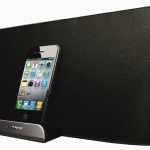
Recently I had the chance to use the Sony Speaker Dock for the iPad, iPhone, and iPod. I love the sophisticated looks; the dock would be perfect to add to the atmosphere of a get-together or party. Even though this is a Sony product, it reminds me of Apple in the sense that this speaker is very simple. It isn't overloaded with complicated buttons that you would need an instruction manual to understand.
For a dock system of its quality, the RDP-X500IP is on the less expensive end, price-wise. For example, Sony sells the dock for $250. The comparable Bose system is $150 more. If you're on a budget, however, there are many quality alternatives, from Logitech and Klipsch, among others. Overall, the RDP-X500IP is a truly fabulous audio system. It's known for great bass, which honestly is quite phenomenal for a speaker of its price and size.
What happens when your online game does too well?

Indeed, these are the kinds of problems we would love to have, but when they actually occur we need solutions nonetheless. So, how do you handle the issues that occur when audience demand overwhelms the infrastructure you have provisioned to serve your content?
A few years ago, my company was approached by Latin Interactive Network (LIN), a publisher of online games across Latin America, including countries like Peru, Argentina, Chile, Colombia, and Mexico. LIN handles several successful MMOs in these territories, including the Spanish-language version of Audition Online, a unique free-to-play dance battle game. Audition is a big favorite, and in Latin America alone, the game is now played by half a million players per month. This is welcome news for LIN, of course, but not always so welcome for Audition gamers who may be stuck using outdated and underpowered infrastructure...
Microsoft enterprise licensing changes favor Windows RT, put Android and iOS in their place

If you can't beat them, manage them. It's a strategy that has worked well for Microsoft in the past, and it is emerging as a key element in announcements last week about how Microsoft will license Windows 8 in all its variations, including the x86 consumer, Professional and Enterprise editions, the embedded Windows RT and the cloud-based Windows Intune.
While Microsoft's primary goal is to stop Apple's growth in the enterprise, which it will do by tilting licensing policies in favor of Windows tablets, the company has a Plan B that will help monetize Apple and Android devices in the enterprise through management.
The hidden costs of poor technology purchasing

Poor technology purchasing happens when a company buys products that do not properly meet their requirements. It happens with things like enterprise software and cloud services, and sometimes even with things like datacenters, hardware and phone systems. It happens more often than you realize but you don’t hear much about it. People love to talk about their purchasing successes, but they are far more reluctant to talk about their purchasing failures.
The infrequent nature of these types of purchases is the root cause of the problem. While employees may have deep system experience, they are often not up to date with competing products in the market simply because these types of purchases happen so seldom. This can lead to a gap between what the selected product delivers and what the business requires. When this gap gets too large, you have a technology purchasing failure.
Painless IT administration is easier than you think

IT administration can be a daunting task, and require hours of additional work to ensure a deployment is operating properly and at peak efficiency. Oftentimes, administrators are faced with overly complex administration software that takes months or even years to figure out.
Worse yet, this software is "built in the bubble"; that is, developers create the platform based on what they think the administrator needs rather than what he or she wants. This results in software that does not mold to the needs of its users, and further adds to its complexity.
© 1998-2026 BetaNews, Inc. All Rights Reserved. Privacy Policy - Cookie Policy.