


Live from CES 2011: Ford product design manager Chris Demeniuk tells all about HMI

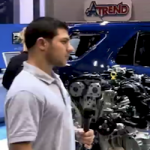
Sean Clark, from mp3Car.ccom, interviews Chris Demeniuk from Ford about the application design process for vehicles. Simplicity, usability, and engineering with the end user in mind are all important themes when creating a Human Machine Interface.
Live from CES 2011: Visteon C-Beyond car's thermal IR responds to you
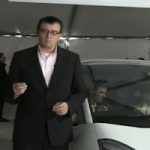
Rob Wray, from mp3Car, shows off the Visteon C-Beyond car. The center console has a thermal IR sensor that detects your hand location and opens and closes the console compartment automatically according to hand movement.
Adjustable ambient lighting can be changed based on the passenger's mood. Motion sensing lighting can aid passengers in finding lost items at night as the floor can illuminate based on hand gestures. "Vertical Air Flow" eliminates the need for conventional HVAC vents on the dash. Individual zones of the vehicle are more easily climate controlled based around circular ceiling and floor modules. A Windows PC and Centrafuse front end controls all of the technology.
Live from CES 2011: Pelagicore demonstrates Genivi Meego cross platform in-car solution
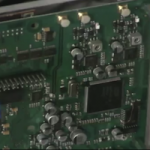
Rob Wray, from mp3Car, speaks with Mikael Soderberg, from Pelagicore, to discuss two new vehicle hardware setups.
First, the ARM processor of the Beagleboard C4 is paired with a daughterboard from Pelagicore to enable easy communication with systems in the vehicle including the MOST, CAN, & LIN protocols. AM/FM radio integration, Bluetooth and power management capabilities are also integrated.
Live from CES 2011: Foryou concept device does Froyo apps in the car
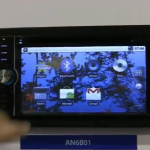
Although not available yet, the Foryou Electronics double din unit in this video features the Android 2.2 operating system. With it, a plethora of app possibilities can now exist in the vehicle, with a user interface conducive to in-vehicle use. Bluetooth, music, email, radio, internet access, and a fast processor are now all easily possible from your dash.
Live from CES 2011: Regulators boot Scosche iPad dash mount into the backseat
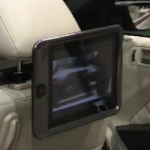
Scosche's front double din iPad mount will apparently never make it to market due to legal concerns. However, their new rear seat mount will. iPads continue to be a sought after solution for in-vehicle computing.
What's it really like to attend CES?

Okay, so, I'm throwing things into a rollie and a backpack to head off to the Consumer Electronics Show tomorrow. It's the usual drill, which I could probably do in my sleep by now, but I still have to apply some consciousness. For example, tomorrow evening I get my rental bike delivered to the hotel, but Vegas is going to be cool this year. So, I have to pack light but warm items: wool cap, ski glove liners, windproof shell.
And I'm not taking my HP Jornada as a note-taking device for the first time since 1998. This time, I need to stay connected. So, an old Lenovo X301 with Windows 7, solid-state storage, 3G and WiFi will have to do it. Oh, and extra battery. At this point, I'm as ready as anyone can be for the chaos that is CES. What is going to be like there? The rest of this post highlights various aspects of the show, some perennial, some dynamic.
Bozos in the cloud

Wavy Gravy famously used to say, "We are all bozos on the bus, so we might as well enjoy the ride," meaning none of us really knows what we're doing. We do the best we can, try to look cool and hope nobody notices when we screw up, when it'd be so much easier to simply admit we're all just trying to figure it out, and let our mistakes hang out for all to see, so others don't have to make the same mistakes. You've got to take chances, and that's what I've done by moving from the safety and familiarity of the desktop to the cloud.
Let me start by letting you know I'm a total bozo when it comes to this cloud thing. I think we all are. It's so new, nobody really knows how to do it all right, and many people are afraid to try. Will their stuff be safe? What if there is no Internet connection? So I'm putting on my red rubber nose and diving into the cloud for everyone to see -- hope you enjoy the ride.
What's it like to develop for Windows Phone 7?

I started developing applications and websites using Microsoft tools about 15 years ago, and I anticipated developing for Windows Phone 7. In fact, two of my WP7 apps were announced as winners in Microsoft's WP7 Federal Apps contest about two weeks ago. However, my enthusiasm is much less post launch, after struggling to get several of my apps approved for sale in the Windows Phone Marketplace.
When I went to register for my Marketplace account early in September, I got an error message at the end of the process. My credit card was charged the $99, but I had no access to the Marketplace developer portal. It took about a full week for this issue to be resolved and for me to get access to the portal -- however, the issue was fairly widespread as there were numerous postings to the support forum from other users experiencing the same issue. I believe this issue is still occurring, although not as commonly, as you can still find similar postings to the registration forums here.
2011: Time for tech enthusiasts to act more charitably

I wish technology enthusiasts could focus more on the good that can be done for people and communities and less on whether their phone matches their shoes or who uses what product. Fanboyism is out of control and detracts from things that are more important.
Microsoft doesn't suck, and neither does Apple, Google or any other company with high revenue and long-term success. If someone writes an even slightly pro-Apple article, the Microsoft fanboys go crazy, and vice versa. These companies are all successful, and their products sell well. Shouldn't we all focus on something else?
Why 2011 isn't 1995 for Apple

In 1995 I remember waiting in lines to buy Windows 95. It effectively ended the design lead Apple had for 11 years in personal computers. From then on Microsoft had both the thought leadership and the market share. Apple ended up with less than 10 percent market share. Microsoft had most of the rest.
Lots of people think that Apple could repeat 1995 in 2011. This time with iOS instead of Macintosh OS and with Google in the place of Microsoft.
Firefox 4 Beta 7: Faster than 3.6, but not 5x faster
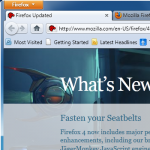
Yesterday, after several weeks of delay due to continued heavy crash counts, Mozilla released public beta 7 of its Firefox 4 browser, with at least three more public beta cycles planned before the end of the year. Beta 7 is the first public release to contain the device Mozilla calls JaegerMonkey, which hybridizes the optimized TraceMonkey engine introduced in Firefox 3.5 with a new just-in-time native code compiler.
The organization touted Beta 7 as being three to five times faster than the stable Firefox 3.6.12 in executing well-known benchmark suites, including the organization's new Kraken suite, and Google's V8 test battery. In a newly revised series of tests conducted this morning by Ingenus LLC, there were limited instances of 300% acceleration, but not across the board. Firefox 4 Beta 7 posted speed scores that were 2.38 times those of Firefox 3.6.12 overall.
Firefox 4 delayed: Is it ready for prime time?
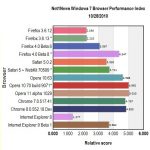
It should have been a week of relatively good news for the Mozilla organization. The former senior vice president for mobility at enterprise database producer Sybase, Gary Kovacs, signed on to become Mozilla's new CEO next month, replacing John Lilly and serving under Foundation chairperson Mitchell Baker. Having headed up Sybase's mobility and integration efforts during that company's buyout by European software giant SAP last summer, Kovacs is certain to inject a much-needed dose of corporate prestige and structure in to the organization.
But immediately, Kovacs may find himself leading Mozilla's greatest uphill charge in its short history. Its premier product, the Firefox browser, is in the midst of a development cycle that has put it behind all its competitors - including, for the first time, Microsoft - in relative performance. This week, however, the Firefox 4 private betas were making headway, beating both Internet Explorer 9 and Apple Safari/WebKit performance scores, on the way to catching up with Google Chrome and the first alpha builds of Opera 11.
Opera with extensions: Now can it replace Firefox?
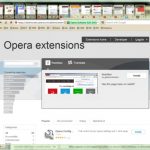
What defines a platform - any platform - in today's market, is apps. If you have apps, you're on the map. If you don't have apps, you're webOS.
Just two short years ago, it would have been unthinkable for anyone to consider the JavaScript engine of any Web browser as the basis for a genuine software platform - something you could make a living from as an apps developer, rather than just a hobbyist. For many, JavaScript was something a Web page used to determine which browser was running, and if it was Internet Explorer, to make it refrain from doing certain dangerous stuff. But in just two years' time, not only have the JS interpreters in Web browsers including IE increased their calculating and processing speed by a factor of ten, but the security of browser-based scripts has improved from almost non-existent to formidable. And all of a sudden, you begin to wonder whether Larry Ellison overpaid for Sun Microsystems.
Latest move by broadcasters to mandate implanting radios into cell phones

Fearing that over-the-air radio may be nearing extinction faster than predicted, the US National Association of Broadcasters has been backing legislation requiring mobile phone manufacturers to install "radio-activated chips," making them into de facto FM radios. . . whether consumers actually want them or not. But in an effort to accelerate legislation to make this happen before, say, next January, the NAB signaled yesterday it's willing to make a bargain with its most valuable negotiating chip: radio's decades-old exemption on paying performance royalties.
For over a year, the NAB has boasted that it has the support of a majority of members of the US House of Representatives, backing a bill that would extend the broadcast radio industry's exemption from paying performance fees to musicians (and their designated rights holders) indefinitely. But the political careers of many of those representatives are now somewhat less than definite, as many pollsters predict a change of party leadership in the House next January.
Fighting back with fire: Firefox 4 closes the gap, Chrome threatens Opera's lead
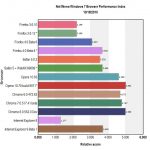
The problem with the developers of any product releasing just a single public beta, without periodic updates, several months before its anticipated final release, is that it creates a fixed target for its competition. Microsoft spokespersons have indicated to me that scheduled updates for the Internet Explorer 9 public beta have not been planned, and even characterized intermediate updates for purposes other than vulnerability patching, to be unorthodox. (Last week, Microsoft issued another big security rollup for stable versions of IE, but not IE9 which didn't need the patch.)
So IE9 has a big target painted on itself, and it doesn't help that its scores are going nowhere during the beta period. Meanwhile, there's a new element of Firefox 4 that could make it one of the fastest, if not the fastest and most efficient, graphics rendering browser in the pack. I say "could" because, even in the latest betas, the superb performance scores posted in HTML 5 Canvas rendering tests, which are supposed to be accelerated using Microsoft's Direct2D library in Windows, are only intermittent. Scores flip between "good" and "incredible," and just when it appears to be time to declare Firefox 4 the latest phoenix to rise from the ashes, those Canvas scores flip back to just "good," even on a pristine and unencumbered test platform.
© 1998-2026 BetaNews, Inc. All Rights Reserved. Privacy Policy - Cookie Policy.