

iPad market share plunged 20 percent in Q4 2010


IDC walloped and bear hugged Apple a day before iPad 2 officially goes on sale. During fourth-quarter 2010, iPad market share fell from 93 percent to 73 percent sequentially, according to the analyst firm. However, IDC expects iPad market share to remain in the 70 percent to 80 percent range throughout 2011. Additionally, IDC released data on ebook reader shipments, which more than doubled quarter on quarter to 12.8 million units.For all 2010, 18 million tablets shipped, with iPad capturing 83 percent market share.
Well, so much for the nearly 100 tablet contenders. Then again, these mobile device markets are so fast changing, it's hard to trust any analysts' projections, particularly when there is no consensus on definitions. For example, Canalys and NPD DisplaySearch classify tablets like iPad as PCs. IDC does not. It's definition: "Media tablets are tablet form factor devices with color displays larger than 5 inches and smaller than 14 inches running lightweight operating systems (such as Apple's iOS and Google's Android OS) and can be based on either x86 or ARM processors. By contrast, tablet PCs run full PC operating systems and are based on x86 processors."
Microsoft rolls out new virtualization tools for Desktop Optimization Pack

Thursday, Microsoft announced two updates to its Software Assurance Desktop Optimization Pack for enterprise Windows deployments are available immediately: App-V 4.6 SP1, and MED-V 2.0.
Microsoft Application Virtualization, or App-V, is the solution which turns software applications into centrally managed, virtualized services that don't have to be installed on client machines. With the SP1 update, Microsoft has introduced package accelerators in the new App-V Sequencer, which Microsoft has been discussing since mid-2010. Package Accelerators are files that admins can combine with install media to automatically convert applications into virtual packages. They are released 1:1 with the applications they work with, and the first accelerators will be available in early April, and will include Project, Adobe Reader, and Office 2010.
IObit Unlocker cracks open locked files


IObit Software has released a public beta of a new file-unlocking tool. IObit Unlocker Beta 1.0 is designed to allow users to access files that have been locked by running programs or processes for the purposes of deleting, renaming, copying or moving.
IObit Unlocker can be invoked from its own shortcut, or accessed by right-clicking any file and choosing IObit Unlocker, which will launch the program with that file selected. It will display what process is locking the file, and give the user various options for unlocking the file.
ESET SysInspector sniffs out malware but can't kill it
Your PC is unstable, behaving very strangely, and you think there's a good chance that it's been infected by malware. Yet your antivirus software hasn't noticed anything at all. So what do you do now?
ESET SysInspector provides an easy way to begin the detection process. It's portable, so there's no need to install anything -- just download the executable, run it, and SysInspector will examine your system files, startup programs, running processes, network connections and other details, before issuing a report highlighting anything it thinks is suspicious.
Firefox 4 nearly ready, but IE9 may be faster

The Mozilla Foundation has announced the release of Firefox 4 RC1, earlier this week. This is a feature-complete release, and could even morph into a final release with no further changes, particularly if Mozilla is keen to steal some thunder from the imminent arrival of Internet Explorer 9, which Microsoft has just confirmed will be available from Monday.
Firefox 4 will, like its rivals, be much lighter in weight than the current version (3.6), which will ensure better performance. Like Chrome and IE9, the user interface has been redesigned to maximise screen real-estate for viewing web pages. It will be available for Windows, Mac and Linux.
Which is the more popular web browser?

Late yesterday, I asked "Which web browser do you use?" -- not really planning a follow-up post. But given Betanews reader response, the informal -- and purely anecdotal -- poll warrants something more. Drum roll, please. And the most popular browser -- Chrome, Firefox, Internet Explorer, Opera, Safari or something else -- is: none of them. Betanews readers generally use more than one, which supports what I explained yesterday: NetApplications' monthly browser stats refer to usage share, not the stated market share.
That said, you generally prefer the newest browser(s) when available, and some of you generally use one lots more than others. Very few respondents cited need to use Internet Explorer for corporate compatibility reasons, suggesting Microsoft's efforts to move enterprises away from ActiveX has largely succeeded. In fact, only one respondent mentioned ActiveX at all, which further supports my supposition.
Which web browser do you use?

Whoever said web browser development is dead? Geez Louise, could there be any less, or is that more, browser news this month? Microsoft is trying to kill Internet Explorer 6 (again). Internet Explorer 9 releases on March 14, while Microsoft is preparing to debut early IE 10 at MIX11 in April. Yesterday, Google popped out Chrome 10, while today Apple released Safari 5.04. Opera opened an app store yesterday. Not to be left out, Mozilla posted Firefox 4 Release Candidate 1. Did I miss anything?
Given all this browser buzz, it's good time to do an informal survey of Betanews readers. Yes, I could check the site logs (and may still) but I want to know specifically which browsers (since many people use more than one) and why. If IE 7, why not IE 9 RC? Perhaps you spend most of the day using an iPad and mobile Safari. Or maybe your work PC has (cough, cough) IE 6, but you use IE 8 and Chrome at home. I'd like to know, and I'm betting there are other Betanews readers who are interested, too. So please answer the question -- "Which web browser do you use?" -- in comments, or email joewilcox at gmail dot com.
Printopia for Mac 1.0.4: Printing from iOS devices made easy
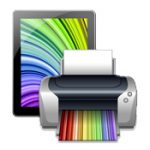
The ability to print documents from iOS is something that huge numbers of iPhone and iPad owners have been waiting for -- it was a feature implemented by Apple when AirPrint was added, but this proved to be less than ideal for many users. Using Printopia for Mac, it is possible to share the printer that you have connected to your Mac so it can be used by your iPad or iPhone.
Unlike AirPrint, which has been found to be very fussy about which printers it will work with, Printopia for Mac can be used with virtually any printer regardless of make or model.
How could Steve Ballmer screw up Microsoft's HP partnership?

Somewhere, in an alternate universe, Microsoft did the right thing: Bought Palm instead of cut a deal with Nokia. But in this reality, Microsoft screwed up, not just by letting Palm go but clearing way for HP to make the acquisition. Now HP, Microsoft's strongest OEM partner, is turncoat, planning to put WebOS on every HP PC by 2012. It's simply unthinkable.
Just 11 months ago, HP revealed plans to buy Palm for $1.2 billion -- a pittance if just to get WebOS. Four months earlier I gave "10 reasons why Microsoft should buy Palm now." But Microsoft CEO Steve Ballmer and his top executives let Palm get away. (Hey, I gave good advice -- for free!) Ballmer was willing to spend $44 billion for Yahoo just a few years ago, and Nokia will reportedly receive $1 billion from Microsoft as part of the Windows Phone OS distribution deal. Palm was a garage sale, by comparison.
Ubuntu shedding dated 'desktop' and 'netbook' edition names

Canonical Inc. on Wednesday announced that there is really no longer a need to have a separate edition of Ubuntu specifically for netbooks and for desktops, and development of the Linux distributions will be folded into a single version of Ubuntu, known simply as "Ubuntu" for Version 11.04.
"We are going back to our roots," Canonical's Gerry Karr said on Wednesday. "From 11.04 the core product that you run on your PC will be simply, Ubuntu. Therefore the next release will be Ubuntu 11.04 and you can run that, my friend, on anything you like from a netbook to a notebook to a desktop. Ubuntu Server will be maintained as a separate product of course and named simply, Ubuntu Server 11.04."
Microsoft's Xbox Kinect sells 10 million, breaks record

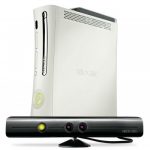
Move over iPad and iPhone -- the fastest selling consumer electronics device is not made by Apple. Microsoft said Wednesday that its Kinect motion-sensing controller has sold 10 million units since its launch last November. In the first 60 days alone, the company said eight million Kinects were sold.
Guinness World Records has dubbed the device the "fastest selling consumer electronics device ever," with an average daily sell-through of 133,333 units per day from the period of November 4, 2010 through January 3, 2011. Those rates are far above that of either the iPod or the iPad, which Apple has been keen to boast as the 'fastest ever' in the past.
Share images online with Hyperdesktop

Whether you want to post a picture on a web forum, show a diagram to work colleagues, or just let family and friends everywhere see your holiday snaps, an online image sharing service can help.
And it doesn't have to take long to set up. In fact, if you download and run Hyperdesktop then it won't take any time at all, as the program will upload your screen grabs or images to the popular Imgur service without requiring any other configuration whatsoever.
Apple rolls out iOS 4.3 for iPhone, iPad, iPod Touch, updates Apple TV

As expected, Apple's mobile operating system received an update on Wednesday, which includes a faster Safari mobile browser thanks to an upgraded Nitro JavaScript engine; iTunes Home Sharing; enhancements to AirPlay; the ability to use the iPad side switch to either lock screen rotation or mute the audio; and the Personal Hotspot for iPhone 4.
Apple first announced these features when it introduced the iPad 2 last week, but most of the new functions were made public when the CDMA iPhone 4 launched back in January.
Government program puts tablets, netbooks in hands of 35,000 kids

Wednesday, the FCC announced the 20 E-rate schools that will be included in the next round of "Learning on the Go" pilot programs, where public schools test how mobile wireless devices such as tablets and notebooks with mobile broadband can be employed inside and outside the classroom.
A large part of the Federal Communications Commission's National Broadband Plan is dedicated to using improved broadband connectivity to improve American education, updating the Industrial Age public school system to one suited for the Information Age. Since technology has already moved into the wireless age, the Commission began testing "Learning On-the-Go" situations last year, exploring how the E-rate program can help schools and libraries offer off-premises wireless access to the Internet.
Chrome 10 seeds Google's Cloud OS ambitions

Google is preparing anyone using Chrome 10, which released yesterday, for launch of Chrome OS. The new standalone browser has reached feature parity -- for business, consumer or IT pro evaluator users, anyway -- with Chrome OS browser front-end running on Google Cr-48 laptops. Chrome 10 is a much bigger browser release than even Google's boasting -- "speedier, simpler, safer" -- lets on. Google is beginning its biggest push yet to the cloud, and Chrome OS is quickly, and I do mean quickly, approaching v1 release. Apple and Microsoft had best watch out, because among major platform developers they have the most to lose should Google's cloud ambitions succeed.
Chrome 10's standout features, at least for cloud computing, all begin with "s": sandbox, search, services, simplicity, security, settings, speed, stability and synchronization. Many of these attributes interrelate or aren't new to this browser release -- they're improved for cloud readiness.
© 1998-2026 BetaNews, Inc. All Rights Reserved. Privacy Policy - Cookie Policy.