Relying on Windows 10 security is risky for business

Microsoft’s latest operating system, Windows 10, unveiled earlier this month, places a fresh emphasis on corporate security. But there are already industry rumblings that over-reliance on Microsoft’s new security features could be dangerous.
Windows 10 is designed to run across the types of devices common to most business users: PCs, laptops, tablets and smart phones. In order to safeguard users’ privileged data, the new OS uses a two-factor authentication system utilizing biometric ID in the form of a finger or thumb print. Users can enroll a single device, such as a smart phone, which will effectively become their mobile credential. It will enable them to sign-in into all of their PC’s, networks, and web services as long as their smart phone is nearby.
What's the point of AdBlock Plus if Google, Microsoft and Amazon can pay to bypass it?


Ads are pretty much universally hated; in the list of lovable things in the world, ads rank pretty far down. On TV, in movie theaters, in magazines and online, ads are forced upon us and are impossible to avoid. Except that's not true online. Ad-blocking software can be used to filter out the stuff you don’t want to see, making for a happier web browsing experience.
However, it turns out that installing an ad-blocking tool like, ooh... I dunno... AdBlock Plus... is not enough to prevent the appearance of unwanted advertisements. Some time ago we learned about the whitelist operated by AdBlock Plus and now the Financial Times reports that big companies like Google, Microsoft and Amazon have paid to be included on the list so their ads are no longer blocked.
How to remove the build number watermark from Windows 10's desktop
Hundreds of thousands of people around the world are currently running Windows 10 Technical Preview ahead of the official launch. While it's fun to try out a pre-release of the upcoming operating system it does mean having to put up with a few problems here and there, as well as the occasional niggle.
One thing that irks many Technical Preview users is the fact that the current build number is emblazoned on the desktop. It doesn’t really get in the way, but it looks kind of ugly. If you'd like to get rid of this unsightly watermark, there's no need to tinker with the registry or hack files by hand -- there's a nifty tool that will take care of it for you.
The ease of upgrading to Windows 10 all but guarantees its success
People don’t like change. Well, people don't like change for the sake of change -- if it ain't broke, don't fix it, and all that. But people also don’t like things to stay the same. People are fickle buggers, when you come to think of it, and this is one of the reasons Windows 8 proved to be such a disaster. Windows 10, on the other hand, is almost guaranteed to be a runaway success.
Uptake of the preview builds has already been impressive, but the ease with which it's going to be possible to make the upgrade -- be it from Windows 7 to Windows 10, or from a preview build to the RTM release -- is going to be key to the operating system's success. Why? As well as being fickle, people are suckers for 'easy'; Microsoft has made upgrading to Windows 10 RTM as easy as possible.
Raspberry Pi 2 arrives -- will run Windows 10!


The original Raspberry Pi Model B launched back in 2012, and got a big update in the form of the B+ last year. However, the core of the device -- the Broadcom BCM2835 application processor -- has stayed the same in all that time.
Given how much technology changes and improves in just the space of a single year, the Raspberry Pi was long overdue for a processor refresh, and today the Foundation launches the new and improved Raspberry Pi 2.
This is why Windows 10 will be essential for your business
Microsoft’s worldwide release of Windows 10 gets underway later this year and with it thousands of businesses and those in the enterprise will be on tenterhooks to see if it manages to fulfill all the promise that the company is throwing behind it.
Windows 10 is a lot more than just the return of the Start menu and it could transform your business in a number of different ways.
Obama's proposed overseas earnings tax could hit Microsoft, Google and Apple hard

It is common practice for companies to take steps to reduce their tax bills. One common technique is to channel money through overseas branches, taking advantage of countries that require payment of little or no taxes. If the President's plans to pull in taxes from multinational companies' overseas earning, the likes of Amazon, Apple, Google and Microsoft could be facing hefty bills.
While the proposed 14 percent tax rate is far lower than the usual 35 percent, it could still top up US coffers by up to $238 billion. In addition to a one off tax payment on money currently held overseas, Obama is looking to slap a 19 percent corporation tax on earnings moving forward.
Warning -- Microsoft's new iOS Outlook app is insecure

After buying Acompli late last year, Microsoft didn’t take long to rebrand the mobile email app as Outlook and launch Android and iOS versions. But it seems that in the rush to get the app out of the door, Microsoft failed to ensure that it was suitably secure.
In fact, IBM developer René Winkelmeyer suggests that enterprise users stop using the app immediately. He was shocked to discover a trio of security issues in the mobile version of Outlook. Perhaps the most worrying discovery is that users' personal credentials are stored in the cloud -- username and password included.
Windows 8.1's market share remains utter rubbish

Last month, web analytics firm NetMarketShare released its usual batch of monthly desktop operating system usage share figures, and it showed Windows 8.x tumbling dramatically. The figure made little sense, and a day later the firm released revised data which showed the tiled OS still shedding a large chunk of share, but not quite as badly.
In December’s revised figures NetMarketShare had the OS falling 5.13 percentage points for a total share of 13.52 percent, placing it back way below Windows XP. This meant January’s figures were always going to be interesting. Surely the tiled OS would rally wouldn’t it? But of course this is Windows 8.x, Microsoft’s least successful operating system in recent memory, so no. Its usage share remains utterly rubbish.
Windows 10 for enterprise will not be free, splits into two upgrade branches

There aren't many people who don’t like the sound of "free", and this was one of the keywords taken away from Microsoft's Windows 10 event earlier in the month. As build 9926 was unleashed on eager upgraders, Microsoft revealed that it will be free to upgrade to Windows 10 in the first year.
At least this is the case for the average consumer; it's something of a different story for enterprise customers. Microsoft has confirmed that Windows 7 Enterprise and Windows 8/8.1 Enterprise are not versions that will be eligible for a free upgrade -- this is the personification of Windows as a service.
Windows 10 updates -- new Surface Pro graphic driver, new Windows Phone Windows Insider App
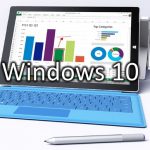
We're gradually moving towards the official release of Windows 10, but in the meantime we have the Technical Preview to work with -- Build 9926 specifically. As we're only at the preview stage, it is to be expected that there will be a few issues here and there.
The good news is that Microsoft is working on fixing these problems, not just for the eventual RTM release of Windows 10, but also the preview builds. Surface Pro 2 and Surface Pro 3 owners complained about problems with stability when watching videos, and this has been addressed with a driver update.
Microsoft launches Outlook for iOS and Android
Microsoft has unveiled its official Outlook app for iOS, a free email client based on the Accompli app it acquired at the end of last year.
An Android version is also available, although only as a preview.
5 things Microsoft's Android-powered CyanogenMod Lumia needs for success

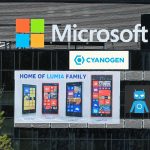
While I don't usually speculate on rumors, sometimes they are just too interesting to ignore. Imagine my surprise to hear a rumor from the Wall Street Journal that Microsoft has allegedly invested $70 million in Android ROM-maker, Cyanogen. Think about that for a moment -- the company behind Windows, investing in the Linux-based CyanogenMod operating system -- insanity!
Sure, it does sound crazy, but it's totally plausible that the new Microsoft, focusing on software and services, could jump-start its mobile offering by embracing Android and dumping the seemingly-stalled Windows Phone (or supporting both). Regardless of whether or not you believe the rumor, its fun to imagine what could be. With that said, here are 5 things a potential Android-powered CyanogenMod Lumia would need in order to be a success.
Smartphones: Apple ties with Samsung, Android still growing, Windows Phone still failing


Samsung is no longer the leading smartphone vendor. According to a new report from Strategy Analytics, Apple caught up with the South Korean maker in Q4 2014, thanks to a record number of iPhone shipments totaling 74.5 million units. The two players now share the top spot on the podium.
How did it come to this? Well, it's simple. Apple's shipments increased from 51 million units by 46.07 percent year-over-year, while Samsung's shipments decreased from 86 million units by 13.37 percent, each converging to 19.6 percent market share. Thanks to the strong performance shown by iPhones, iOS' market share rose also, to 19.6 percent from 17.6 percent a year prior, while Android's market share dipped slightly to 76.7 percent from 78.3 percent.
Microsoft's decision to ditch Surface is a long-overdue mercy killing for Windows RT

For too long it was the metaphorical unwanted litter of kittens tied in a sack just waiting for someone to ditch it in the river. Windows RT is dead, having enjoyed a cancer-ridden 'life' for longer than many people expected. Microsoft announced that it is no longer going to manufacture Surface devices, all but signing the death warrant for Windows RT.
Hear that sound? No? That's the sound of everyone caring about it. To be fair, the writing has been on the wall for quite some time. Windows RT was always the sickly twin sibling of Windows 8 and now Microsoft has done the decent thing. It might not quite have delivered the lethal shot to the brain yet, but the gun has been cocked. And not before time.
© 1998-2026 BetaNews, Inc. All Rights Reserved. Privacy Policy - Cookie Policy.