No one can accuse Microsoft Surface marketing of copying Apple iPad


That didn't take long. A day after debuting the first Windows 8 TV commercial, Microsoft puts out another -- this one for Surface. There's a theater of the bizarre quality about the ad spot, which features lots of folks dancing with tablets. I half expected to see digitally-inserted cameos with Fred Alistair and Ginger Rogers. No one could accuse Microsoft of copying Apple iPad marketing, that's for sure.
The commercial focuses on Surface's attachable keyboard and pop-out stand and the click sounds they make. There is lots of action centered around clicking. You won't learn anything about what Surface does from the one-minute jig or how much the tablet costs (oh, do we want to know). But people will remember the commercial, the slate and the colorful Modern UI. That's the whole point of advertising: get people to remember something.
Tech tribalism leads to BAD computing decisions


Computing, and I use the term in the widest sense, has always been tribal to an extent. People have loyalties, and there’s nothing wrong with that. This year, tribes are called "ecosystems", but whatever the current label, looking around the Interweb it seems to me that tribalism is becoming more prevalent and more aggressive. It’s as if everyone stood on soapboxes with their fingers in their ears, shouting "LALALALALALALA", while at the same time (a good trick, this) yelling through a megaphone that theirs is the only way and anyone who doesn’t agree is just too stupid to be considered human.
Famously, way back in 1994, the writer and thinker Umberto Eco (The Name of the Rose) compared computing loyalties to religions: Apple followers were Catholics who believed that they would find salvation through following the One True Path. Conversely, PC users, like Protestants, were obliged to find their own way through the many paths open to them, and not all would be saved. And (I guess) Linux users are the hairy prophets who come out of the desert proclaiming, "It’s really easy. Honestly. And these days you only have to scourge yourself with thorns once a week …"
Microsoft announces Xbox Music


Whether you think Microsoft wants to be Apple, or not, the company continues to roll out products designed to compete with its major rival. Today’s announcement is for Xbox Music, a digital music service for the Xbox games console, which will also appear as the default music player in Windows 8.
The service, which goes live tomorrow and will be available in 22 countries from launch, is a cross between Spotify and iTunes. Users will be able to listen to songs or full albums for free, create artist-based streaming radio stations, and put together music mixes and playlists. The iTunes element comes in the form of a music store, which will allow users to purchase and download tracks. The store will reportedly offer over 30 million songs, some four million more than Apple's store. There will also be over 70,000 music videos on offer.
Microsoft releases Office 2013 gold code

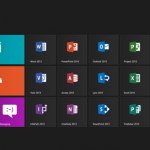
Three months after offering a public preview, overnight, Microsoft announced that Office 2013 released to manufacturing. Development is complete. The timing isn't surprising, given the software is bundled with Windows RT, which will be available to purchase on new computing devices in two weeks.
However, Windows RT-based devices, and specifically the Surface RT, will come with a preview version of Office 2013 rather than the fully-developed final code, due to the time-frame between the device and the software suite launch.
Get a life! Microsoft isn't trying to be Apple

Yesterday's Steve Ballmer "devices and services company" letter unleashes a torrent of idiot punditry. I can only laugh at the sheer stupidity of writers infatuated with the idea Microsoft wants to be Apple, or putting forth such lunacy to sack pageviews.
Read Ballmer's 1,300-word missive again. Microsoft's focus on devices and services has little to nothing to do with Apple. The cloud-connected device era is here and Microsoft embraces it to maintain computing relevance. The company has been on this course for years. Research and development takes time, and the good ship Microsoft is too large to change course in a few months -- or even a few years. The sheer number of carefully coordinated new (and largely changed) products shipping simultaneously (or soon after) clearly indicates a massive undertaking long planned.
Microsoft wants to become Apple, but can't

Microsoft has a long history of copying Apple. Back in the early 90s, Bill Gates' company introduced features found in the Macintosh GUI into Windows 2.0, sparking a copyright infringement lawsuit (Apple's taste for litigation is nothing new). Microsoft arguably has pilfered ideas from its rival's OS ever since -- Windows’ taskbar and Aero Peek certainly share clear similarities with OS X's Dock and Exposé. When the iPod became a massive hit, Microsoft introduced the Zune. Apple stores are hugely popular, which is why we’re now seeing Microsoft Stores popping up everywhere. Surface, in a way, copies the iPad, although of course Microsoft has tried (and failed) to popularize tablets since 2002.
And yes, before I go too far into this article, I’m aware the above paragraph could be seen as troll bait, so I’ll point out that Microsoft copies from other companies too -- Google being a major example -- and Apple, in turn, has lifted ideas from Microsoft, particularly from its operating system. Big companies copy from one another, it’s a fact of life. My point, however, is when Apple does something exceptionally well, Microsoft is keen to try and follow suit.
Steve Ballmer asks customers, partners and shareholders to believe in Microsoft
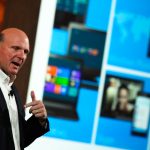
Today, Microsoft's CEO released his annual shareholder letter, which also is meant for customers, employees and partners. Steve Ballmer's looking back-peering ahead missive comes as the company stands on a precipice between the PC and cloud-connected device eras and seeks reinvention through an unusually strong late-year release cycle that includes Surface tablets, Windows 8, Windows RT and Windows Server 2012.
Under Bill Gates, Microsoft sought to put a PC on every desktop, with software innovation driving that effort. Ballmer describes post-PC Microsoft as a "devices and services company", which aptly describes the fundamental shift in progress. Services focus reminds of IBM, which dominated the mainframe era the PC displaced. This devices and services ambition "impacts how we run the company, how we develop new experiences, and how we take products to market for both consumers and businesses".
Microsoft Azure Services come to Windows Server

Windows Server 2012 launched a little more than a month ago and packs quite the toolset. To further complete the package, Microsoft announced the arrival of Windows Azure Services to its cloud-oriented server operating system, though only in beta for the moment.
Microsoft's cloud computing platform services are designed for hosting service providers, which was until recently exclusive to Windows Azure but in July was showcased on Windows Server and System Center. According to the company, Windows Azure Services on Windows Server is now a feature-complete beta release that focuses on delivering a considerable number of improvements over the previous versions.
Malware targets bargain hunters

They say the best things in life are free. There's another saying about when stealing, you get what you deserve. When it comes to software, that's more than what you bargained for. Or so claims Microsoft, which warns malware writers increasingly exploit people's desire to get for free something they should pay for.
Yesterday, the Redmond, Wash.-based company released its first-half 2012 "Security Intelligence Report" -- 134 pages for your reading pleasure. Today, Microsoft's Joe Blackbird highlights one of this volume's findings: bargain-hunting exploits for movies, music and software.
Microsoft Store is EVERYWHERE
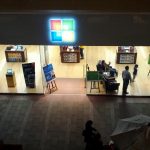
There is no appropriate way to express how aggressive will be Microsoft's retail blitz to support the launches of Surface, Windows 8 and Windows RT (on October 26) and Windows Phone 8 (on October 29). In 18 days, the software giant will have retail shops open in 27 states and three Canadian provinces. Many of the locations will be what Microsoft calls "holiday stores", which are more kiosks than shops but retail presence nevertheless. The company announced the pop-up shops about a month ago, but as important product launches approach the sudden retail blitz takes on looming significance.
The stores' importance cannot be understated, and their value is much bigger than selling new products. The shops will create big brand presence during the holidays and give many shoppers reasons to buy something with a Microsoft logo rather than the bitten fruit. (Say, if there's a bite out of the Apple, shouldn't that make it forbidden fruit in the classical biblical/literature sense or used goods from a purely commerce perspective. I certainly wouldn't pick a bitten apple from the grocery store. Funny that Apple's partially eaten logo doesn't put off more people.)
Kinect now supports Windows 8, Virtual Machines, and China

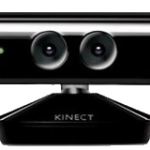
Microsoft has rolled out a major update to the Kinect motion control runtime and SDK for Windows machines on Monday, unlocking new data tools for developers and allowing Kinect to perform in lower light and at longer ranges.
Perhaps the biggest part of the SDK update on Monday is its vastly broadened availability. The Kinect SDK now features Windows 8 compatibility, which gives developers the ability to make apps for the soon-to-be-released next version of Windows. It also features compatibility with Microsoft Hyper-V, VMWare and Parallels, letting Kinect control virtual machines as well. Finally, the Kinect for Windows SDK is now available in the largest market in the world, China.
Save the date (or maybe not) -- Windows Phone 8 launches October 29
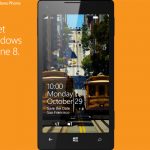
I must take a moment to share the love -- the exact same given me by the Windows Phone team offered in return. Nothing! Bwhahahaha. Microsoft sent out invitations to a Windows Phone 8 event -- hey, you know it's the launch -- for October 29. Not that I received one. (Yes, I checked spam messages.) Apologies to the good editors at Wired. I lifted the invite image from you. It reads "save the date" -- well, I guess not.
The phone OS event comes just three days after Microsoft launches Windows 8 and Surface tablets in New York City. I have three sisters, and their birthdays are October 26 and 29. Should I regard these product launches as presents or distractions, since Microsoft will have me too busy writing about the new stuff to celebrate with them? Well, girls, there's always Google+ Hangout or, maybe, just maybe, Skype. :)
Microsoft's $300M Barnes and Noble investment promises new Windows 8 Nook app

Book retailer Barnes and Noble announced on Thursday that its partnership with Microsoft in a new limited liability company called Nook Media LLC is complete and ready to go ahead of Windows 8's launch.
Barnes and Noble first announced it was considering a spin-off of its digital content business in January 2012. Three months later, the partnership with Microsoft was announced, and the software giant pledged $300 million to the venture, which would encompass Barnes and Noble's digital content business: e-books, e-textbooks, and e-periodicals.
US smartphone market consolidates around Android, iPhone
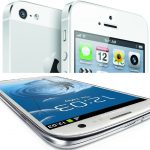
In a move appropriate for another two-party presidential election season, there is now little room for three dominant smartphone operating systems. The US market is now decisively consolidated around just two, Apple and Google platforms, as rivals -- including BlackBerry and Windows Phone -- make brisk retreats.
For the three months ended in August, Android and iOS had combined 86.9 percent smartphone subscriber share -- that's up from 82.8 percent at the end of May, according to comScore. August 2011: 71 percent. As combined share approaches 90 percent, a third-party contender looks less likely. Both potential candidates lost share during the three months, all gobbled up by the leaders.
Wake me when something more exciting happens than Google's market cap rising above Microsoft's

Around midday EDT, I started seeing headlines about Google market capitalization passing Microsoft -- for the first time. But when I checked, the software giant had already pushed past the search leader again. Then, about an hour before trading closed, colleague Mihaita Bamburic posted to group chat: "Google surpassed Microsoft in market valuation". I responded: "Yeah, for two seconds". But not any more. Capital G topped big M again.
I don't think much of market cap stories, and I've written many. For traders, and anyone looking to churn interest in a stock, they're meaningful. But as comparison of value, I'm not hot on them. I also recognize these stories' potential to manipulate, whether or not intentional, share price. For example, soon after stories started circulating Google's valuaton passed Microsoft's, the stocks did a topsy-turvy. Google pushed ahead and stayed through end of trading. Tomorrow is another day and chance for more flip-flopping.
© 1998-2026 BetaNews, Inc. All Rights Reserved. Privacy Policy - Cookie Policy.