I don't know whether to cheer or cry for Microsoft

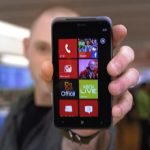
From one perspective, 2012 looks like a great year for Windows Phone, with about 17 percent year-over-year growth in the United States. Outstanding! But, uh-oh, that's from a tiny base. Get out your magnifying glass -- share will rise from 3.5 percent to 4.1 percent, according to Strategy Analytics. Ah, yeah.
The analyst firm's forecast is for actual number of smartphones sold, not shipped -- 123 million, 5 million of which will have Windows Phone. That's up from 101.8 million and 3.5 million, respectively, in 2011.
Got Windows XP or Vista? You won't get Office 2013


Microsoft really wants you to stop using XP and Vista. Office 2013, which preview released this week, only supports Windows 7 and 8. XP is still the most widely-used Windows version (although Net Applications says that could change this month). From the perspective of customers, the move doesn't make much sense. But Microsoft, of course, is more interested getting them to upgrade.
Microsoft gambles a lot on this decision. According to NetApps, 47.28 percent of computers run the rather old Windows XP and a minuscule 7.29 percent use Vista. Combined they have 54.57 percent usage share, which is not insignificant by any matter and a clear warning sign about the move. Office 2013 cuts off more than half the current Windows install base.
Will Novell-Microsoft ruling make developers digital serfs to platform lords?

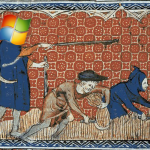
Today marked another win for Microsoft while under the watchful eyes of Judge J. Frederick Motz, who dismissed the antitrust lawsuit brought by Novell. The case stems from a complaint that Microsoft deliberately withdrew namespace extension APIs for Windows 95, knowing they were key to Novell's application, with the intent of thwarting software application competition. Specifically to give an edge to the Microsoft Office suite over third-party products.
At the time, 1994, WordPerfect had 30 percent productivity suite market share worldwide. WordPerfect had developed its rich user base since the days of MS-DOS and was more widely used than Microsoft's own competing upstart Office suite, which had only been released a few years earlier.
Microsoft takes away browser choice, EU wants to give sanctions

The European Union's Competition Commission surely isn’t on Microsoft’s Christmas gift list. Antitrust regulators are investigating the Redmond, Wash.-based corporation anew. The software giant allegedly failed to comply with a 2009 EU antitrust commitment to give Windows users option to choose their browser.
Microsoft is supposed to provide Windows users with a “browser ballot”. But that ballot is missing from Windows 7 Service Pack 1 and has been, for many users, for nearly 18 months.
Office politics are killing Windows 8


A letdown. That's the only way to describe Microsoft's Office 2013 announcement. With the fate of the Windows ecosystem hanging in the balance, the Redmond, Wash.-based giant is doing what it always does when faced with a tough, course-changing decision: It’s playing internal politics.
On one side you have the Windows division. Right now, they're facing an existential crisis, with Apple and Google poised to dominate the emerging post-PC landscape. Division head Steve Sinofsky and his team need all the help they can get to crack into this new territory that threatens to subsume everything that came before.
Meet Office 2013

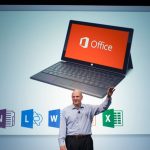
On July 16, Microsoft has released a preview of Office 2013. In one sense it is a continuation of the Office 2010 office suite.
In another it is a new direction for Microsoft products. The new office suite has the standard office products: Word, Excel, PowerPoint, Outlook, and Access, but there is more to it. We highlight the many key new features and their potential benefits.
Get Office 2013 NOW!

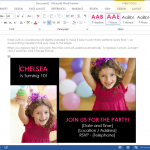
Microsoft has released a Windows-only "Customer Preview" of Office 2013 and Office 365 (the subscription-based service), a major revamp which aims to move the suite firmly into the 21st century.
The interface is cleaner, more tablet-friendly, for instance: Microsoft claims that you’ll “experience Office at its best on Windows 8 devices”. But even if you plan to avoid Windows 8 for a very long time, there are plenty of interesting additions here.
Microsoft delivers Customer Preview of new Office suite

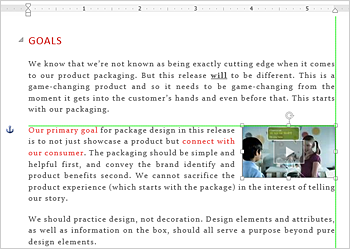
Microsoft unveiled the latest version of Office on Monday, intended to take advantage of the latest features of Windows 8 including touch, an ARM-based version for Windows RT, and two new Office applications including OneNote and Lync.
"We are taking bold steps at Microsoft", CEO Steve Ballmer said at the press conference in San Francisco. "The new, modern Office will deliver unparalleled productivity and flexibility for both consumers and business customers. It is a cloud service and will fully light-up when paired with Windows 8".
Microsoft should follow Apple's lead and ditch the disc in Windows 8
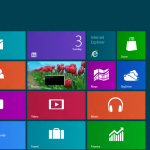
Microsoft plans to simplify Windows 8 sales by eliminating the full version of the operating system and focusing on upgrade and "system builder" editions. The change likely means that Windows 8 will be cheaper by and large to obtain the most consumers.
Pundits Paul Thurrott and Mary Jo Foley spoke of the move, citing sources on their weekly Internet radio show "Windows Weekly". The move follows another from April where the company announced Windows 8 would only be available in standard and Pro editions, aimed at making the purchasing process much easier.
Only Microsoft Surface can compete with iPad on price
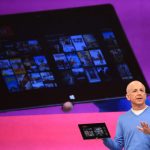
It’s an addiction. For nearly three decades, the PC industry has gorged itself on profit margins. Whether it’s a “premium” line of notebooks or the latest uber-gaming rig, vendors have always managed to squeeze enough margin out of their product offerings to line their respective silk purses. And who rides shotgun to this PC profit gravy train like some deranged, hypodermic-carrying monkey? Microsoft.
The Redmond, Wash.-based behemoth injected itself into the basic PC equation a generation ago, and it has milked the OEM license revenue stream ever since. Fortunately for them, average selling prices across the spectrum of PC categories helped offset this Microsoft addiction “surtax”. After all, what’s $70, $80 or $100 when the system in question retails somewhere just north or south of the $1,000 mark?
Microsoft learns from Apple -- hardware creates innovation, software doesn't

Earlier this week, Microsoft bought Perceptive Pixel, a touchscreen development company. Many people see this as Microsoft's commitment to the Surface tablet, the Windows 8 operating system and idea that touchscreen technology will play a much bigger role in the near future.
Currently, Perceptive Pixel has three different models featuring 27-inch, 55-inch and 82-inch touchscreens, and while that certainly is a long way from the 7-inch Surface tablet, it could very well mean that part of the company's technology finds its way into a second-generation tablet or a refresh of the first. The acquisition could have an even larger effect than that. Big changes are afoot.
Imagine what Metro could have been...
Fundamentally, the Metro user interface is not bad. It’s a good idea to change the interface of an operating system from time to time. Microsoft did the right thing with Aero back when Windows Vista was introduced. It was definitely a step forward and made Windows XP look old and ugly by comparison.
The fact that Windows Vista had so many problems that some considered it the worst operating system to come from Redmond is another story. Comparisons with Windows Me didn’t help either.
Windows 8 will be the new Vista?
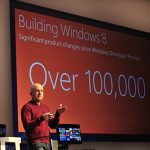
What should business expect from Windows 8? Do they even want it? Do IT decision-makers believe the OS will provide them with additional features that will improve their business operations? We can’t fully know the answer until Windows 8 launches in October, although more will be revealed when volume-license subscribers get access to the software early next month.
For now, here is what we do know: Version 8 is a sharp break from the existing Windows brand of operating systems. That brand has been around since the DOS-days. Microsoft is striking out in new ways that will push the OS technology in new directions. Many businesses won't want to follow.
Motorola and Microsoft suspend some patent disputes

Microsoft and Motorola Mobility pulled back from their bitter patent dispute in the courts, as both sides joined together Tuesday to ask for a temporary stay to all ongoing patent disputes in the US District Court for the Western District of Washington. This involves three cases currently being heard by that court, and refocuses arguments on so-called FRAND (fair, reasonable and non-discriminatory) licensing terms.
Motorola is accused -- not only by Microsoft, but by other targets of the company's patent suits -- of attempting to demand too high royalties for standards essential patents. The company's efforts have frustrated judges, too, with one publicly admonishing both Motorola and Microsoft of using the courts to gain an upper hand in negotiations.
The 808 PureView accentuates Nokia's downfall

How would you like to spend $700 on the most amazing smartphone, one which truly replaces your digital camera and makes iPhone look like horse and buggy compared to your Porsche. The handset has style and finesse, and is teched-out to the nines. There is but one little problem: The software is outdated -- abandoned -- before the phone's release. The hardware is amazing but the operating system is dead on arrival.
Nokia 808 PureView is the latest smartphone to come to the United States from the Finnish manufacturer. Nokia's USA website lists the 808 PureView as "coming soon", but Amazon will sell you one right now, for $699.99. There the lone reviewer, Tor Slettnes, rates five stars, writing: "This phone is nothing short of a dream come true for any remaining Symbian fans -- all 3 of us!" There you have it. Everything that's right about the mobile shows what's wrong with Nokia.
© 1998-2026 BetaNews, Inc. All Rights Reserved. Privacy Policy - Cookie Policy.