Microsoft keeps the old Surface alive with Perceptive Pixel buy


While Microsoft has turned to the smaller touchscreen with its Surface tablet, the company hasn't forgotten about its roots in large-format touch screens and the original Surface (now PixelSense). Microsoft announced the acquisition of Perceptive Pixel on Monday, one of the leading large-scale, multi-touch display solution providers.
You are probably already familiar with Perceptive Pixel's technologies, although you may not realize it. CNN began using the company's touch displays during the 2008 presidential election and has used them ever since. Perceptive Pixel also has customers across other sectors, including government, defense, energy exploration, engineering, and higher education.
Microsoft announces Windows 8 for October retail release

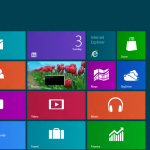
At the 2012 Microsoft Worldwide Partner Conference in Toronto, Canada, Microsoft CFO and Chief Marking Officer Tami Reller finally revealed the time when we can expect Windows 8 to hit the market.
During her keynote presentation, Reller talked about the new features of the Windows platform and how it will work with its deployment partners. Of course, the bigest news was that the final build of Windows 8 will reach RTM (release to manufacturing) in the first week of August.
Microsoft sets Server 2012 lineup and pricing, ditches Home Server


Server 2008 and Windows Home Server will soon be a part of Microsoft history. While Server 2008 provided many enhancements to the Server role in the Microsoft Network control system, the recent enhancements in technology, especially the Cloud, meant that the OS was behind the times in functionality. That is why the new OS will reflect the advances that are now prevalent in IT.
Server 2012 will be offered in four editions. These are Data Center, Standard, Essentials, and Foundation. A huge cut in versions when you compare it to the 12 versions that Windows Server 2008 R2 was available in. Microsoft continues its efforts to streamline its product line. The details of the four models appear below the fold.
HP should save the enterprise from Windows 8


With Microsoft bringing their own branded tablets to market, what is left for major OEMs like Hewlett Packard? One's first reaction may be to consider trying to do one better with the hardware. While this is still possible, maybe HP should consider getting back into the software business.
HP is making a good decision by concentrating on the x86 platform, rather than ARM in future tablets. Windows RT is untested at this point. Also Windows RT will not run the huge existing x86 based Windows software base that dwarfs any current app store in quantity and quality. There can be many advantages to HP's current decision.
Microsoft should buy RIM as soon as possible


Research in Motion is in trouble. Exactly how much trouble isn’t really clear right now, but things are looking bad.. Thorsten Heins, the current CEO, is keeping a positive outlook. He stated this week, in an interview with a Canadian radio station: "There’s nothing wrong with the company right now".
Pretty much everyone disagrees with this statement, including the stock market. At the time of writing the share price stands at under $8. This time last year it was $30. Go back to 2008 and the company was trading at $150 a share. RIM also recently announced 5,000 redundancies and losses of $518 million. Heins might say one thing publicly, but in private you can bet he is a worried man.
Microsoft ad and search biz is a $6.2B failure


Worthless. That's the description that best describes Microsoft's ambitious aQuantive acquisition, announced in May 2007. Today, after the market closed, the software giant announced a "non-tax-deductible income statement charge" of $6.2 billion booked last year. Fiscal 2012 closed June 30, so the timing has a deliberateness.
Microsoft probably should have told everyone before the quarter's close. Doing so today, during a big holiday week (Fourth of the July), mitigates the negative news. Lots of people are on vacation.
Is Microsoft trying to kill BYOD?


IT news comes in fast. Sometimes it takes us a while to process it all. In the blur of competing headlines, critical trends become obscured, and seemingly disconnected events -- when viewed through the prism of a few days rest and a good cup of tea -- can suddenly seem interrelated.
Consider the past two weeks. First, Microsoft drops the Surface bombshell, including news that only one of the devices -- the Windows RT version -- will be ready in time for the holidays. Then, on the heels of much hand wringing over Google’s Nexus 7 and its impact on the BYOD movement, PC stalwart Hewlett Packard reveals that it won’t be shipping any Windows RT tablets, at least not in the short term. Again, seemingly disconnected events -- yet when you pull them all together they lead to one inexorable conclusion: Microsoft hates BYOD.
It's a gargantuan war among industry titans and the winners will control everything for years to come


Damn, what an extraordinary month.
Let’s recap. First, we saw a spate of exciting new Ultrabook announcements, along with some x86- and ARM-based Windows 8 tablets at Computex. Then Apple introduced new spins of iOS and OS X for tablets and PCs, respectively, at its developer gathering. Microsoft unveiled Windows Phone 8 at the Windows Phone Summit -- and let's not forget the Surface tablet. And this week, Google rolled out new products and concepts buckshot-style at Google I/O, showcasing its first branded tablet, the Nexus 7, and Android 4.1, just to name a few.
Google Apps vs Office 365: Which wins over users?


Unlike most tech industry analysts that pit Google versus Microsoft in a paper-specs war each time they opine about these cloud email platforms, I’ve got two cents to offer on the subject from a slightly different -- and perhaps more down-to-earth -- perspective. I’m an IT consultant by day who is responsible for implementing, supporting, and training on each company’s product.
It allows me to have better perspective about how end-users feel about these major cloud suites when “non techies” are at the wheel. And the things they tell me are often no-holds-barred as they rarely hold back. The bigger question most analysts fail to answer still stands: who’s winning the “hearts and minds” of those using these suites?
How long before Microsoft drops SharePoint 'On Premise' altogether?

So Microsoft went ahead and bought Yammer. Amongst the wider coverage were some interesting comments from Kurt Delbene, President of the Microsoft Office Division. In the official press conference he seemed to suggest that any future Yammer integration would be limited to cloud products:
"Yammer provides Microsoft best-in-class enterprise social networking service, as well as a phenomenal list of talented employees that know how to deliver rapid innovation in the cloud. Yammer will be an important addition to Microsoft's cloud services, and this acquisition underscores our commitment to helping customers move to the cloud."
Microsoft's road to redemption


Microsoft just put behind it an eventful and positive week, coming off two major announcements on its two major computing platforms -- Windows and Windows Phone: Surface and WP8. Consumer and expert scepticism hobbled much of the excitement, as Microsoft nose dives into paradigm change. Nevertheless, the third week of June 2012 is indicative of a profoundly new direction for Microsoft, characterized by refreshing perspectives and paves a path that leads ultimately in the right direction.
Microsoft is making genuine inroads towards a new strategy that represents a complete paradigm shift from the fundamentals that defined the company and its products over the last couple of decades. The company used to be the antithesis of Apple in practically every sense, selling products based on the abundance of choice as opposed to Apple's strategy of marketing a small hardware lineup. Apple's strategy has always focused on ease of use, simplicity and form; whereas Microsoft, although not neglecting form and aesthetic, put functionality first and foremost and wrapped design around this in the most appealing way possible. The announcements this week represent a fully-committed digression from this strategy from Microsoft.
Microsoft’s Surface pricing dilemma is two opportunities waiting to be missed

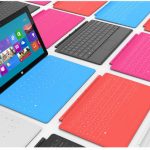
In an article that appeared earlier today on BetaNews, Robert Cringely talks about how Microsoft can compete with Apple on pricing but -- due to supply and manufacturing issues -- won’t be able to undercut its rival. It’s an interesting observation, and one that’s based on sound thinking.
But Surface is a curious beast. The iPad is, to all intents and purposes, a scaled-up Smartphone. Microsoft’s tablet (or tablets, rather) is a touch-screen PC. It runs Windows 8, and Office, and applications like Photoshop.
RIM is a far more formidable player than either Google or Apple
I like it when I’m right. Whether it’s dispelling the myths surrounding the Windows 7 kernel (I was right), or bursting the bubble of the VDI-everywhere zealots (right again), I enjoy having my predictions come true.
I’m also an operating system technology purist. I believe that a strong OS foundation is what determines whether or not a given platform will succeed over the long haul. This is why I’m convinced that Microsoft will ultimately dominate the enterprise mobile computing space (Windows Phone 8 is based on Windows NT, an OS for which I have tremendous respect). And it’s also why I believe they eventually will share this space not with Apple or Google, but rather the company that everyone likes to write-off: Research in Motion.
Microsoft and Google won’t have a price advantage with iPad, so they’ll have to actually make a better product

Last week Microsoft kinda-sorta announced its new Surface tablet computer. This week will come a Google-branded tablet. Both are pitted against the mighty iPad. Both companies see opportunity because of what they perceive as a Steve Jobs blind spot. And both companies are introducing tablets under their own brands because they can’t get their OEM’s to do tablets correctly.
For all the speculation about why Microsoft or Google would risk offending hardware OEMs by introducing name branded tablets, the reality is that neither company really had any choice but to make the hardware. In the commodity PC market, no one company is likely to be willing to make the investment necessary to compete with the highly-integrated iPad. Samsung tried, and even then it didn’t pay off for them. Taiwan Inc + Dell just don’t seem to run that way. Furthermore, it is a lot easier to make a product when you control the operating system. You have the experts right there. You don’t have to go through support channels to fix stuff. So ultimately, Microsoft and Google should be able to make much better products than their licensees.
Microsoft should have bought Yammer two years ago

Editor's Note: On June 25, Microsoft announced acquisition of four year-old, enterprise social-networking startup Yammer, for $1.2 billion. A day earlier, in the midst of rumors, Chris Wright put the merger in context, in this sharp and insightful analysis.
Recent press reports claim that Microsoft has bought Yammer, or that they are buying Yammer, or that they at least want to buy Yammer. The scenario currently playing out isn't entirely clear, although the New York Times seems confident the deal is done. In reality, we won’t know the exact nature of what is going on until any paperwork is complete.
© 1998-2026 BetaNews, Inc. All Rights Reserved. Privacy Policy - Cookie Policy.