Microsoft Q2 2012 by the numbers: Windows revenue falls 6%

Late this afternoon, Microsoft answered a question oft-asked by investors this month: What about Windows? Near the end of his Consumer Electronics Show keynote last week, Microsoft CEO Steve Ballmer boomed: "There's nothing more important at Microsoft than Windows". But at the same event, Tami Reller, Windows & Windows Live CFO, warned that the division's fourth-quarter results could fall below analysts' estimates, because of weak PC sales. Today's fiscal second quarter 2012 earnings results answered by just how much.
For Q2, ended December 31, Microsoft revenue was $20.89 billion, up 5 percent year over year. Operating income: $7.99 billion, a 2 percent decrease. Net income was $6.62 billion, or 78 cents a share. Both were flat year over year.
10 years after Bill Gates' Trustworthy Computing memo: What it meant for Microsoft and why every tech company needs one

I joined the Microsoft Security Response Center (MSRC) in April 2001 and left the company in December 2010. During that time I was involved in security and privacy at Microsoft, culminating in my role handling worldwide crisis communications for security and privacy incidents. I am one of a handful of people who knows what the security world was like at Microsoft before Chairman Bill Gates' Trustworthy Computing memo on Jan. 15, 2002. I was also part of the growth and transformation that memo brought about over the years.
As Microsoft marks the tenth year anniversary of that memo, it seems a good time to share a former insider’s view of what it really meant and accomplished. As well, I'll share thoughts on why, in the next 10 years, it’s critical that other technology companies follow Gates’ lead.
Microsoft search share tops Yahoo, and, whoa, that's not a good thing

I told you so. In summer 2009, I asserted that the Microsoft-Yahoo search deal was "Google's Christmas-in-July present". Reasoning: By Yahoo outsourcing search to Microsoft, Bing would cannibalize share from its partner rather than lead to the combined entity gaining against Google. Last month, Bing US search share nudged ahead of Yahoo, according to comScore. It's a setback for Microsoft.
Google remains the big winner in the search share wars with Microsoft. In June 2009, the month before the announced search outsourcing deal, Google share was 65 percent. Yahoo and Microsoft were 19.6 percent and 8.4 percent, respectively, or 28 percent combined. In December 2011, Google search share was 65.9 percent, Microsoft 15.1 percent and Yahoo 14.5 percent -- for combined 29.6 percent. That's lower than November when Microsoft-Yahoo share was 30.1 percent. The point: Little has changed since the search deal was announced, except that Microsoft has cannibalized share from Yahoo.
Microsoft signs patent deal with LG over Android, boasts on Twitter

Microsoft now has licensing agreements with Android manufacturers covering 70 percent of all phones on the market following an agreement with LG over Android and Chrome OS announced Thursday. The Redmond, Wash.-based company has long maintained that "Android isn't free", and aggressively pursues licensing deals with manufacturers.
For the most part it has been successful, and already has deals with HTC, Samsung, Suanta, Copal Electronics and Wistron. Motorola resists Microsoft's efforts, but an International Trade Commission ruling finds the company is infringing on at least one Microsoft-owned patent, making an eventual deal more likely.
Only Windows 8 can save the PC market now
Three days ago, near the end of his last Consumer Electronics Show keynote, Microsoft CEO Steve Ballmer boomed: "There's nothing more important at Microsoft than Windows". He better mean it, because the Windows PC is in big trouble. Fourth-quarter US personal computer sales were outright disastrous, while overall 2011 global growth was the worst since 2001. Recession that year devastated PC shipments, despite Windows XP's late-year launch.
There is no single reason for weak shipments during fourth quarter, when holiday sales typically give PCs a boost: Economic crisis in Europe, hard drive shortages following flooding in Thailand and weak demand among consumers, among others. There is a convergence of factors -- a cascading effect that disproportionately affects Windows PCs compared to Macs. On the Windows side, only Lenovo has proved immune. Apple meanwhile continues to sell Macs hand over fist, as they say, while Windows is at risk.
Steve Ballmer caption contest winner
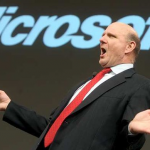
Last week, we asked you to put a caption to the photo above -- for a chance to win an HP TouchPad -- and, whoa, did you ever. We received about 300 responses in comments and by email. Many of the best caption contenders came by mail, while many others came too late to qualify; deadline was December 28, 2011 at 11:59:59 pm ET. Actually, among the late-comers there were some well-deserving contest considerations. :(
We reduced the number of candidates to 15; originally we planned 10 but there were so many good entries. We used a polyhedral dice from my old Dungeons & Dragons game -- yes, there was role playing before the Internet and Xbox 360 -- to cut the contenders to 12, nine, six and three. Then one -- so the winner was randomly chosen from among the top 15.
10 resolutions Microsoft should make for 2012
It's my annual ritual. Rather than make predictions for the new year, I arrogantly tell Companies X, Y or Z what they should do. This year, I asked colleague Ed Oswald to offer Apple resolutions, and Google's will come from you. I've got Microsoft, but, sadly, my list looks too much like last year's, and that's disturbing. If the world doesn't end for the rest of us in 2012, as Mayans predicted, it could for Microsoft, if CEO Steve Ballmer and top execs don't take the post-PC era more seriously.
In mid December 2010, I warned that "2011 will be make or break" for Microsoft. Viewed from perception, the year was more "make", as Microsoft marketing, successful BUILD conference and Xbox Kinect helped lift a long sagging image. Last year I put forth: "Perception management is a good 2011 priority for Microsoft, with no new versions of its flagship products planned for the year. The company needs to give consumers, developers and IT Pros reasons to get excited again about Microsoft software and OEM products". There, Microsoft succeeded.
Hey, Santa, which tech execs were naughty or nice this year?

Christmastime is coming soon, Santa's on his way. As jolly old St. Nick makes his rounds of Silicon Valley this weekend, which tech CEOs will be on his "Naughty" and "Nice" lists this year? We here at BetaNews are secret elves, and we'd like to help out the man in red by giving our opinion on who should get what they asked for, and who needs a big lump of coal.
Some of our picks are pretty obvious, while others may surprise you. Our list is intended to make you think and to spur some discussion on the trends in tech during 2011. Either way, we want to hear from you on who you think deserves to be on this list. We'll follow up Friday with your responses.
Can CES survive without Microsoft?
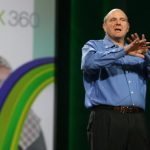
It is a move sure to change the dynamics of the Consumer Electronics Show, and one the tech media may not have expected so soon. Microsoft announced Wednesday that CES 2012 is the last it will maintain a significant presence. After this January? No keynotes, no booth. Attendees won't even know the Redmond, Wash.-based company is there in 2013. If you want to gawk at a CEO Steve Ballmer CES keynote, next year's show is your ticket, and the last.
"We won’t have a keynote or booth after this year because our product news milestones generally don’t align with the show’s January timing", says Frank Shaw, head of corporate communications at Microsoft. "It feels like the right time to make this transition".
First-impressions review: ExoPC 'Microsoft Signature Series' tablet

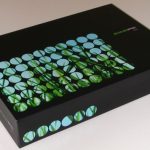
From all the buzz about iPad, or Android tablets, you'd never know that Windows slates are available and that they offer many unique benefits. I recently bought the ExoPC from Microsoft Store. It is a Microsoft Signature Series PC selling for $399 and running Windows 7 Home Edition.
The company says this about Signature Series PC: "Microsoft engineers carefully tune your PC to help it achieve maximum performance, and include software that really makes it fly. Add world-class antivirus security software with no renewal fees along with 90 days of technical support directly from Microsoft. That gives you a PC that's the best it can be, made that way with Microsoft Signature". The computer, or in this case tablet, isn't loaded up with performance-sapping, third-party software.
What is Microsoft's problem with Android apps?
Suddenly, Microsoft is a major developer for iOS. The software giant better known for Windows dropped three iOS apps or updates in just two days, and there are rumors of more coming (e.g. Office). But what about Android? "What about Android?" you ask, surprised. "Why should Microsoft give a hoot's fart app about Android? Google and open source are reasons enough why not Android". Yes, but Microsoft makes heaps of money from Android. Nothing from iOS.
Shouldn't Microsoft support the platform that is more personally profitable? The Redmond, Wash.-based company now has convinced most major Android developers to pay licensing fees, presumably because the open-source OS violates Microsoft patents. Perhaps threat of lawsuit is enough. It's serious money, too, $10 or more per device -- if rumors are to be believed. "Patent trolling with Microsoft" I called it in July. Microsoft makes what from iOS? Diddly.
Microsoft releases SkyDrive, Kinectimals for iOS

Microsoft debuted two new apps for Apple's mobile platform. The new apps are iOS versions of popular Kinect game Kinectimals and Windows Live SkyDrive, its online storage service.
SkyDrive is free, although Microsoft is charging $2.99 for Kinectimals. The game is the only app that the company currently charges for. The two apps follow the release of an Xbox Live app earlier this month and OneNote for the iPad, and Lync for the iPhone.
Are Windows 8 tablets DOA?
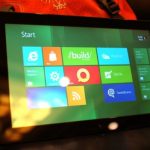
That's my question for you to ponder and to comment and debate about. Yesterday, a Forrester Research analyst proclaimed "Microsoft has missed the peak of consumer desire for a product they haven't yet released" -- it's already too late for Windows 8 tablets. He's absolutely nuts, I say. Or is he?
The analyst, JP Gownder, contends that "Windows 8 is going to be very late to the party" and Apple and Samsung tablets "will likely be into their third generation by the time Windows 8 launches". Microsoft is a late-starter to the tablet market. Meanwhile consumers have lost interest. "In Q1 2011, Windows was by far the top choice of consumers" with 46 percent US consumers pining for a tablet running Microsoft's OS. "By Q3 2011, that picture had changed dramatically...interest among consumers dropped to 25 percent". It's recipe for failure, he contends. I'm not sure what Forrester pays Gownder, but, hey, my more competent analysis is free.
Microsoft is in trouble

From a technology perspective, Thanksgiving 2011 ranks as one of my most insightful and frustrating holidays ever. I'm an enthusiast who wants to see Microsoft make a strong comeback among consumers. Unfortunately, three Turkey Day incidents left me disheartened.
Microsoft has got a big perception problem.
Which store offers better Black Friday deals? Apple or Microsoft?
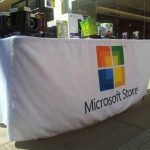
Consider yourself lucky if living nearby one of the 14 Microsoft stores -- there are big savings for you today and over the weekend. Live nearby one of the 330 or so Apple shops -- well, you can shop Microsoft Store online for real bargains.
Black Friday is perhaps the one day of the year where Apple and Microsoft differences in retail pricing and digital lifestyle are most pronounced. Apple continues its "pay-more" philosophy, which granted is good for margins and keeps shareholders happy, while Microsoft focuses more on value. That's all assuming Windows PCs at much lower selling prices are more valuable to you than costlier Macs. Hey, more Americans drive mini-vans than Mercedes. But plenty of others can afford and will pay more.
© 1998-2026 BetaNews, Inc. All Rights Reserved. Privacy Policy - Cookie Policy.