11 things Microsoft should be thankful for in 2011


This year I revive my annual "give thanks" series -- what Microsoft has to be grateful for this Thanksgiving Day. In 2006, "employee bloggers" topped the list and "Google's woes", following a year-long collapse of the search giant's shares, in 2008. What about 2011?
I present the list in reverse order of importance. No. 1 is the last item and the reason for which Microsoft should give most thanks this year (so far).
Can't afford Microsoft Office? Take Starter for free


If you’re looking for a free Office-compatible suite then there’s plenty of choice around, with tools like LibreOffice and OpenOffice.org offering a host of powerful features.
Another option is simply to install Microsoft’s Office 2010 Starter edition, though. It’s cut down, but still has more than enough functionality for many purposes, and can be used without a product key. The package only includes Word and Excel, and if you’re familiar with the regular editions then running either of these will quickly reveal some limitations.
Yusuf Mehdi is the best thing to happen to Xbox in years

Somehow I missed yesterday's rather startling Microsoft exec move, but, whoa, it's a doosey. Yusuf Mehdi, the sole-surviving executive of stature from the Online Services Business' better days, is stepping aside and taking up a new marketing role over Xbox -- and, whoa, is that a good thing. It's helluva loss for OSB, but Mehdi wasn't going up the executive ladder there anyway. His loyalty is worth something, and there's chance to distinguish himself at Entertainment and Devices the way he did during OSB's brief period of profitability (back when it was called something else).
Mehdi was one of Microsoft's young, rising stars during the early Noughties and he worked as part of the leadership that turned MSN from Money Pit to Black Gold. I beta tested the online service before its debut with Windows 95. Microsoft launched MSN in response to online services AOL and CompuServe, while failing to see the more important World Wide Web rising above them. The MSN group lost money from day one and continued to do so into the new century. There was a joke among some Microsoft employees that MSN was on the "red side of campus", because it was perennially unprofitable.
Microsoft's clever 'family' marketing campaign is exceptional

Microsoft's "It's a great time to be a family" marketing campaign keeps getting better. This ranks as one of my favorite high-tech promotionals in a decade and accomplishes something Microsoft has never successfully done in a mass-marketing campaign -- clearly show the benefits of multiple products working together. I spotted two more videos late today.
Before Microsoft launched the "I'm a PC" campaign three years ago, I recommended firing then new ad agency Crispin Porter & Bogusky, after the Chairman Bill Gates and Comedian Jerry Seinfeld commercials aired. But I was wrong to make the recommendation. The agency has produced for Microsoft a string of creative hits, of which the family campaign is just the most recent.
Is 'Hawaii 5-0' one long Microsoft commercial?
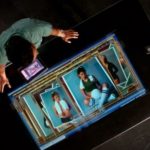
Product placement is the ultimate in marketing. It's relatively cheap -- that's assuming the company pays anything at all -- the value worth millions in potential sales and/or savings paying for actual advertising. Why pay for a 30- or 60-second TV commercial when your product can be part of the show? Or on CBS cop drama "Hawaii 5-0" be one of the stars of the show?
I've been pondering writing about Microsoft's product placement since 5-0's first season aired (season two started last month). The program's actors routinely use the company's big-ass table -- that is Surface -- and Bing to search from Windows Phone. But this week, in episode "Ma'ema'e", Windows Live SkyDrive joins the active placement of Microsoft products -- or cast, if you will.
Microsoft Q1 2012 by the numbers: $17.37B revenue, $5.7B profit

Will slowing PC sales be the end of Microsoft? You'd think so from some recent punditry, boatloads of Apple iOS device sales and consumers buying tablets and smartphones instead of new computers. But, today, after the closing bell, Microsoft showed that it has staying power and shouldn't be written off for dead (although Apple apologists give quarterly epitaphs). The Redmond, Wash.-based company revealed fiscal 2012 first quarter results after the closing bell.
For Q1, ended September 30, Microsoft $17.37 billion, up 7 percent year over year. Operating income: $7.2 billion, a 1 percent increase. Net income rose 6 percent to $5.7 billion, or 68 cents a share. Earnings per share rose by 10 percent year over year.
Microsoft rolls out early preview of "Project Roslyn" compiler for VB and C#


Microsoft on Wednesday released the community technology preview of Project Roslyn, a new type of compiler (considered a "Compiler-as-a-Service") that was first debuted at BUILD earlier this year.
Based on the Mono Project, Roslyn is designed to be a more open compiler (and not just "a black box," as Microsoft says) that lets developers access and utilize the data that it is generating on the Visual Basic and C# code it is compiling.
Microsoft continues to look beyond the glass screen with new touch experiments

At the ACM Symposium on User Interface Software and Technology (UIST) in Santa Barbara, California this week, Microsoft Researchers are showing off some experimental touch interaction projects that look beyond the flat glass touchscreen and move into different areas where touch-sensitivity could be employed.
OmniTouch, one of the projects making a major appearance this week, uses a pico projector and a Kinect-like depth-sensing camera to project "clickable" images onto any surface. It's actually quite similar to the device we first saw from the MIT Fluid interfaces group three years ago, which utilized a pico projector, smartphone, and camera to put an interface layer over the real world. The critical difference between the two is OmniTouch's use of a three dimensional camera that detects the difference between a click and a hover and allows for a much more sensitive interface.
It's a great time to be a Microsoft family

Two days before Christmas last year I posted "Talking about Microsoft Store", which contrasted the differences between people shopping there and the Apple shop a few doors down in Fashion Valley Mall, San Diego. Apple Store was busier, and the crowd younger, with lots of individuals and couples. I observed about the other shop: "Microsoft Store is where families meet".
So it is with great intrigue and curiosity that I watch Microsoft's new "It's a great time to be a family" marketing campaign unfold. I'm loving it. The first commercials clearly show the benefits of using Microsoft stuff and put them in context of what matters most to the majority: Family. Core family values also are central to the Microsoft lifestyle. And when I express "core family values" the meaning simply is "one another" -- not some moral conservative or liberal moral agenda.
Skype now officially property of Microsoft

Microsoft has completed the $8.5 billion acquisition of consumer VoIP and instant messaging service provider Skype from investment firm Silver Lake that was first announced
six months ago.
Now, Skype is officially a new business division inside of Microsoft, and the company's CEO Tony Bates will become president of that division, reporting directly to Microsoft CEO Steve Ballmer. For now, it appears Skype's products won't change.
Violate Microsoft's vendor code of conduct and you're fired

Microsoft on Thursday announced that it is broadening the amount of information it publishes from its global vendors regarding their business ethics, environmental policies, labor and human rights standards, and respect for intellectual property.
Microsoft's "Vendor Code of Conduct" is a set of rules that vendors, their employees, agents and subcontractors must adhere to if they want to keep doing business with Microsoft, and the company is looking to make more of this information available to shareholders, customers, and individuals so they can take a deeper look at how Microsoft is holding up its social responsibilities.
Get the Windows 8 look and feel on XP, Vista or 7

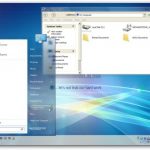
Even though the developer preview of Windows 8 is publically available, there will be some people who are keen to try out the upcoming operating system without having to go to the effort of setting up a dual boot system or wiping out their existing installation. This is where transformation packs can help, and the Windows 8 Transformation Pack 2.0 and UX Pack 3.5 have just been released with a view to making the task of mimicking Windows 8 easier and more impressive than ever.
In a matter of moments, the transformation tools enable you to turn your copy of Windows XP, Vista or 7 into a very close match to the look of Windows 8. The pack makes use of genuine Windows 8 resources to give an authentic finish, and this updated version includes changes to UI fonts, as well as the very latest icons navigation buttons and other interface components.
Five years on, Microsoft finally gives up on Zune


It seems like eons ago that the first details of Microsoft's Zune player were leaked right here on the pages of Betanews, but five tortuous years later that effort is over. On the company's official support website, Microsoft let users know that it was finally giving up.
This was a complete reversal from its statements just yesterday denying that its music player was dead. Asymco founder Horace Deidu noted the irony. "Yesterday Microsoft denied that Zune was being discontinued," he mused. "Today it confirmed that Zune has been discontinued."
Samsung to release its first Windows Phone 7.5 mobile in Italy
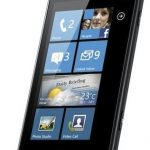
Samsung unveiled a new smartphone based on Microsoft's Windows Phone 7.5 "Mango," the Omnia W on Monday. The Omnia W is the latest in a line of higher-end Microsoft-powered smartphones from the company, all which carry the "Omnia" brand.
The Omnia W features a 1.4GHz processor and HSPA capable of 14.4Mbps connectivity. The screen is a 3.7" Super AMOLED and features both front and rear facing cameras. It also features built-in Facebook, Twitter, Windows Live, and LinkedIn connectivity through Microsoft's "People Hub."
Microsoft's antitrust case stifled innovation

Microsoft CEO Steve Ballmer hit me with a club yesterday -- okay, figuratively, but it didn't feel that way. He boomed onto the BUILD developer conference Day 2 keynote stage with an unexpected message: Microsoft is re-imaging -- that is reinventing -- around Windows. Now that's talk I haven't heard from the big boss in about 10 years.
"Our point of view is Windows is at the center", Ballmer told financial analysts a few hours later. The proclamation is stunning because of timing and what Microsoft is doing with Windows 8. In mid May, US trustbusters finally ended oversight of Microsoft; the company plans to integrate into Windows 8 the kind of stuff it hasn't since, well, XP launched a decade ago next month.
© 1998-2026 BetaNews, Inc. All Rights Reserved. Privacy Policy - Cookie Policy.