New technology stops mobile malware calling home


Modern day malware is all about stealing, whether it's data or money. That means to be effective it needs to communicate with its command and control servers.
A new technology released by cloud-based anti-malware company Percipient Networks for its Strongarm product aims to break this link without the need for VPNs or other potentially hard to implement solutions.
IT heads lack the confidence to fight security threats


Despite seeing how painful poor cyber-security posture can be on a company, IT decision makers are still skeptical of the funds given to them by upper management to combat the threat, and lack the confidence, too. This is according to a new report by cloud business applications provider Intermedia.
The company surveyed 350 ITDMs, asking questions in four categories: security, general IT services, infrastructure and skilled IT workforce. Overall, the confidence score is 7.2 out of 10, which Intermedia calls "modest" (0 means a company is not confident at all, and 10 means the company is "extremely confident").
Three security trends that will take off in 2017

Cybersecurity, the Internet of things, driverless cars, artificial intelligence. These topics were hot in 2016, and interest in them should continue strong in 2017. However, the discussions will take new turns. Where will they go?
I predict that three particular trends will gain real momentum and re-shape the cyber landscape in 2017.
70 percent of businesses are willing to pay up for ransomware

We've already seen this week that ransomware is an increasingly popular attack method. The fact that it's a profitable activity for cyber criminals is underlined today by a new report from IBM Security which reveals that 70 percent of businesses pay up to regain access to their data.
This puts criminals on target to make nearly $1 billion in 2016 from their use of the malware. Indeed, the report shows that ransomware made up nearly 40 percent of all spam e-mails sent in 2016, up from less than 0.6 percent in the previous year.
Protect yourself online with EFF's updated Privacy Badger 2.0


In the second decade of the 21st century, the blind excitement about the internet has worn off -- now users are aware of the dangers and are concerned about privacy. Cookies have been around for just about as long as web connections, but there are all manner of ways to track people and spy on online activity. This is something that Privacy Badger 2.0 aims to help with.
Coming from the digital rights group Electronic Frontier Foundation, the tool takes the form of a browser extension -- available for Chrome, Opera and Firefox. It blocks online trackers that can be used to monitor your activity, ensuring your privacy.
November saw a spike in ransomware attacks

Ransomware remains a major threat with attacks using Locky and Cryptowall both increasing by 10 percent in November compared with the previous month.
The latest report from threat prevention specialist Check Point based on its Global Threat Index shows the number of active malware families and number of attacks remain close to an all-time high thanks to continued relentless attacks on business networks.
The biggest high-profile password blunders of 2016
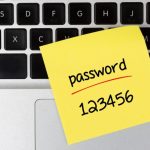
Weak or reused passwords are one of the main causes of security breaches and nobody is immune from the problem.
Password manager company Dashlane is seeking to raise awareness of the issue with the release of what it calls its P@ssholes List, highlighting the celebrities and high profile organizations that have fallen victim to poor password habits in the past year.
It's time to put passwords out to pasture

Once again, the world has woken up to news of another huge data breach and another reason that the current password security system for business applications and websites is flawed. This time it was 412 million reasons, this being the number of accounts and user credentials that were exposed following the breach of FriendFinder Networks.
Despite this becoming such a common occurrence, so common that headlines can be saved for "Business name suffers data breach and X number of details have been hacked", the cybersecurity world has not woken up to the real problem or implemented a solution that actually works.
Popcorn Time ransomware asks victims to infect other computers to decrypt their own files

Ransomware is the malware du jour and those seeking to extract money from victims have started to use a pyramid scheme system to increase the rate of infection. Not content with encrypting a victim's files and holding them to ransom, the Popcorn Time ransomware encourages those who have been struck to pass on the infection.
As is the norm with ransomware, Popcorn Time gives the victim the chance to pay a Bitcoin ransom to decrypt their files, but it also offers a self-described "nasty way" to unlock files for free. Think of it as a ransomware referral scheme.
Fighting ransomware in the cloud
A recent survey of 500 businesses revealed that nearly half were brought to a standstill by a ransomware attack within the last 12 months. Ransomware is malware that installs covertly on a victim's computer, executes a crypto-virology attack that adversely affects it, and demands a ransom payment to decrypt it or to not publish it.
There has been more and more documented evidence that ransomware is on the rise, particularly in the UK. It's being used as a sort of testing ground to the point whereby ransomware has become the number one threat facing British organizations in 2016.
Firewalls give enterprises a false sense of security

The recent US elections served up plenty of drama and even more suspense as the campaign entered its final stretch. Pollsters and forecasters crunched data continuously to accurately predict the paths to victory or defeat for both parties.
One of the most publicized concepts was the supposed "blue firewall", a group of states that had consistently voted for the Democratic party in past elections. If the Democrats could hold onto their lead in these states, they’d all but guarantee victory, or so the polling experts predicted…
Why cybersecurity is an essential part of any enterprise’s security plan
Online, hooked up, plugged in and "on the cloud". Whether it is your own personal information such as saved passwords or credit card information or if it is your client's’ personal information, so much of our personal lives can now be easily accessed just with a little Wi-Fi. With our new found accessibility -- everything at the click of a button -- our lives have become all that much more convenient, and our businesses and assets have become all that much more vulnerable. Cybercrime has boomed over the last decade and has become a real problem for businesses, large and small alike.
In the U. S. alone, more than 35,000 computer security incidents happen each day, and that is only the reported attacks. Many more attacks happen but go unreported as businesses aren’t legally required to report some types of attacks. According to PwC’s 2015 US State of Cybercrime Survey, a total of 79 percent of respondents detected a security incident in the past year. The security firm Gemalto estimated that in 2015 alone, more than 700 million data records were compromised, but unfortunately only 37 percent of organizations have implemented a dedicated cyber incident response plan.
Employees' bad security habits put businesses in danger

Employees have poor security practices and use completely unsecured private devices for work, putting their organizations at huge risk of cyber-attacks, a new report by WinMagic says. After polling workers in the UK, the report says more than four in ten (42 percent) use private devices for work, accessing corporate data and e-mail accounts.
More than half (52 percent) use private accounts, including enterprise file sharing services (EFSS), which they use to either store or access corporate files. Only a third (34 percent) say they had never done so. Laptops, smartphones and USB devices are the top three personal devices used for work, and Hotmail, Gmail and Dropbox are the top three online services used by employees.
Points mean prizes in gamified DDoS platform

Gamification is increasingly used by business as a means of enhancing the usability of software. But now it seems hackers are exploiting the technique too.
Researchers at threat protection company Forcepoint have uncovered a DDoS package being shared on Turkish hacking forums employing a gamified approach.
Many of UK's NHS trusts continue to rely on Windows XP

Nine in ten NHS trusts still rely on Windows XP, even though Microsoft stopped supporting the platform with new patches and security fixes a year and a half ago.
This information was released by Citrix, and it is based on a Freedom of Information (FoI) request. Out of 63 trusts Citrix reached out to 43 responded, and 90 percent say they still use Windows XP.
© 1998-2026 BetaNews, Inc. All Rights Reserved. Privacy Policy - Cookie Policy.