Employees can put corporations in danger for little money


The recent breaches of large corporation internal systems has lead some security analysts to believe indifference from employees is a key factor, rather than rogue nations attacking the private sector.
Identity management firm SailPoint claims employees would be willing to sell corporate information like passwords for as little as £100 and routinely use the same passwords for almost all applications.
Securing business applications in real-time


As demand to access company information on the move and from mobile devices increases it places extra strain on security resources.
Existing web applications firewalls (WAFs) monitor traffic but don't have an understanding of the logic of data flows and the behavior of applications. This can make it hard for them to distinguish between legitimate traffic and attacks on apps such as SQL injection and cross-site scripting.
Stop jumping to conclusions! Lizard Squad didn't take down Facebook


Despite many reports to the contrary, there is nothing to suggest that downtime experienced by Facebook, Instagram and Tinder was anything to do with Lizard Squad. Earlier today, the three services were inaccessible for a short while and Lizard Squad took to Twitter to announce the outages.
The tweet, which read "Facebook, Instagram, Tinder, AIM, Hipchat #offline #LizardSquad" was taken as an admission of guilt and reported as such by many, many websites. Even when Facebook announced that the downtime came as a result of a system change by Facebook, site after site continued to report that Lizard Squad was to blame.
New ransomware is making the rounds via email

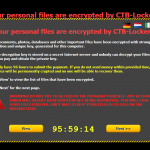
The "pay or lose your files" concept of ransomware seems to have taken off with hackers and crime syndicates, becoming the modern cyber equivalent of the mob shakedown. Sort of like paying "protection money".
Now a new ransomware variant has been spotted in the wild, spreading via email, just as previous ones had. The latest is being referred to by the catchy name of Trojan.DownLoad3.35539, and appears in a message as a ZIP file with hopes that unsuspecting recipients will launch it.
Facebook is the world’s favorite identity
With more and more websites requiring passwords to access them, people are looking for ways to manage their surfing that don't require multiple IDs.
Increasingly the answer they're turning to is social media and in particular Facebook. A new infographic from identity management specialist Gigya shows that the social network accounted for over 60 percent of logins in the fourth quarter of last year.
How hackers can infiltrate a network and remain undiscovered

In 2014 we saw many data breaches which were often due to a direct attack on a company’s network in which human error played a part.
Big data security specialist Exabeam has produced an infographic showing how hackers can penetrate a network and remain difficult to spot.
Adobe issues security bulletin for Flash...again

In the race to the bottom of security, Flash has remained a strong contender, competing with Java to win the competition. It's really nothing against Adobe, the company seems to try fairly hard to keep things safe. It's more that Flash is so popular that it becomes a primary target. Something Microsoft would know a thing or two about, given the success of Windows.
The company has issued its latest security bulletin. It isn't the best of news -- the report seems to encapsulate two vulnerabilities, and both are being exploited in the wild.
The social media threats to watch for in 2015

The increased popularity of social media, for business as well as personal use, has opened up a new avenue of attack for cyber criminals.
Risk management company ZeroFOX has produced a list of the top social media attacks to look out for this year.
The effect Obama's new cyber laws will have on UK firms

President Barack Obama made clear in his State of the Union address earlier this week that he intends to push through new legislation aimed at tightening corporate cyber security standards across the US. Just as the US’s Sarbanes Oxley Act of 2002, designed to improve the accuracy and reliability of corporate disclosures in the wake of the Enron scandal, effectively forced companies wanting to partner or do business with US corporations to comply with its rulings, so Obama’s proposed cyber laws are likely to have a global ripple effect across businesses outside America. Companies based in countries like the UK will need to tighten their own cyber security if they expect to do business with American firms which might otherwise see them as a weak link and potential vulnerability in their communications and data networks.
In his address to the nation on Tuesday (January 20th 2015), Obama said: "I urge this Congress to finally pass the legislation we need to better meet the evolving threat of cyber-attacks, combat identity theft, and protect our children’s information. That should be a bipartisan effort. If we don’t act, we’ll leave our nation and our economy vulnerable".
Kim Dotcom launches encrypted MegaChat beta, complete with bounty for security flaws

There was a time when Kim Dotcom was hardly out of the news, but it's been a little quieter for him of late. He popped up recently when he apparently intervened and persuaded Lizard Squad to stop attacking the PlayStation Network and Xbox Live. Dotcom used the opportunity and attention he drew to himself to advertise his Mega storage service, and anyone following him on Twitter can't help but have noticed constant references to MegaChat.
Well, the time for talking about MegaChat is over. The browser-based, ultra-secure chat service that offers end-to-end encryption is now ready for you to talk through. Dotcom refers to it being a Skype-killer, but it remains to be seen just how much trust people are willing to place in the service.
Is it time to say goodbye to the password?
Microsoft's Bill Gates predicted the death of the password as long ago as 2004, yet we're still heavily reliant on them for our day-to-day security.
Part of the reason the password has lingered so long is the lack of solutions that provide security combined with ease of use.
LastPass for OS X puts password manager directly on the Mac desktop


LastPass has released LastPass for Mac 3.2.0, a desktop version of its popular password-management tool. The app, also available as a series of browser extensions for Safari, Chrome, Firefox and Opera, now sits at the heart of the user desktop.
Once installed and launched, LastPass for Mac places an icon into the menu bar. It also creates a new Quick Search tool for speedily accessing, viewing and editing stored passwords and other notes.
93 percent of US organizations are vulnerable to insider threats

In the past few years the adoption of new methods to access corporate data has led to traditional endpoint security being less effective. At the same time there are concerns about the number of employees who have access to data and how much of a threat they present.
Data security specialist Vormetric has released its latest Insider Threat Report which reveals that 93 percent of US organizations polled believe that they’re vulnerable to insider threats.
Facebook aims to wipe fake news stories from your newsfeed

The queen is dead, boys! President Obama has announced he's going to step down! You can rewrite Facebook's privacy policy to your liking! Sick of seeing fake news stories cluttering up your Facebook newsfeed, getting in the way of content you actually want to see? Facebook feels your pain and is taking steps to cut back on the hoaxes.
Stop me if you think that you've heard this one before, but not everything that appears online is one hundred percent true. In fact, there's a huge amount of content that is twaddle, pish, balderdash -- and lots of people fall for it. Facebook is introducing a new feature that lets you report a story as being fake, and if enough other people do the same, the power of crowd sourcing means the story will be culled.
The worst passwords in the world -- is yours on the list?

Did you resolve to increase your security in 2015? If the list of top passwords used in 2014 is anything to go by, a lot of people should have had this right at the top of their list of New Year's resolutions. Security and password firm SplashData has published its annual list of the most common (worst, in other words) passwords that are in use.
If there's anything positive to be taken from this terrifying list of insecurity, it's that 'password' is still not the most used password out there. It only slipped to second place last year to be replaced by '123456'. The top two positions remain the same this year, so there's not really that much cause for celebration. But the list makes for interesting reading, particularly when you consider these (supposedly) security-conscious times we live in.
© 1998-2026 BetaNews, Inc. All Rights Reserved. Privacy Policy - Cookie Policy.