Poetic Justice -- DDoS service operated by Lizard Squad gets hacked, user data leaked


The past few weeks have not been kind to hacking group Lizard Squad. They've managed to raise the ire of the last possible group of folks you'd wish to anger -- Anonymous. The organization is also experiencing arrests of its members, thanks to poor procedures put in place for identity protection. But the latest blow may come as poetic justice to many people.
The loosely-knit hacker communicative has been trying to sell its wares online -- namely DDoS for hire services. Unfortunately for it, and rather fortunately for the rest of us, the offering has been hacked. According to multiple reports LizardStresser.su was compromised.
Minecraft usernames and passwords leak online


Minecraft is a phenomenon. The online game is incredibly popular with well over 100 million PC downloads to date. When Microsoft bought developer Mojang last September it had to shell out a cool $2.5 billion to do so.
So it’s perhaps no surprise that players of the game have been the target of hackers keen to get their hands on poorly guarded gaming credentials. Armed with a valid user name and password, anyone can log into a game, or download a full copy of Minecraft.
US government -- 'Do as we say, not as we do' when it comes to hacking
While the news of the recent Sony hack has died down, it certainly isn't forgotten. The simple fact remains that we still have no clear answer on who was responsible. The US government blamed North Korea and initiated sanctions on the nation, though no real evidence was put forth to support this alleged misdeed, leaving the move to reek of political motivation.
The simple fact that the hackers originally asked for money, as if it were a hostage situation, seems to point away from state-sponsored wrongdoing, but we simply don't know the real truth, and perhaps never will. All we really know is there's a lack of evidence for this case. We'd be safe in speculating a jury would be unlikely to convict the country.
North Korea blamed for Sony hack because NSA had been spying since 2010


When Sony Pictures was hacked, the US was quick to point the finger of blame at North Korea. Security experts may have disagreed, but newly declassified documents show that the NSA had been monitoring the nation as far back as 2010 -- and there are even hints that the US was aware of the possibility of North Korea launching some form of cyberattack.
With the help of allies such as South Korea, US intelligence services were able to tap into North Korean web traffic. The NSA also went as far as installing malware on North Korean computers with a view to monitoring the activity of key systems. New papers published by Der Spiegel show that it is this spying that helped to pin the blame for the Sony attack on NK.
'Easy Disk Drive Repair' is not what it seems


"Easy Disk Drive Repair" looked like a promising program. "An incredibly easy to use, yet powerful drive repair and maintenance tool", the developer claimed. Works with all drive types. More than one million downloads, five star awards plastered all over their product pages, and listed at big sites like Softpedia and ZDNet.
Sounded great, but we don’t like to copy and paste a developer’s description onto our own pages. We wanted to try it out, first.
Listen up, Microsoft -- Verizon fixes critical email security flaw in two days

When it comes to fixing security problems, it's better for everyone involved if a patch can be released as quickly as possible. A few days ago, a critical vulnerability was discovered in Verizon's FiOS app by Randy Westergren when he found it was possible to access the mail account of any Verizon customer with relative ease.
In stark comparison to the unhurried approach adopted by Microsoft to fixing problems identified in Windows -- on more than one occasion failing to hit a public disclosure deadline set by Google -- Verizon acknowledged, investigated and fixed the problem within two days. The problem itself was worrying, but the speed of reaction is impressive.
Google reveals two more unpatched Windows security bugs

Earlier in the week, Google managed to raise the ire of Microsoft by publishing details of a vulnerability in Windows before a patch had been published. Now the same thing has happened again, but this time it's a double whammy. Google Security Research has revealed two more security holes that Microsoft is yet to fix.
Just as was the case a few days ago, Microsoft had been warned about the security problems and Google agreed to keep details private for a period of 90 days. Now the three months is up, details of the security issues have been automatically published, running the risk that users could be targeted.
UK man arrested for Christmas Xbox Live and PlayStation Network attacks

Cyber crime investigators have arrested an 18-year-old man in the UK for the attacks of the Xbox Live and PlayStation Network that took place over Christmas. This is something that Lizard Squad has claimed responsibility for, but at the moment it is not clear whether the man who has been arrested is associated with the group.
South East Regional Organised Crime Unit (SEROCU) worked in conjunction with the FBI and the UK's National Cyber Crime Unit to home in on the unnamed man believed to have been involved in the DDoS attacks. Thousands of gamers had their Christmases spoiled after the gaming networks were rendered inaccessible, leading Sony to offer compensation to those affected.
Frequent flyer miles no longer safe as American and United airlines get hacked

Those who travel regularly count on the frequent flyer miles that almost all airlines offer. Customers use these to build up for free trips or upgrades to a better class seating section. But what happens when these miles get swiped away from you? American and United airlines are finding out.
Both flight providers have experienced theft of these miles, carried out by hackers that got hold of access from customer account information. The miles were used to book free trips and upgrades.
IObit launches safe payment environment for mobile users

Perhaps best known for its SystemCare products for Windows, software company IObit is launching a new version of its Android app, AMC Security.
AMC Security is a combined security and device optimization app. Among the new premium features included in this release is Payment Guard, which is designed to protect mobile users' financial data and the mobile payment and banking process.
The cost of dealing with false positive malware alerts
False positives are often accepted as a fact of life with anti-virus programs but a new survey commissioned by breach detection specialist Damballa reveals that they have a significant cost for businesses.
The study produced by the Ponemon Institute reveals that enterprises spend $1.3 million a year dealing with false positive cyber security alerts, which equals nearly 21,000 hours in wasted time.
War is declared: US and UK to engage in cyber attacks

The US and UK usually get on pretty well, but plans are afoot for the two nations to stage cyberwar on each other. Later this year, Wall Street and the City of London will be subjected to a series of attacks that is being described as "unprecedented".
But this does not signal a breakdown in the "special relationship" that extends across the Atlantic, rather the "war games" are part of a venture between the two countries to help improve security. The aim is to expand information sharing in a bid to stave off real cyber attacks that could be launched by other nations.
Marriott hotels back down on plans to block guests' Wi-Fi hotspots

The Marriott chain of hotels has backtracked on its plans to block guests' Wi-Fi hotspots. The group had previously indicated a desire to make use of blocking equipment with a view to increasing security. But the likes of Google and Microsoft saw this as undue interference and decided to fight the plans.
Marriott International went as far as applying to the FCC for permission to use signal blocking equipment, but it has now done a complete 180 and announced that no Wi-Fi blocks will be put in place.
SAASPASS makes two-factor authentication available to the masses
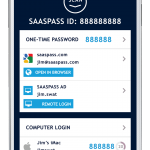
Passwords are increasingly being seen as inadequate for protecting information and businesses and end users alike are looking for more secure alternatives.
San Francisco-based SASSPASS is making it easier to implement two-factor authentication with the launch of its Computer Connector. In conjunction with a SAASPASS mobile app it enables quick and easy 2FA for Macs and PCs.
Changing employee behavior can cut security risk by up to 70 percent

Whilst companies employ an array of sophisticated technology to combat security risks, often the weakest link remains the person sitting in front of the screen.
New research from Wombat Security Technologies and the Aberdeen Group suggests that changing employee behavior when responding to cyber threats via social media, phishing and other popular attack vectors can reduce an organization's risk by as much as 70 percent.
© 1998-2026 BetaNews, Inc. All Rights Reserved. Privacy Policy - Cookie Policy.