Time’s up! CryptoLocker ransomware is back in business


CryptoLocker recently had something of a setback when law enforcement agencies managed to seize control of servers running it and the GameOver Zeus botnet. Britain's National Crime Agency (NCA) declared this would give computer users a unique two week opportunity to secure their systems, which seemed a rather precise claim.
It turns out that prediction wasn’t too far off the mark. Three weeks after that warning, and CryptoLocker is indeed making its return, this time as a standalone threat. The new strain does not rely on 2048-bit RSA encryption nor need a Command and Control server to work.
Kaspersky Lab uncovers new Android and iOS spying tools

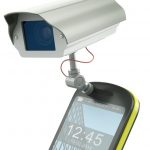
Security company Kaspersky Lab has published a new report uncovering previously undiscovered Remote Control System (RCS) Trojans that work on both Android and iOS. It's also mapped their massive international command and control network.
The Trojans are part of the allegedly 'legal' spyware tool, RCS, also known as Galileo, developed by the Italian company, HackingTeam. Kaspersky's researchers were able to map the presence of more than 320 RCS command and control servers in over 40 countries. The majority of the servers being found in the United States, Kazakhstan, Ecuador, the United Kingdom and Canada.
Google's Nest thermostat hacked with Linux -- backdoor enabled on device

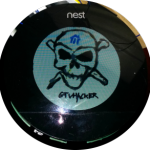
Sometimes it feels like the whole world went and got crazy. It's true, with every passing day, all types of newfangled gadgets, doodads and wild ideas are released. Google is at the forefront, with Google Glass, self-driving cars and Nest internet-connected thermostats. Truth be told, I'm hardly a Luddite, but I am wary of having a computer and camera strapped to my head or having my home connected to the internet.
I am not scared of the technology, but of the hackers. You see, anything connected to the internet has the capability of being hacked or exploited. This makes me hesitant to embrace the connected home. Think I'm crazy? Think again. Today, popular Google TV hacking site GTV Hacker, announces it has hacked the device to enable the booting of unsigned code. If you own a Nest, hackers could have a backdoor into your home.
Too many servers still vulnerable to Heartbleed exploit


Since it was brought to our attention three months ago, Heartbleed made countless headlines due to the severe dangers it poses. The vulnerability, which affects systems using the OpenSSL library, allows hackers to penetrate affected servers without leaving any trace of their actions behind. Its severity would lead us to assume the people responsible to prevent it from making any (more) damage have already taken all the necessary precautions in this direction.
And, indeed, popular service providers have been quick to address the problem, with the likes of Google, Facebook and Microsoft publicly stating whether the vulnerability could affect their products and users, and issuing patches where needed. This has given us a false sense of security, knowing that the worst has passed. Yet, even today, Heartbleed can still do quite a bit of damage.
The most popular stories on BetaNews this past week: June 15 -- 21


This is the week of the Surface Pro 3. Brian had already attended the launch event earlier in the month, and has provided an essential list of hardware and software purchasers need to grab for the best all round experience -- he even goes as far as suggesting that it's better than a MacBook Air. Even before launch there was an update available for the tablet-cum-laptop, and there was also news that the Intel Core i3 and i7 models would be shipping earlier than previously expected. But not all of the products we looked at this week were quite so "every day". There was the wifi doorbell complete with camera, and also the prospect of charging your phone wirelessly with your pants -- yes you did read that correctly.
The Windows Phone market is dominated by Nokia, but a new batch of handsets has been unveiled by Indian manufacturer Micromax. If Android is your mobile OS of choice, you may be thinking about venturing into the rooted world. This week a new tool was released that makes the process as quick and painless as possible, opening up a whole new breed of apps and options. Joe decided to take a walk on the wild side and adopt the Nokia Lumia Icon as his phone of choice. In the Android arena, a new contender entered -- the Amazon Fire Phone. Will a kill switch be added? Microsoft and Google have agreed to add it to their mobile operating systems.
Request legally binding signatures via any email client
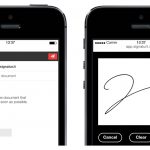
Email may have revolutionized business communication, but if you need a signature on a contract or business document in most cases you still have to send it through the post or use a cumbersome e-signature app.
Until now that is, Barcelona-based startup Signaturit has a new solution that enables you to request handwritten signatures through any email client.
Paedophile use of dark net increases for child abuse images

Tens of thousands of paedophiles are using the dark net to circulate images of sexual abuse, according to a report by the BBC.
The National Crime Agency said that abusers were increasingly turning to encryption software to maintain anonymity. The dark net is a hidden part of the Internet which can only be accessed by special software, one of the most popular of which is the TorBrowser.
Microsoft, Google to include kill switch in Windows Phone, Android
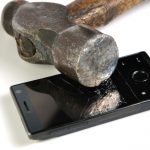
Both Microsoft and Google have agreed to add a kill switch their mobile operating systems. Following an agreement with the New York Attorney General, the next versions of Windows Phone and Android will include a feature that will render handsets useless if they are stolen. The attorney general, Eric Schneiderman, published a report yesterday outlining the importance of such a feature, and revealed that two of the biggest names in technology are on-board.
It's something that authorities have been calling for for some time now, citing the sheer number of mobile phone thefts taking place around the world. Schneiderman's report points to Apple as proof of the efficacy of a kill switch. Thefts of iPhones dropped by 17 percent in New York City after the introduction of a remote wiping and locking feature. The Secure Our Smartphones report took fire at Samsung. The company had opted not to include a kill switch, and thefts of Samsung handsets jumped by 40 percent in NYC. "Reactivation Lock" has since been implemented on a small number of new Galaxy handsets.
Heartbleed: Really that bad?

Most information security scares come and go with relatively little fanfare, some though make a splash and catch the attention of the public and media.
Heartbleed was the latest to fall into the latter category and sent the IT world into a bit of a frenzy. But how bad was it really? Security specialist Secunia rates vulnerabilities on a one to five scale and given the amount of publicity it received you might expect Heartbleed to be at the top end.
LinkedIn repeatedly ignores warning of widespread security flaw
LinkedIn has failed to address a security flaw for over a year that puts at risk the data of all of its over 300 million users and means that sensitive user information can be pilfered easily.
A report conducted by Zimperium Mobile Defense Security found a straightforward MITM attack that uses an SSL stripping technique allows hackers to steal user credentials and gain full control of an account.
How the mobile threat landscape is challenging companies’ ability to respond

As with cyber security generally, the mobile threat landscape is constantly evolving. So although businesses may have invested heavily in solutions like antivirus and mobile device and application management they can’t afford to relax.
Mobile security specialist Zimperium, the company that uncovered the recent LinkedIn flaw has released a whitepaper looking at the attack vectors that specifically target mobile devices.
Emsisoft Anti-Malware 9.0 adopts Windows 8-themed facelift, available for just $9.99


Emsisoft has released Emsisoft Anti-Malware 9.0, a brand new version of its dual-engine anti-malware tool for Windows users. Version 9.0 sports a major facelift, improved performance and "hundreds of detail improvements" for better usability.
To celebrate the release, users have a nine-day window in which to purchase 12 month’s protection for the special introductory price of just $9.99, a saving of 75 percent on the usual MSRP.
1Password for Windows 4.0 tightens security, adds new features
Toronto security firm AgileBits has completed its round of major updates to its secure password storage service with the release of 1Password for Windows 4.0. With version 4, AgileBits has revamped the Windows build, significantly closing the feature-set gap between it and the more fully developed Mac version.
Highlights of this release include tighter security, a number of significant new features and the promise of vastly improved performance, and follow on from the recent Android update.
End users are the biggest headache say security professionals

Business security specialist Bromium has released the results of a survey of over 300 IT security professionals looking at endpoint threats.
It finds that the majority believe end users to be the biggest security headache, that existing security solutions are unable to stop endpoint infections, and that antivirus can’t stop advanced, targeted attacks.
One in five businesses are still using Windows XP despite the risks
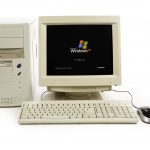
Microsoft ended support for XP two months ago, yet consumers are still proving resistant to change, and many businesses are similarly reluctant to upgrade to a newer version of Windows.
According to security firm Bitdefender, which conducted a three-month global study into the operating system use of small and medium businesses, nearly 19 percent of firms, or almost one in five, are sticking with the aging XP despite security concerns.
© 1998-2026 BetaNews, Inc. All Rights Reserved. Privacy Policy - Cookie Policy.