Microsoft reveals 37,000 data requests from law enforcement agencies


Just about every company with an online presence is getting into the sharing game. It's something we’ve already seen from other companies. Facebook has already shared information about the data requests it has received from governments, and LinkedIn, Microsoft and Google all want to be able to tell us more. Now Microsoft is sharing what it can about the requests for information it has received from law enforcement agencies around the world.
The company's second Law Enforcement Requests Report covers the first six months of 2013 and reveals the requests received for data about users of all of Microsoft's online services. There is no particularly detailed breakdown of the figures, but they do include requests made for information about Skype. Despite collating figures for all Microsoft services, it looks as though the number of requests is in line with the figures from last year. In the first six months of 2013, Microsoft received a total of 37,196 requests relating to 66,539 accounts. This compares to 75,378 requests impacting 137,424 accounts throughout the whole of 2012.
Vet unsafe websites with WOT 2.0, out now for Chrome, Safari and Firefox


These days most browsers offer some form of basic protection against clicking a fake link and visiting phishing websites (facsimiles of genuine sites that attempt to trick users into giving up sensitive personal information like passwords and credit-card details). But they don’t offer much else protection against other dangerous sites.
This is where Web of Trust (WOT) comes in: it maintains a database of websites, rating them for safety, privacy and security and giving you a second opinion about whether or not a particular site is safe to shop at, share personal details with or even simply visit.
AirCover Security promises all-in-one protection for your Android device [Review]

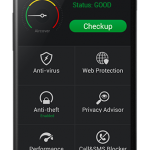
All of the major antivirus firms -- big names like Symantec, McAfee, AVG and Kaspersky -- offer mobile security apps for Android which can help protect against malware and theft. There are offerings from lesser known companies available too.
BlueSprig is a newcomer in this field, but its AirCover Security Android app is a comprehensive offering which can protect against malware and theft, help boost your privacy, block unwanted calls and SMS messages, and safeguard you on the web, as well as optimize your system.
Sighthound claims to add people detection and better search to home security


I am a long time customer of a home security system, and it has been a wild ride through much of its history, but not one I will detail here -- suffice it to say, the alarm can scare you to death for no reason at times. Adding a camera can intensify this problem, by opening up the motion detection to every creature that wonders into the field of view -- a lot as I live in a rural area.
Now, Sighthound wishes to fix that problem with new technology that can distinguish images and filter out the false alarms. "Sighthound Video has been trained to simulate the human brain’s recognition abilities. The software not only detects motion, it detects people. The software’s ability to detect and differentiate humans from animals or other objects greatly reduces the number of false positives and unnecessary alerts sent to users, which can make even the most modern security cameras unusable", the company claims.
Using Mailbox for iOS? There's a JavaScript security hole to beware of

A potentially serious security flaw in iOS email app Mailbox is being investigated. Michael Spagnuolo, an Italian computer engineer writes about discovering that the app automatically executes any JavaScript that might be embedded in the body of an email.
Michael has recorded a video demonstrating a few proofs of concept which leaves iPad and iPhone users open to potential attack. His example scenarios are purposefully harmless -- he has opted to show how opening an email could lead to an app being opened without permission or instigate a tweet or SMS (although it is not sent without confirmation) -- but the security hole is going to make many users feel uneasy.
Companies must refocus privacy efforts says Gartner report


According to a survey by research company Gartner only 43 percent of organizations have a comprehensive privacy program in place whilst seven percent admit to only doing the bare minimum to address privacy laws. The results are based on 221 organizations surveyed in April and May 2013 in the US, Canada, UK and Germany.
"More than a third of organizations still 'consider privacy aspects in an ad hoc fashion' and it is surprising that so many companies are saying that they are not conducting privacy impact assessments before major projects. Sixty-two percent do not scan websites and applications, or conduct an organization-wide privacy audit every year. Organizations must put these activities on their to-do list for 2014," says Carsten Casper, research vice president at Gartner.
How to find, lock, ring and wipe your Windows Phone remotely


Windows Phone receives quite a bit of bad press for its immature feature set and lack of killer apps. The smartphone operating system, however, has a few neat tricks up its sleeve which some users may not even know about. The one feature that I find to be quite useful yet highly understated is the ability to find, lock, ring and wipe Windows Phones, officially known as "find my phone", which comes in handy in case of theft or misplacing the handset.
The feature is available, and probably operational too, out-of-the-box. You only need a couple of minutes to spare, a Windows Phone and access to a computer, smartphone or tablet, to set it up properly and find, lock, ring or wipe your handset remotely.
Remotely add password protection to your lost or stolen Android phone

Protecting your phone may well be something you don’t think about until it is too late. I'm one of those people who can't stand PIN protection on phones -- heck, I hate the lock screen… I just want to switch on and start using my phone! For people like me, there is a new feature in the superbly useful Android Device Manager. This free tool was released back at the beginning of August, but there's now an interesting new option that has been quietly added.
Previously when you lost your phone you had a couple of options -- call it to locate it, or remotely wipe it (which is quite an extreme length to go to). Now when you head to the Android Device Manager Page you'll find a new feature in the form of device locking. But how does this work if you have not enabled locking on your handset?
iPhone 5s Touch ID bypassed with a fake fingerprint
Just days after the launch of Apple's iPhone 5s, German security and privacy group Chaos Computer Club, claims to have found a way to bypass the Touch ID fingerprint reader. The group says that this demonstrates that "fingerprint biometrics is unsuitable as an access control method" but the "hack" is longwinded enough to mean that it is unlikely to be of concern to most people.
The Chaos Computer Club (CCC) goes as far as explaining precisely how it managed to bypass Touch ID using a fake fingerprint fabricated from a photo of a print.
The most popular stories on BetaNews this past week -- September 15-21

Apple stole the limelight from just about everyone else this week. The big news was, of course, the release of the iPhone 5c and iPhone 5s. Just about as soon as online orders opened up, delays in shipping started to lengthen; Joe was somewhat skeptical about the limited supplies.
Before the new hardware hit the stores, iOS 7 was released to mixed reviews -- I hated it, Wayne loved it. A couple of security holes were found in the operating system including one that allowed for Siri to be used to post messages and access phone details even on locked handsets. There was also a new iOS 7 inspired look for iCloud and the addition of a bookmark syncing option.
Siri security flaw leaves some locked iPhones open to abuse

The number of people who are running iOS 7, either by buying a new iPhone or by downloading the update from Apple, is high. Very high. But shortly after the excitement of the new operating system, a security flaw with Siri emerges -- and it's not one to be taken lightly. Security firm Cenzic reveals details of a vulnerability that enables anyone to bypass the lock screen of an iPhone using Siri.
The voice activated assistant is better known for providing answers to questions and allowing for hands-free operation of iPhones. But Cenzic researchers show that it can also be used for more sinister purposes. You would think that when your phone is locked it should not be possible to do anything, besides answering calls, until you unlock it.
LinkedIn throws its hat into the ring -- wants to be more transparent

It seems that every online company is in a sharing mood at the moment. Facebook has already come clean about the data requests it has received from the US government, Microsoft wants to tell us more and Google is really keen on the idea. The latest company to express concern about the restrictions on reporting about government data requests is LinkedIn.
In a "Letter to the LinkedIn community", Vice President, General Counsel, and Secretary of LinkedIn, Erika Rottenberg, not only announces the publication of the social network's Transparency Report for H1 2013, but also expresses "great disappointment and frustration" at the limitations on what can be reported. Rottenberg reveals that she has written to the FBI to ask that LinkedIn be permitted to release additional data about requests that have been made.
Windows Phone 8 is one step closer to enterprise and government adoption

Microsoft can pop the champagne. The software giant has scored a major win in its uphill battle for Windows Phone 8 enterprise and government adoption -- its smartphone operating system is officially FIPS 140-2 certified. The accreditation was given by a joint effort between the US National Institute of Standards and Technology and the Communications Security Establishment Canada, called Cryptographic Module Validation Program.
The FIPS 140-2 accreditation, which was received earlier this month according to official documents, makes it possible for Windows Phone 8 users to handle sensitive information on their devices, when working in regulated industries -- financial and health-care institutions and for the Canadian and US governments, for instance.
Commuters put corporate data at risk on public Wi-Fi

The results of a survey released by GFI Software show that a startling 96.5 percent of respondents use public Wi-Fi networks at least once a week to carry out work related tasks. The survey carried out by Opinion Matters asked 1,000 U.S. office workers with a tablet or smartphone who travel to and from work on a train, bus or subway about where, how and what they use their mobile devices for, and how those mobile devices have impacted the way they work both inside and outside the workplace.
More than one-third (34.2 percent) of those respondents reported they accessed public Wi-Fi at least 20 times a week during their commutes, with some employees saying they connect more than 70 times a week. This activity puts company data and passwords at risk from packet sniffing and other forms of traffic interception.
Microsoft wants you to do more to stay safe online

Microsoft is no stranger to finding itself on the receiving end of complaints about security issues that are found in Windows and its other software. But now the Redmond company is turning the tables on consumers, saying that they need to do more to secure their own computers. Microsoft's research shows that Internet users are taking fewer precautions when they're online.
This is based on declining Microsoft Computing Safety Index (MCSI) scores over the last couple of years. The MCSI system was developed in 2011 as a way to measure the security savviness of web users. The system takes into account whether users do common things such as installing anti-malware software, enabling a firewall and keeping software up to date. It also factors in whether users are aware of the importance of using secure websites, using unique passwords and taking care of the personal information they share online.
© 1998-2026 BetaNews, Inc. All Rights Reserved. Privacy Policy - Cookie Policy.