Grab 34 exciting software downloads released this week


The second week of releases for July is a little different from other weeks in that there has been a greater number of Mac releases than usual. TRIM Enabler 2.2 is a great free tool that helps to improve the life of SSDs, and the latest version of the app includes support for a wider range of drives. Lion is proving to be the most popular version of OS X yet, and Lion Tweaks 2.0.1 is a free tweaking tool that can be used to customize the operating system and eliminate irritations, while CrystalClear Interface 2.7.4 enables you to completely change the appearance of OS X through the use of skins. If you want to be sure of a secure web connection whether you are at home or out and about with a laptop, Hotspot Shield 2.61 is a free proxy tool that protects your privacy and enables access to blocked web sites.
No week would be complete without its fair share of browser updates, and this week is no different in that respect. Chrome 21.1.1180.41 Beta is an interesting peak into the future of Google’s browser, and there is also a portable version of the software available in the form of Google Chrome Portable 21.1.1180.15 Beta. If you're keen to see what the future holds for Chrome, there is also Chrome 22.0.1201.0 Dev and again there is a portable version available -- Chrome Portable 22.0.1201.0 Dev.
Make it Christmas in July with one of these software specials

We kick off this month’s selection of special offers with a world exclusive -- CyberLink Media Suite 10 Ultra, which can be yours for just $99.95 (a saving of 23 percent off the MSRP) and includes a free copy of PowerDirector 10 Ultra. You can also buy CyberLink PowerDirector 10 Ultra separately and this includes not only 30-percent savings plus free $89 software. For even less outlay, you can invest in PowerDirector 9 Ultra64 -- this previous version is reduced to clear at $29.95 or 70 percent off the MSRP. If you’re looking for disc software, you can save 80 percent off the MSRP of Roxio Creator 2011 when you buy it for just $19.99 -- Roxio Creator 2011 Pro is also available at a savings of 81 percent for just $24.95.
There are also great savings on a wide range of security tools, starting off with PC Tools Spyware Doctor with Antivirus 2012, which could be yours for just $7.95 -- a staggering saving of 80 percent off the MSRP. From the same company comes PC Tools Internet Security 2012, which features a similarly huge saving and is available for just $9.95.
Jumpshot: the Linux security stick you give to your clueless friends


With slick marketing, a great sense of humor, and a practical, useful product idea, Texas startup Jumpshot launched its initial public funding round on Kickstarter this week.
The long and short of Jumpshot is that it's a USB stick that removes bloatware, adware, spyware, and malware in a package that toddlers and grannies alike would be able to use. When Jumpshot is cleaning the system in the background, the user can stay connected and browse the Web in a Linux-based sandbox.
Yahoo hack shows, again, too many people use '123456' and 'password'

While the ongoing floods of leaked account credentials from Formspring, LinkedIn et al. are potentially disastrous for the owners of those accounts, analysis of those data doesn't only provide a way of seeing whether our own accounts are at risk. It also provides an incentive for us all to re-examine our own password (and passcode) selection strategies by the insight they give us into whether we are using the same far-from-unique passwords as so many of the victims of these breaches.
My colleague Anders Nilsson's Eurosecure blog looks at the data from the Yahoo! breach and refers to some detailed statistics. Rather than reproduce all those data here, I'd recommend that you read his blog, but as I've previously referred here and elsewhere to 'Top Umpteen' lists of insecure, over-used, easily guessed passwords, I can't resist reproducing the top ten he extracted here, as it comes from a more recent source than the Mark Burnett analysis I quoted in my previous post on the subject.
Hack exposes 450,000 Yahoo passwords


Yahoo is investigating a hack that disclosed the usernames and passwords of at least 450,000 users. The attackers are believed to have gotten into the site through Yahoo Voices, the user-generated content site formerly known as Associated Content.
Security Firm TrustedSec found that the passwords were stored unencrypted, and have now been posted online. This means anyone affected by this breach is at immediate risk of an account breach, and so far has only offered publicly that it is "looking into" claims of a breach. The best advice for Yahoo users at this point is to find out for themselves if their account has been breached, and take immediate steps to change their passwords.
Take Information Superiority over employee-owned devices to secure the mobile enterprise

The battle for your network revolves increasingly around Information Superiority. When your network is breached, the attackers leverage Information Superiority -- they know something you don’t about your environment and they’re using that to gain access to your network and digital assets.
Unfortunately the typical organization doesn’t know enough about its environment to effectively defend it. Perhaps nowhere is this lack of Information Superiority more apparent than in the mobile enterprise. A study conducted by IDC finds that 40 percent of IT decision makers say that workers access corporate information from employee-owned devices, but in stark contrast more than 80-percent of employees indicate they access corporate networks this way. To protect our corporate assets we need to close this gap.
Malwarebytes Anti-Malware 1.62 improves malware scanning


Malware is a problem that every computer user faces and, just as in the antivirus market, there are a huge number of free and paid-for tool to choose from. Malwarebytes is a company that has built up a solid reputation in the field of malware protection and Malwarebytes Anti-Malware 1.62 is the latest that has been designed to help detect and remove all manner of malware threats.
While this is a fairly minor update, there is still plenty to look forward to. The biggest change has been made to the program updater. The software can now be updated faster than ever which means that you can be sure of having the very latest version of the program more quickly and with reduce bandwidth requirements. There have also been a number of other improvements made to the software.
Android Dropdialer Trojan poses as games on Google Play

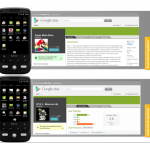
It’s a new day, but not quite so new malware on Google Play. Symantec caught a Trojan posing as game titles Super Mario Bros and GTA 3 Moscow City on the Android app store. Uh-oh, they had been up on the market since June 24, infiltrating somewhere between 50,000 – 100,000 smart phones, says Symantec's Irfan Asrar. "We would like to thank Android Security for immediately revoking the threat after we notified them of this discovery".
Both of the game apps are the Trojan known as Dropdialer. Once it gains access to a phone, the Trojan pulls in another package called Activator.apk through Dropbox. Then it goes ahead and wreaks havoc by sending texts to premium-rate text numbers. "The premium SMS is targeting Eastern Europe", Asrar says. Then, in the most subtle manner, the malware gets rid of the secondary payload by effectively removing all traces of what it has been doing.
OpenPuff 4.0 keeps files from prying eyes, and maybe even from you

When you need to keep confidential files away from prying eyes then encryption is the most obvious answer. But it’s not always appropriate.
If others share your hardware, in particular, then the presence of password-protected files alone might attract attention. And so in some situations you might be better off using a steganography tool, like OpenPuff 4.0, to move your data entirely out of view.
Nation-state hackers attack small businesses, too


Small businesses have their hands full these days in light of a down economy, tightening budgets and the steepening pace of business, but with nation-state hacks front and center in the threatscape, should you worry about those, too, or are you (and your customers) safe?
Nation-state hacks bring to mind images of large defense contractors, big government offices, and/or high profile financial institutions. After all, if a bad actor overseas stole the cutting edge design of a new nuclear reactor, it would be quite a haul for that government and its cronies -- and worth their time, money and effort to go after. But you’re a small business, too small to garner that kind of attention, right?
New Android malware threat: over 100,000 devices infected so far


Malware on Android devices is a real and growing threat, and one that is only likely to worsen. The latest Trojan to be found in the wild is a particularly nasty piece of coding named MMarketPay.A by TrustGo, the mobile security company that discovered it. Believed to have infected more than 100,000 smartphones in China, the Trojan downloads paid apps and videos from Mobile Market (M-Market), China Mobile’s official app store, without the user’s knowledge, resulting in some pretty hefty bills.
The malware is picked up by downloading infected apps from one of nine app stores (nDuoa, GFan, AppChina, LIQU, ANFONE, Soft.3g.cn, TalkPhone, 159.com and AZ4SD) and once installed on a device, it bypasses M-Market’s SMS security step, and begins placing orders and downloading content.
Bitdefender Internet Security 2013 review
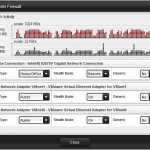
If you like your security suites to be feature-rich then Bitdefender’s offerings have always been a good choice. And the company’s latest releases show there’s no sign of that changing any time soon: Bitdefender Internet Security 2013 includes all the core functionality you’d expect from a suite (antivirus, firewall, spam filter, parental controls) and a lot you probably wouldn’t (virtual “Safepay” browsing, USB autorun virus protection, more).
All this power doesn’t seem to add much in the way of complexity, though. Installation is straightforward, with a single small setup tool scanning your system for threats, downloading the full suite and installing it for you with the minimum of hassle.
Celebrate July with one of these 19 software downloads

The halfway point of the year has come and gone, and as we slide our way through the calendar, there are more and more software releases to keep track of. If you’ve been busy through the first week of July, here are some of the highlights that you may have missed.
Starting off this week’s selection of titles are a number of tools with a connection to the Internet. Connectify Lite 3.5 is a great free tool that can be used to turn your laptop onto a WiFi hotspot that can be used by other laptops or mobile phones. If you want to use the Internet as a platform for your photography, jAlbum 10.8 can be used to share your photos online. ShareMeNot is a browser extension that can be used to prevent social networking buttons from tracking you line -- it is available as ShareMeNot for Firefox 2.0.1 and ShareMeNot for Chrome 1.0.
Android botnets? Not so, says Google

A couple of days ago Microsoft researcher Terry Zink claimed he’d uncovered evidence of Android phones being used as part of a botnet to send spam from Yahoo Mail servers. In his blog post on July 3rd he reported that the spam, which included "androidMobile" in the message header, and "Sent from Yahoo! Mail on Android" at the bottom of the emails, was being sent from devices located in Chile, Indonesia, Lebanon, Oman, Philippines, Russia, Saudi Arabia, Thailand, Ukraine and Venezuela. He then went on to speculate that users of the infected phones might have installed Trojanized pirated versions of legitimate apps, and become infected that way.
Security experts Sophos, agreed with his findings after running investigations of its own on the spam messages, but didn’t actually find or test any of the supposed malware itself. Google has since denied that any Android devices have been compromised in this way, stating there was no evidence to prove Zink’s claim, and that the junk messages had just been formatted to look as if they originated on Android handsets.
PrivaZer is one of the most powerful free privacy tools we’ve ever seen

If you’ve tried a few PC privacy tools then you’ll know they’re often disappointing, doing little more than you can achieve with your browser and Windows alone (clearing your temporary folders, deleting cookies and so on).
PrivaZer, fortunately, is a genuine exception, an amazingly thorough utility which could be one of the most powerful free privacy tools we’ve ever seen.
© 1998-2026 BetaNews, Inc. All Rights Reserved. Privacy Policy - Cookie Policy.