Anti-Malware 6: Emsisoft boasts big performance gains

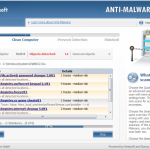
If you're tired of sluggish antivirus tools taking forever to scan your system, then you're not alone.
But the good news is that at least the security vendors are finally listening. Emsisoft today became the latest company to announce major performance improvements, with the claim that their new Anti-Malware 6 is now on average 450-percent faster than before. And by making smarter decisions about what it checks, the program continues to get faster with every scan.
Tired of bloated security suites? Try Webroot SecureAnywhere
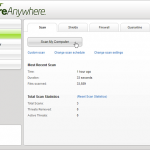
Webroot is describing its new SecureAnywhere 2012 range as being “the fastest and lightest virus and spyware protection you can buy”. And while this sounds like more security company hype, on first glance at least it looks like they may have a point.
The core antivirus engine is a compact and ultra-lightweight cloud-based affair, which makes smart choices about the files it checks to minimize scan times. Webroot say this means system scans will typically be under two minutes, something that we confirmed (they were closer to 30 seconds on our test PC). And the program is very careful about its use of RAM: we found it peaked at around 50MB when scanning, and when idle was closer to 5MB (private working set).
Avira releases rebranded anti-malware software
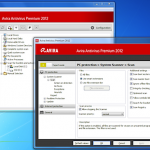
It has been around since 1988, but German antivirus company Avira has finally said goodbye to the AntiVir brand. And so its 2012 range will now follow the same naming convention as, well: “AntiVir Personal” becomes “Free AntiVirus“; “AntiVir Premium” becomes “Antivirus Premium 2012″ and “AntiVir Premium Security Suite” is now “Internet Security 2012“.
The latest releases don’t have any major new technologies to help them stand out from the crowd, either, unfortunately. Still, Avira has been working hard, and there are plenty of smaller worthwhile improvements tjhat should be welcome to Avira fans.
Is that Google Chrome or malware on your PC?


Is Google Chrome suddenly not working for you? If Microsoft Security Essentials is installed on your PC, that's likely explanation. It seems that, well, ah, that the security software is misidentifying the browser as malware. Oh, Microsoft you wish! With Chrome market share going up, surely someone at Microsoft sees the Google browser as an infestation to be purged.
But ribbing aside, it's just one of those glitches that sometimes occurs with software. But surely there's a script here somewhere for how Microsoft would like to remove unwelcome software on your Windows PC. Gone it is. If you're affected, it's possible Security Essentials has identified Chrome as "PWS:Win32/Zbot" and removed it from your PC. Quick! Where's the Internet Explorer 6 installation disc? :)
AVG Anti-Virus Free for Android has your back

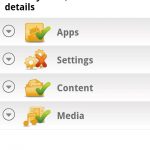
PCs are certainly the most common target for virus attacks, but this does not mean that other platforms are immune. The increased use of mobile devices means that platforms such as Android devices are prone to virus infection and antivirus software is now available to help counter this. AVG is most famous for its desktop virus protection software, but Anti-Virus Free is also available for Android and its aim is to protect your mobile in a number of ways.
As you might expect, the app provide virus protection on a real-time basis as well as enabling you to scan on a schedule or manually. Surfing the web is the source of many threats, and to this end the app includes phishing and malware protection. But Anti-Virus Free also goes far beyond this, and includes a number of handy extra tools and utilities.
mysql.com hacked and serving malware, stolen data sold on hacker forums

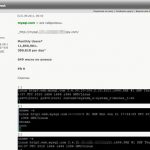
Users visiting mysql.com are being infected with malware, say security researchers. According to security firm Amorize, the hack is delivering malicious code through the use of an iFrame which in turn infects users with the Black Hole exploit.
Black Hole exploits security holes within the user's browser -- including plugins -- to find a hole through which a piece of malware can be used without the user's consent. Users would not need to agree to anything: Amorize found that simply visiting the site will lead to an infection.
Are Apple products really more secure?

One thing I hear regularly when working in the computer security field are comments from Apple users along the lines of: "Why doesn't everybody use Apple because there are no viruses for Macs?" or "All viruses target Windows because Windows sucks so bad" or "Microsoft is the target because Microsoft sucks!"
None of these comments are based on accurate information about the real security situation facing Apple products. In fact, I would claim that the current security level of Windows 7 is better than on Mac OS X, and that it's more likely we will see a major mobile worm outbreak on iPhone than on smartphones running Windows Phone.
Be careful, that PDF might be a Mac Trojan

Well, hello Mac users! The 1 billion Windows users of the world welcome you to the wonderful world of malware. F-Secure has identified a new one, and like Mac Defender, this piece of nastiness borrows from malware already released for Windows.
"We may have come across a Mac malware in the making. Detected as Trojan-Dropper:OSX/Revir.A, the malware disguises as a PDF file to trick user into triggering its payload", F-Secure warned earlier today.
Use layered security to protect your small business PCs


The hallmark of effective security in any field, especially computers, is defense-in-depth. There is always a way around any particular defensive measure, so you need multiple defenses in order to stop attacks with a high level of confidence. Large organizations are full of multilayered defenses, but they are no less essential to small businesses.
It's never big news, but small businesses get hit all the time by cybercrime. Reporter and analyst Brian Krebs has many stories of small businesses that fell victim to attacks, losing hundreds of thousands of dollars. Specialized malware (malicious programs) named Zeus and SpyEye find ways to get into your bank accounts and steal your money. In some cases, businesses have sued their banks to get their money back, but the courts have sided with the bank. It's the business's responsibility to secure the access the bank has given to the account.
Mac OS X Lion passwords super easy to crack, says researcher

A two-year old security issue in Mac OS X has reared its ugly head once again in Mac OS X 10.7 Lion, allowing users of a computer to easily modify the passwords of other users.
Mac OS X stores encrypted passwords in what are called "shadow files." These files are placed in secure locations on the drive, which are intended to be only alterable by the user himself or the administrator, provided they authenticate themselves.
Kaspersky introduces ONE license for PC, smartphone & tablet security

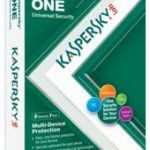
Security company Kaspersky Lab on Tuesday announced a new program called Kaspersky ONE, where a single license covers the security software across all of a user's devices: desktop, notebook, smartphone, and tablet.
Having security on your PC should be a given. It's just a matter of personal preference which security suite you use. But when you own multiple PCs with vastly different hardware configurations, or multiple PCs and multiple mobile devices, comprehensive security is often not a priority. Kaspersky suggests that this is due to the hassle of multiple licenses for the different platforms we deal with.
DigiNotar goes bust

Digital certificate authorities everywhere be warned: Hackers can destroy you. Today parent company VASCO Data Security announced that DigiNotar has been declared bankrupt. The action comes after weeks of controversy, following an intrusion that allowed a hacker to distribute more than 500 rogue digital certificates. Browser makers like Google and Microsoft responded by blocking DigiNotar certificates, thus cutting off the company's lifeline. The question now: Who's next?
DigiNotar's problems started in late August, when the first rogue certificates appeared. After Google and Microsoft suspended -- that is "untrusted" -- DigiNotar, the CA suspended issuing certificates. Two weeks ago, a hacker using the handle COMODOHACKER took responsibility for the security breach, claiming to have distributed 531 rogue certificates and to have breached five other certificate authorities. Now that he (or she) has essentially destroyed DigiNotar, will COMODOHACKER move on to the others? Or perhaps other CAs have tightened security since the DigiNotar breach.
Are cyber spies looking at you?

A good-looking spy sips a cocktail after ingeniously breaking into a high-security compound and then casually walks away with some confidential documents. That's what spies do in the movies. In the real world they are more likely to use a keyboard.

Spying is about collecting information. When information was still written on pieces of paper, a spy had to physically go and steal it. These days information is data on computers and networks, so modern spying is often carried out with the help of malware. The cyber spies use trojans and backdoors to infect their targets’ computers, giving them access to the data even from the other side of the world.
Will Windows 8 make security software obsolete?

Security vendors will have an increasingly hard time making a case for expensive subscriptions as Microsoft keeps pushing Windows to be "secure enough" out of the box. Windows 8 adds a number of impressive features that really should make a difference in the "ecosystem".
The main feature chart for security improvements in Windows 8 is described by the ubiquitous Steven Sinofsky of Microsoft in this blog entry entitled "Protecting you from malware".
ESET Security 5 adds gamer mode, updates cloud protection

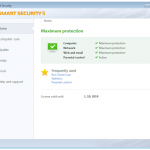
Slovakian security firm ESET has updated its anti-malware and all-in-one security packages to version 5. ESET Smart Security 5 32-bit/64-bit and ESET NOD32 Antivirus 5 32-bit/64-bit both include ESET Live Grid, a renamed and revamped cloud-based protection based on the previous release’s ThreatSense.Net technology.
Also new to version 5 of both products is Removable Media Control, which prompts the user to scan a removable drive when it’s plugged in, and Gamer Mode, which reduces ESET’s system footprint and suppresses all pop-up windows. Also new to ESET Smart Security 5 is a new parental control module and improved startup performance.
© 1998-2026 BetaNews, Inc. All Rights Reserved. Privacy Policy - Cookie Policy.