Lost your laptop? Norton Anti-Theft could recover it

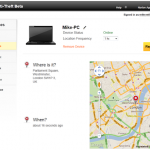
If you’re worried about losing your smartphone or tablet then there’s no shortage of services around that claim they can help you to protect it. There’s not quite as much choice for laptop and PC owners, of course. But if you’re worried about thieves, help is at hand in the shape of a new Symantec web service, Norton Anti-Theft, released this week in beta form.
If you’ve ever tried one of the mobile device location and recovery services then Symantec’s take will seem quite familiar. After creating a Norton Beta account, all you have to do is install the Anti-Theft client and leave it running on your system. And if your laptop is stolen, then logging in to the Anti-Theft website will provide all the recovery features you’d expect, as well as one or two you might not.
Norton Internet Security 2012: Nothing radically new, but plenty to like

The 2012 security suite party is now well under way, and Symantec are the latest company to join in with the release of Norton Internet Security 2012. The 2011 edition was excellent, and perhaps as a result this build is more about building on that, than providing anything radically new. Still, there’s plenty to like here.
Identity Safe, for instance, the browser tool for storing your logons and other information, then automatically completing web forms, can now hold your data in the cloud so it’s accessible from anywhere. Symantec’s reputation-based system, Insight, is now being used to check your downloads, and even try to identify brand-new malware.
Symantec puts cloud-based certificate management system in beta


Digital certificate problems are much in the news, owing to the scandal over compromised certificate authority DigiNotar, but the more common certificate problems are much simpler and more confined. Large, complex organizations often have trouble keeping track of all their certificates.
It's surprisingly common to find management of external CA-issued digital certificates to be decentralized and unorganized. Different groups buy them for different sites and some guy keeps track of them, including minor details like the private keys and expiration dates, in an Excel sheet. One day when he falls through a manhole or leaves for another job, what's going to happen? You may not even remember about it until one of the certificates expires and users start getting errors. "I think that file was somewhere here in his network folder..."
We need an international police force to fight cybercrime

In the real world, you only have to worry about the criminals who live in your city. But in the online world, you have to worry about criminals who could be on the other side of the planet. Online crime is always international because the Internet has no borders.
Today computer viruses and other malicious software are no longer written by hobbyist hackers seeking fame and glory among their peers, but by professional criminals who are making millions with their attacks. These criminals want access to your computer, your Paypal passwords and your credit card numbers.
Windows better protects apps, users from rogue DigiNotar certificates

It's received wisdom in software development generally that you don't write your own code when a perfectly good implementation is there for the taking. It's the old saw about reinventing the wheel. But it's especially true of cryptographic code. Windows programs that utilized the OS standard crypto functions got fast and automatic protection from the rogue certificates distributed during the DigiNotar scandal.
Over the last couple weeks, as stories about the hacking of certificate authority DigiNotar increased, various companies retracted their trust and the Dutch government stepped in. Given that the criminal who did the hacking announced the fact, it was potentially too late for anyone to protect themselves, but still time is of the essence in such matters.
Mozilla raises specter of death sentence on insecure CAs

The security requirements for certificate authorities have, so far been, well, there haven't been any. Mozilla is attempting now to impose some and giving CAs precious-little time to come up to standard. Could the Mozilla "death sentence" be imposed?
Moailla's letter to certificate authorities demands some significant information by September 16, 2011, the end of next week. While it shows nothing about breaches, we know from the EFF's SSL Observatory project that many certificate authorities aren't sticklers for detail when it comes to security issues.
Mozilla issues ultimatum to Internet certificate authorities


Mozilla has decided that once broken trust isn't easily restored. Today, the open-source developer of Firefox issued an ultimatum to certificate authorities, in wake of the spreading damage caused by the DigiNor hack. Certificates like those DigiNor and other CAs issue are the backbone of Internet trust. That lock you see in the browser represents security and trust in the website where transactions occur. But third-parties issue the certificates, presumably being more trustworthy than your local bank or other online service.
The hacker claiming to have broken into DigiNor, who goes by handle COMODOHACKER, also claims to have breached four other CAs and issued at least 531 rogue certificates. Major browser developers -- Microsoft among them have banned DigiNor and dispatched updates to block rogue certificates.
AVG Internet Security 2012 in-depth review
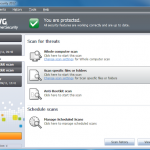
Some security companies appear to think that enhancing their software is just about adding new functionality. But while this can make for an enticing feature list, there’s usually a price to pay, in terms of extra complexity and layers of overweight code that slows down the rest of your PC.
So it’s good to see AVG take a different approach with their latest Internet Security 2012 release.
Norton Security 2012: Better protection, less overhead

Symantec has released brand new versions of its antivirus and Internet security products. Norton Internet Security 2012 and Norton AntiVirus 2012 both launch with new and improved features to boost the brand's security reputation even further.
Norton 2012 promises improved Norton Protection System and Insight features, a new parental controls tool and built-in optimization for netbooks, claiming it will conserve battery life and preserve network usage while running on battery power.
DigiNotar scandal worsens: 500+ rogue certificates issued, five CAs breached

The hacker who breached the DigiNotar certificate authority has come out, or at least claimed to. He appears to be the same hacker who breached Comodo, another CA, several months ago. (Hat tip to F-Secure.) "COMODOHACKER" seems to have a problem with the Dutch government.
He claims to have gotten past numerous sophisticated protections in DigiNotar's systems, the details of which he will divulge later, and that he retains inside access to four other "high-profile" CAs and can still issue rogue certificates from them. He also claims that the password for the PRODUCTION\Administrator account (the domain administrator of certificate network) is "Pr0d@dm1n".
Looking for work and got an offer by email? Criminals want you to be their money mule

I like reading my spam. Sounds strange? Perhaps it is, but from the perspective of an eCrime investigator, there's often something interesting inside a spam folder.
One day I was going through the spam folder of my inbox and came across an interesting job offer. A company was looking for people who could speak English, had an email box and a PC, could work unsupervised, and had no criminal record.
Google cuts security corners to gain market share

It has been obvious for some time that Google's app standards for Android are lenient to say the least. That's why Android is the favored platform for mobile malware. But it turns out that Chrome extensions are a huge, and similar problem that I'm beginning to really worry about.
When Android phones started coming out Google had a lot of catching up to do. Back then there was a lot of mindless talk about how many tens of thousands or hundreds of thousands of apps a phone had. Obviously 200,000 apps is twice as good as 100,000, right? The way Google structured their app system for Android seems to me to be designed to maximize the number of apps by making it cheap and easy to create and distribute them. And this happens at the expense of security.
AVG 2012 security software cuts the bloat, runs faster
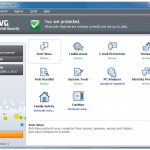
If you’ve felt that AVG’s security tools have become a little bloated in the last few years, then we’ve some good news: the 2012 range, released today, focuses strongly on improving performance and reducing their impact on your PC’s speed. And their efforts do seem to have produced some worthwhile results.
Grab a copy of the new AVG Internet Security 2012, for instance, and you’ll find the download is half the size, installation is faster, and the suite’s footprint on your hard drive is cut by an average of 45 percent when compared to the previous edition.
Microsoft patch management got you down? Secunia CSI 5 has your back

If only there were a way to keep up to date automatically on vulnerabilities and have Windows apply patches to the important ones. Secunia's Corporate Software Inspector (CSI) 5.0 lets you do that, applying even your 3rd party software updates through Microsoft's WSUS (Windows Software Update Services) and SCCM (System Center Configuration Manager).
I've been complaining for years that Microsoft should open up the Windows Update process to third parties. Secunia has filled in most of this gap with their Personal Software Inspector (PSI) for individuals and CSI for managed networks.
What if all your Facebook friends were fakes? [Infographic]

As the debate over whether or not Google+ should allow fake names continues, I've got a good reason why real names are better: Security.
Today, security start-up Impermium released some startling statistics about scammers and spammers creating fraudulent accounts on social websites. There's a good chance that new Facebook friend is your worst enemy. Lonely hearts, beware! Impermium found that as many as 40 percent of users on some services are fraudulent accounts.
© 1998-2026 BetaNews, Inc. All Rights Reserved. Privacy Policy - Cookie Policy.