New G Data plug-in offers free protection against malicious websites


German security vendor G Data has released G Data CloudSecurity 1.0, a free browser plug-in for Internet Explorer and Firefox users that adds an extra layer of protection to Windows PCs. It works by blocking access to known phishing and malware-infested websites, throwing up a highly visible prompt warning the user that the site they're about to visit is considered to be dangerous.
G Data CloudSecurity won't rely on regular updates to provide protection against known websites, but utilize data from other users of its security software in the cloud to monitor behavior and spot malicious and fake websites, deploying protection to all of its users.
'Spam king' released from prison, disavows his former ways


After more than four years in prison, Robert Soloway is now a free man. Dubbed the 'Spam King' for his role as the head of a spam ring that sent an estimated 10 trillion junk e-mails between 2003 and 2007, Soloway is now busy reintegrating himself into everyday life, according to Wired.
He was first arrested in May 2007 and charged with 35 counts including fraud, identity theft, and money laundering, and sentenced in July 2008. Soloway was widely considered one of the top ten spammers in the world, and had also lost multimillion dollar suits to Microsoft and an Oklahoma ISP as a result of his actions.
I'll believe Mac malware is a problem when I see it


The real world state of security on Macs has long baffled security experts. From a simple analysis of attack surface and opportunities, the Mac is not just vulnerable to attack, but far more so than Windows. And yet attacks on Mac users are rare while Windows malware continues to thrive.
What explains this? The consensus, and it's an opinion I share, is that the people who write the important malware are unconvinced that the cost/benefit of writing a parallel code base of malware for the Mac is worthwhile to them. People argue about what the real installed bases of Windows PC and Macs are, but it would appear that these developers don't think there are enough Macs out there to make it worth their while.
Now in beta: OS X backdoor Trojan

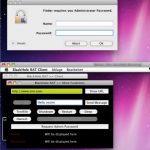
Security researchers at Sophos Labs last week discovered a new, "still in beta" backdoor Trojan targeting Mac OS.
The Trojan, identified as BlackHoleRAT, is a variant of the free "remote administration tool" darkComet RAT for Windows, and gives the administrator the ability to place text files on the desktop, send restart, shutdown or sleep commands, to run shell commands, to place a full-screen window with a message that forces a reboot, to force URLs to a client, and to pop up a fake "Administrator Password" phishing window.
Avast 6 leaves beta, adds new features

Leading Czech antivirus vendor Avast! has updated its free antivirus tool to version 6. Avast! Free AntiVirus 6 claims to deliver even better protection against malware thanks to two new features previously only found in paid-for antivirus programs.
The first feature is AutoSandbox, which automatically identifies suspicious applications and prompts the user to run them in an isolated environment, preventing them from interacting with, and potentially infecting, the computer. Second, WebRep provides reputation-based ratings for websites and search engine results, although this functionality is already available for free in standalone browser add-ons like MyWOT, it's the first time it's been made available as part of a free antivirus product.
IE9's 'Do Not Track' features could become Web standards

The World Wide Web Consortium (W3C,) the standards body responsible for HTML5, accepted and published Microsoft's member submission for standardized privacy features on Thursday.
Last year, the Federal Trade Commission endorsed a framework for consumer privacy which suggested a persistent browser setting to protect users from services that collect and harvest browser data without users knowing about it.
5 password managers for storing, protecting and syncing your personal information

How safe are you online? These days the biggest prize for any hacker or thief is access to your online accounts -- financial or otherwise, and with many people choosing to protect all their online details with a single, easily crackable password, there's never been a better time to practice safe browsing.
The problem with staying safe is that ideally you should use complicated, unique passwords for every single account you have. That's brilliant in theory, but in practice it's almost impossible to remember that "fjdSkjAh43q2" is the password for your online bank while "rh13um93ba" protects your Paypal account. The answer lies in utilizing a password manager like one of the five we've plucked out from a lineup for this quick-fire comparison.
Five security backdoors every small business should shut

Corporate security is serious business, but what about small businesses? How do owners know if they're unconsciously leaving the backdoor open to cybercriminals? Monitoring for new and emerging threats is a daunting task, particularly when the small business owner wears a second hat -- IT manager. Cyberattacks come through a variety of channels. There are five backdoor entrances every small business should guard against.
Door #1: Social networks and community bad spirits. Most social networking activity is concerned with community spirit and sharing of a wide range of data including documents, music, video and links. The biggest problem here is trust. People trust people that they know, or that they think they know. This means that users are more likely to click an infected link if it comes from a trusted colleague or friend. Beef up your security policy. Only 23 percent of companies have any security policies in place that specifically addresses social media. Offer staff some guidelines to keep them and your company network safe.
Norton 360 v5.0 launches with free web app-desktop gadget and Cybercrime Index

The weakest link in any security strategy is human. No matter how good the technology, nothing creates risk like ignorance and naiveté. When Symantec released its Norton 2011 products back in September, the company spoke of "engendering goodwill" among potential customers with free tools to educate and protect their vulnerable systems. Today, concurrent with the release of Norton 360 version 5, the company made available yet another free tool to keep users aware of the ever-changing daily threat landscape.
The Norton Cybercrime Index, a free service, gives a daily snapshot of the most dangerous websites and the most hijacked search terms, as well as top scams, identity theft ploys and spam. The daily data from the Cybercrime Index can be viewed in a Web portal, on a mobile site, or as a free desktop gadget for Windows 7 and Vista. The main tool is a daily risk level meter similar to the Department of Homeland Security's threat advisory level.
Outpost Security Suite FREE 7.1 bulks up with second malware engine

Agnitum has released version 7.1 of its flagship product, Outpost Security Suite FREE. It's a maintenance upgrade for the most part, with under-the-hood bug fixes and minor tweaks, but there are some notable exceptions.
Top of the list is the inclusion of a second anti-malware engine. The suite now includes one antivirus engine, and a second focused on spyware, adware and trojans. The company claimed in a blog post that this offers "double the protection" and "more targeted security for Windows users"; there are no related controls or options exposed in the interface, though, so you can continue to use Outpost Security Suite as you always have.
31% of EU Internet users were infected by worm or Trojan in 2010

Eurostat, the European Union's office of statistics, Monday said that 31% of all Internet users in the 27 EU member nations had contracted a computer virus that resulted in "loss of information or time" in the second quarter of 2010.
Eurostat found that 3% of all users suffered some kind of financial loss related to phishing/pharming attacks or fraudulent credit card use, and 4% of all users reported an abuse related to personal information and privacy.
Why Microsoft has to open Windows Update to third-party developers

There's a lot of confusion out there about when attacks against computers occur as a result of vulnerabilities in software as opposed to some other weakness, usually social engineering. Considerable progress has been made in protection against vulnerabilities on Windows, and we can make exploitation even harder if Microsoft can be talked into my scheme: open up Windows Update to third-party applications.
My own opinion is that social engineering is far more important than vulnerabilities and has been increasing in importance. One reason for this is that vulnerabilities are a harder target than they used to be, and that's in large part because of the work Microsoft has done over the last 6 or 7 years.
Hacking Chrome? Google Bets $20,000 you can't

Google has donated $20,000 to a yearly hacking competition to be awarded to the first researcher able to crack its Chrome browser. The Mountain View, Calif. company's move marks the first time a browser developer has contributed money to the contest.
The Pwn2Own competition is in its fifth year and is held at the CanSecWest security conference. Participants are tasked with cracking a variety of other browsers too (Apple's Safari, Microsoft's Internet Explorer, and Mozilla's Firefox) on computers supplied by the contest creators running Windows 7. Those that perform a successful crack win the computer it was done on as well as a $15,000 cash prize.
Opera 11 gets Web of Trust

The Web of Trust (WOT) plug-in, which delivers security and privacy ratings on websites and search engine results worldwide, has extended its support to the Opera web browser now that version 11 supports the use of third-party extensions.
WOT 0.9 works in the same way as it does on other supported browsers -- namely Internet Explorer, Google Chrome, Safari and Firefox -- to provide a traffic-light icon in the browser toolbar and next to search engine results to provide at-a-glance safety and privacy ratings for the websites in question. If a site is rated red, Web of Trust throws up a warning message making it clear it doesn't recommend the user visit the site -- this can be overruled by the user, but is not recommended.
Twitter hit with Goo.gl faked antivirus worm

A new virus is spreading around Twitter using the Google 'goo.gl' URL shortening service, posing as anti-virus software. Affected users may see tweets with links in their timelines ending with "m28sx.html," says Graham Cruley of security firm Sophos.
Clicking on the link will take the user a page that claims the computer is infected, and attempts to trick him or her into installing the malware-infected software as well as to pay for disinfection. Once downloaded, the virus then posts a tweet under the users account with the link in an attempt to infect his or her followers.
© 1998-2026 BetaNews, Inc. All Rights Reserved. Privacy Policy - Cookie Policy.